


Global Prevalence of Sleep Bruxism and Awake Bruxism in Pediatric and Adult Populations: A Systematic Review and Meta-Analysis
- PMID: 39064299
- PMCID: PMC11278015
- DOI: 10.3390/jcm13144259
Global Prevalence of Sleep Bruxism and Awake Bruxism in Pediatric and Adult Populations: A Systematic Review and Meta-Analysis
Abstract
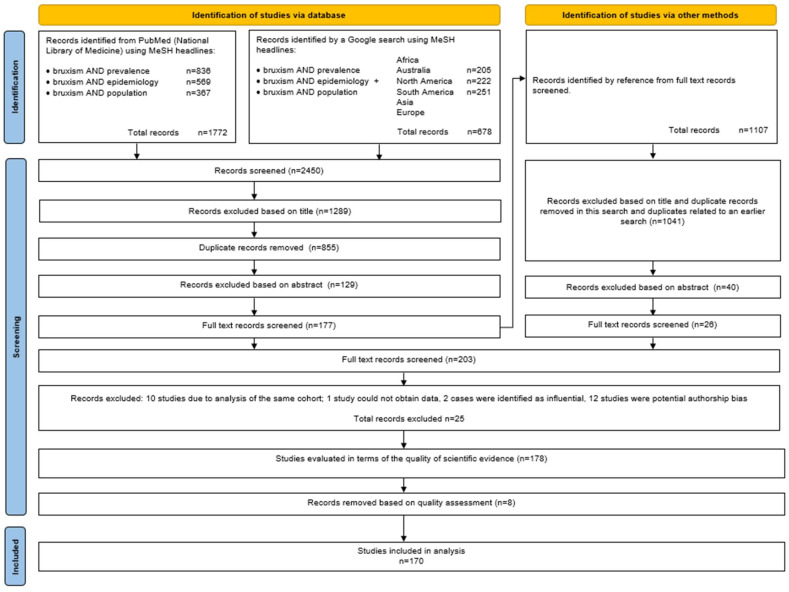
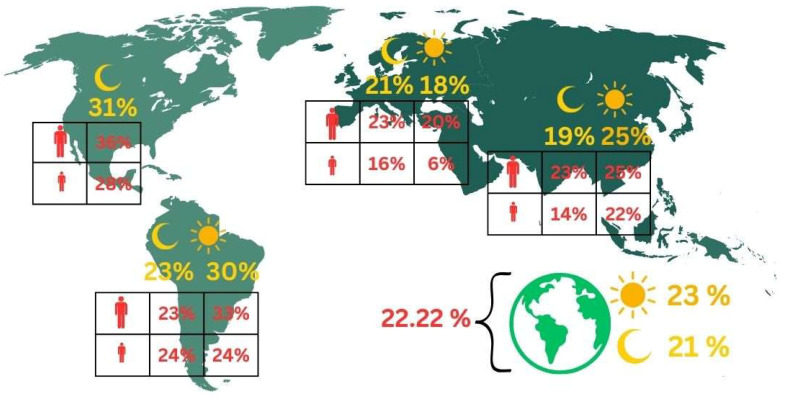
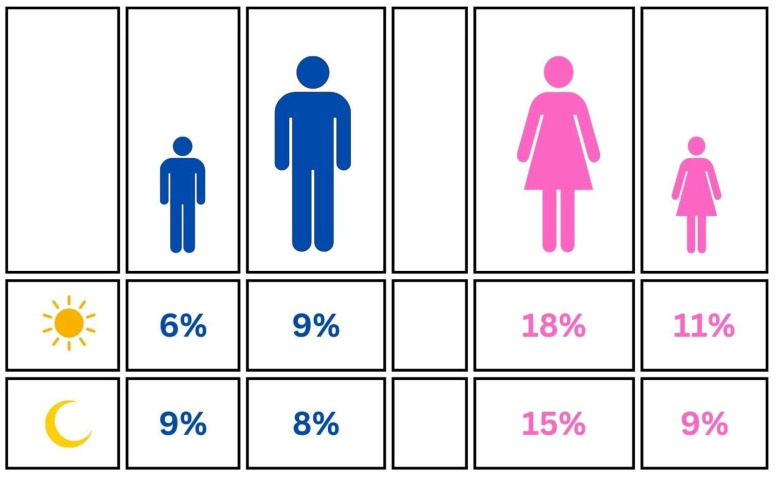
Background/Objectives: The purpose of this systematic review was to assess the global prevalence of sleep bruxism and awake bruxism in pediatric and adult populations. Methods: This systematic review was conducted by analyzing studies published from 2003 to 2023. The following keyword combination was utilized: prevalence, epidemiology, population, and bruxism. The PubMed database was analyzed, supplemented by manual searches using the Google search. Additionally, the snowballing procedure method was applied. A double assessment of the quality of publications was carried out to preserve the highest possible quality of evidence (e.g., Joanna Briggs Institute critical appraisal checklist). Analyses were conducted using the R statistical language. Results: The global bruxism (sleep and awake) prevalence is 22.22%. The global sleep bruxism prevalence is 21% and awake prevalence is 23%. The occurrence of sleep bruxism, based on polysomnography, was estimated at 43%. The highest prevalence of sleep bruxism was observed in North America at 31%, followed by South America at 23%, Europe at 21%, and Asia at 19%. The prevalence of awake bruxism was highest in South America at 30%, followed by Asia at 25% and Europe at 18%. Conclusions: One in four individuals may experience awake bruxism. Bruxism is a significant factor among women. It was observed that age is a significant factor for the occurrence of sleep bruxism in women. Among the limitations of the study is the lack of analysis of the prevalence of bruxism in Africa and Australia due to not collecting an adequate sample for analysis. The study was registered in the Open Science Framework (10.17605/OSF.IO/ZE786).
Keywords: Africa; America; Asia; Australia; Europe; epidemiology; nocturnal bruxism; population; prevalence; wakefulness bruxism.
Conflict of interest statement
The authors declare no conflicts of interest.
Figures
References
-
- Frohman B. The Application of Psychotherapy to Dental Problems. Dent. Cosm. 1931;73:1117–1122.
-
- Pietkiewicz M. La Bruxomanie: Memoires Originaux. Rev. Stomatol. 1907;14:107–116.
-
- Editorial Attrition of the Grinding and Cutting Surfaces of Teeth. South Dent. Exam. 1860;1:24–25.
-
- Boyens P.J. Value of Autosuggestion in the Therapy of “Bruxism” and Other Biting Habits. J. Am. Dent. Assoc. 1940;27:1773–1777. doi: 10.14219/jada.archive.1940.0331. - DOI
Publication types
LinkOut - more resources
Full Text Sources
Medical
