Review
. 2024 Jun 26;12(7):711.
doi: 10.3390/vaccines12070711.

Deciphering the Potential of Probiotics in Vaccines

Affiliations
Review

Deciphering the Potential of Probiotics in Vaccines

Chang Xu et al. Vaccines (Basel). .

Abstract

The demand for vaccines, particularly those prepared from non-conventional sources, is rising due to the emergence of drug resistance around the globe. Probiotic-based vaccines are a wise example of such vaccines which represent new horizons in the field of vaccinology in providing an enhanced and diversified immune response. The justification for incorporating probiotics into vaccines lies in the fact that that they hold the capacity to regulate immune function directly or indirectly by influencing the gastrointestinal microbiota and related pathways. Several animal-model-based studies have also highlighted the efficacy of these vaccines. The aim of this review is to collect and summarize the trends in the recent scientific literature regarding the role of probiotics in vaccines and vaccinology, along with their impact on target populations.

Keywords: efficacy; immune response; probiotics; safety; vaccine development.


Conflict of interest statement

The authors declare no conflicts of interest.

Figures
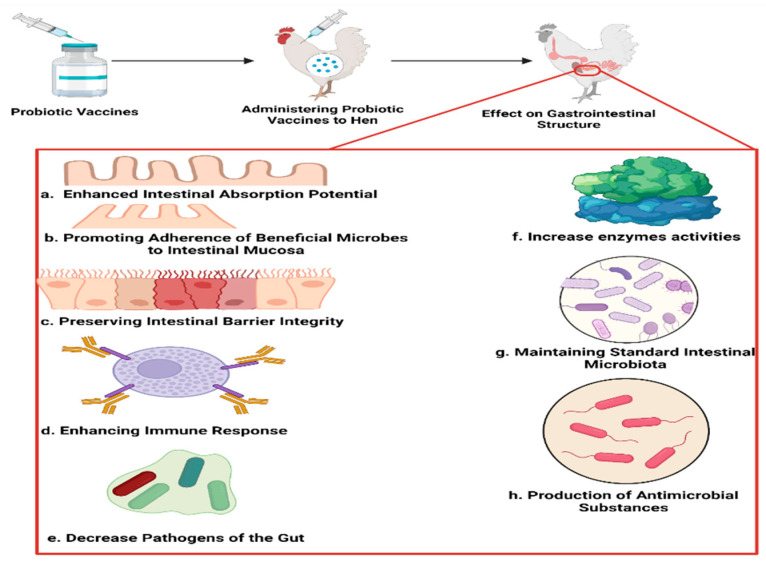
Figure 1
Figure 1
Impact of probiotics on intestinal health and immune system.
Figure 2
Figure 2
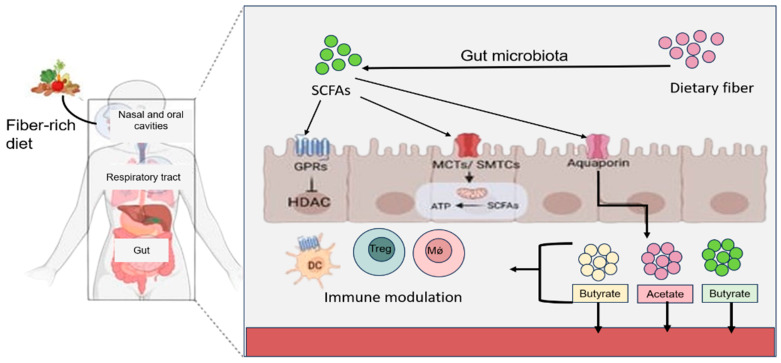
An illustration of production of short-chain fatty acids (SCFAs) by the gut microbiota. These metabolites interact with G-protein-coupled receptors (GPCRs) and monocarboxylate transporters (MCTs and SMTCs) to regulate gene transcription and energy production in intestinal epithelial cells (IECs). Moreover, SCFAs can traverse the intestinal mucosa, entering circulation to modulate both metabolic and immune functions. Key players in this process include dendritic cells (DCs), T regulatory cells (Tregs), and macrophages.
Figure 3
Figure 3
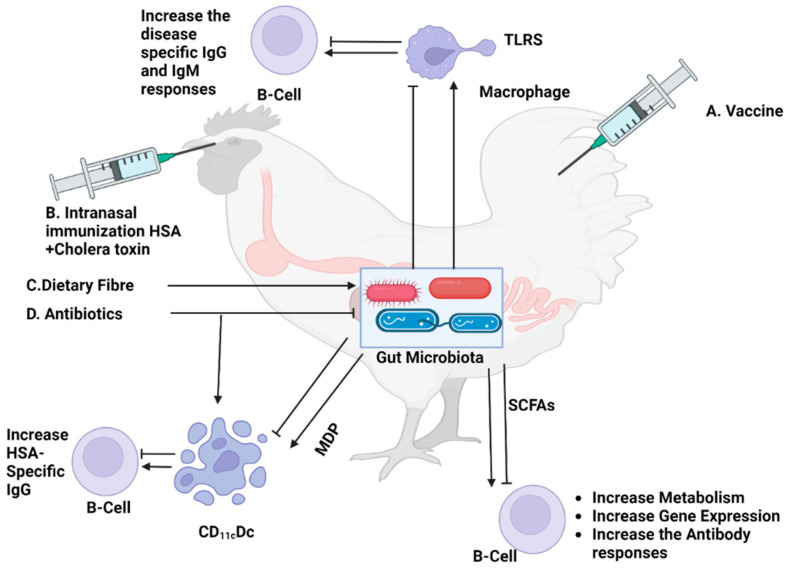
The mechanisms of effect of gut microbiota on antibody titer after vaccination. The gut microbiota play a crucial role in modulating the host’s immune system, impacting both innate and adaptive immune responses. After vaccination, certain bacterial communities in the gut can enhance antigen presentation and promote the maturation of dendritic cells. This leads to a more robust activation of B cells, resulting in higher antibody production. Additionally, microbial metabolites, such as short-chain fatty acids (SCFAs), can influence the differentiation and function of immune cells, further enhancing the immune response to vaccines. Dysbiosis, or an imbalance in gut microbiota, can impair these processes, potentially leading to suboptimal vaccine efficacy. Therefore, maintaining a healthy and balanced gut microbiota is essential for achieving optimal vaccine-induced immunity.

References

    1. Kocourkova A., Honegr J., Kuca K., Danova J. Vaccine ingredients: Components that influence vaccine efficacy. Mini-Rev. Med. Chem. 2017;17:451–466. doi: 10.2174/1389557516666160801103303. - DOI - PubMed
    1. Carpenter T.E. Evaluation of effectiveness of a vaccination program against an infectious disease at the population level. Am. J. Vet. Res. 2001;62:202–205. doi: 10.2460/ajvr.2001.62.202. - DOI - PubMed
    1. FAO. WHO . Cordoba, Argentina: Food and Agriculture Organization of the United Nations and World Health Organization Expert Consultation Report. FAO; Rome, Italy: WHO; Geneva, Switzerland: 2001. Health and nutritional properties of probiotics in food including powder milk with live lactic acid bacteria.
    1. Morelli L., Capurso L. FAO/WHO guidelines on probiotics: 10 years later. J. Clin. Gastroenterol. 2012;46:S1–S2. doi: 10.1097/MCG.0b013e318269fdd5. - DOI - PubMed
    1. Fenster K., Freeburg B., Hollard C., Wong C., Rønhave Laursen R., Ouwehand A.C. The production and delivery of probiotics: A review of a practical approach. Microorganisms. 2019;7:83. doi: 10.3390/microorganisms7030083. - DOI - PMC - PubMed

LinkOut - more resources