


Obesity and Early-Onset Breast Cancer and Specific Molecular Subtype Diagnosis in Black and White Women: NIMHD Social Epigenomics Program
- PMID: 39073818
- PMCID: PMC11287389
- DOI: 10.1001/jamanetworkopen.2024.21846
Obesity and Early-Onset Breast Cancer and Specific Molecular Subtype Diagnosis in Black and White Women: NIMHD Social Epigenomics Program
Abstract
Importance: Epidemiologic data suggest an association of obesity with breast cancer (BC); however, obesity's contribution to early onset and risk of diagnosis with specific molecular subtypes by race is uncertain.
Objective: To examine the race-specific association of body mass index with early onset and diagnosis of specific molecular subtypes.
Design, setting, and participants: This retrospective cohort study included patients with BC diagnosed between October 1, 2017, and March 31, 2022, at 3 University of South Alabama Mitchell Cancer Institute clinics. Participants were also prospectively enrolled for serum leptin measurement.
Main outcomes and measures: The primary outcome was age at BC onset and specific subtype diagnosis. The secondary outcome was race-specific differences. Odds ratios (ORs) for associations of body mass index with age at onset and subtype were estimated using the Fisher exact test. Race was self-reported.
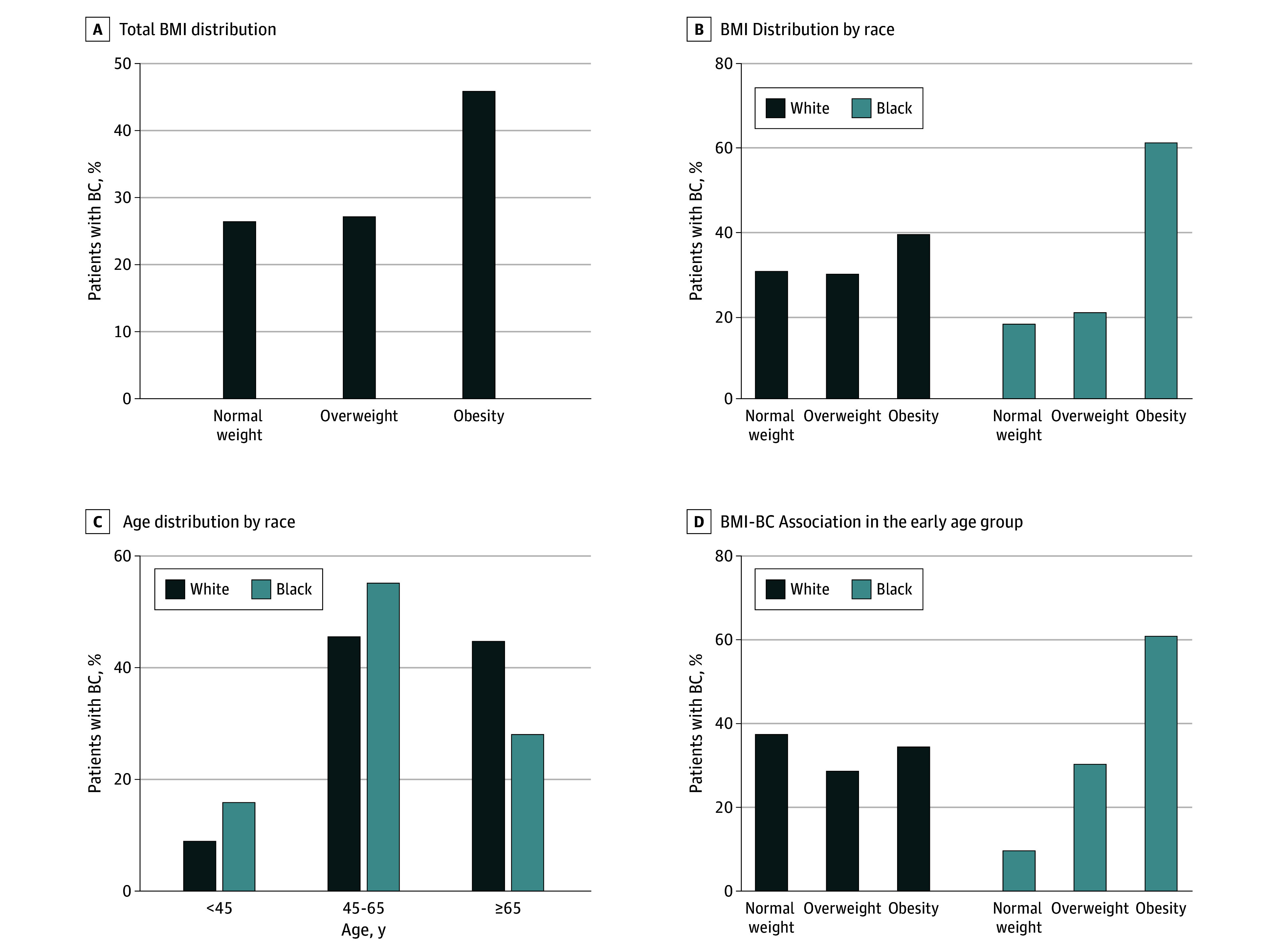
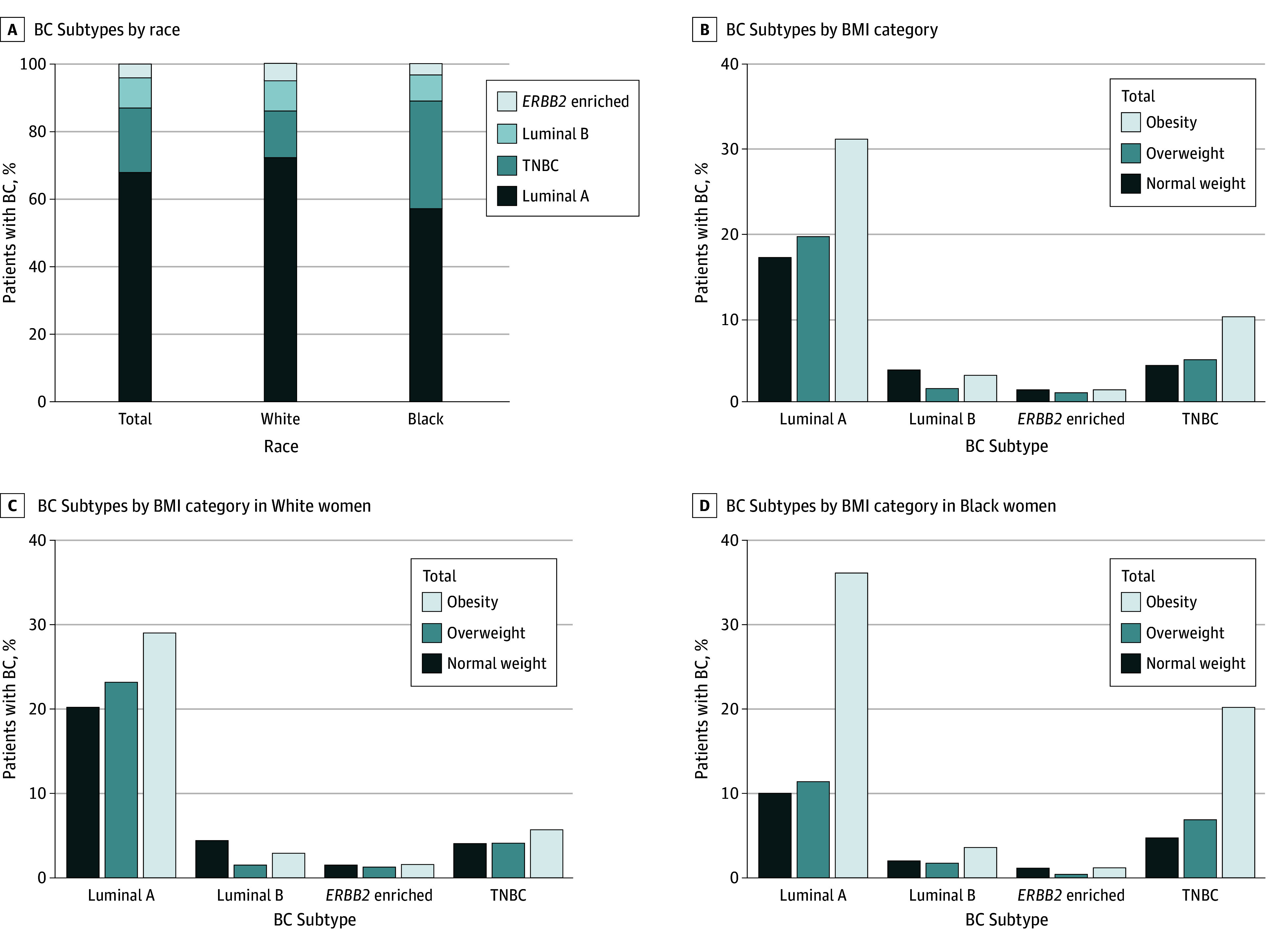
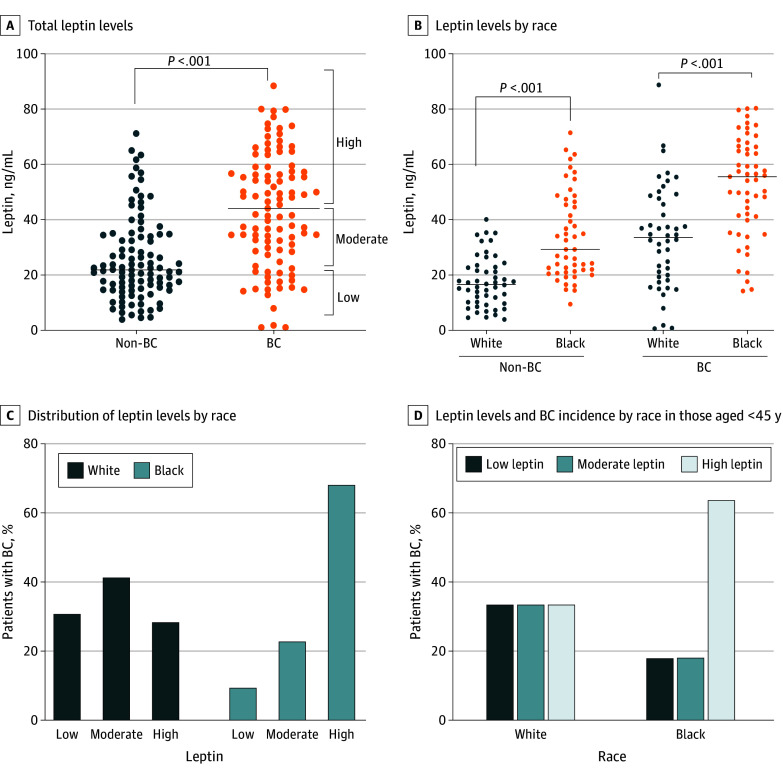
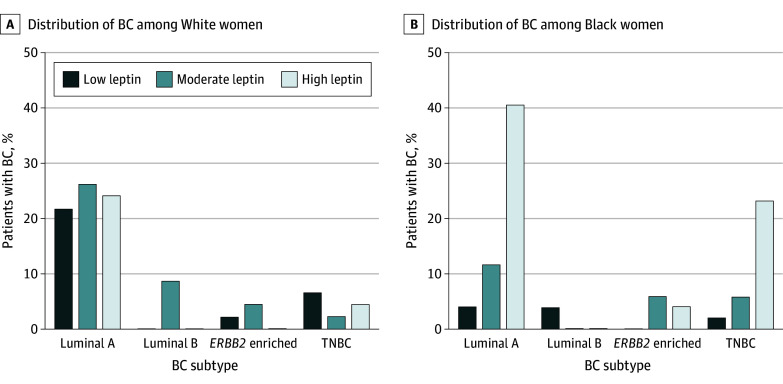
Results: Of the 1085 study patients, 332 (30.6%) were Black with a median age of 58 (IQR, 50-66) years, and 753 (69.4%) were White with a median age of 63 (IQR, 53-71) years. A total of 499 patients (46.0%) had obesity, with Black women with obesity receiving more frequent BC diagnosis than their White counterparts (OR, 2.40; 95% CI, 1.87-3.15; P < .001). In addition, Black women had a significantly higher incidence of early-onset disease (OR, 1.95; 95% CI, 1.33-2.86; P = .001) than White women, and obesity increased this risk significantly in Black women (OR, 2.92; 95% CI, 1.35-6.22; P = .006). Black women with obesity also had a significantly higher risk of luminal A BC (OR, 2.53; 95% CI, 1.81-3.56; P < .001) and triple-negative BC (TNBC) (OR, 2.48; 95% CI, 1.43-4.22; P = .002) diagnosis than White counterparts. Black women, with or without BC, had significantly higher serum leptin levels (median [IQR], 55.3 [40.3-66.2] ng/mL and 29.1 [21.1-46.5] ng/mL, respectively, P < .001) than White women (median [IQR], 33.4 [18.9-47.7] ng/mL and 16.5 [10.0-22.9] ng/mL, respectively), which was associated with higher odds of luminal A disease (OR, 5.25; 95% CI, 1.69-14.32, P = .003). Higher odds of early-onset disease (OR, 3.50; 95% CI, 0.43-23.15; P = .33 for trend), and TNBC diagnosis (OR, 6.00; 95% CI, 0.83-37.27; P = .14 for trend) were also seen, although these outcomes were not statistically significant.
Conclusions and relevance: In this cohort study of patients with BC, obesity and high serum leptin levels were associated with an enhanced risk of early-onset BC and diagnosis of luminal A and TNBC subtypes in Black women. These findings should help in developing strategies to narrow the existing disparity gaps.
Conflict of interest statement
Figures
References
-
- Office of Minority Health. Obesity and African Americans. Accessed January 18, 2024. https://minorityhealth.hhs.gov/obesity-and-african-americans
Publication types
MeSH terms
Substances
Grants and funding
LinkOut - more resources
Full Text Sources
Medical
