Cardiorespiratory Fitness in the Prevention and Management of Cardiovascular Disease
- PMID: 39076181
- PMCID: PMC11269081
- DOI: 10.31083/j.rcm2311382
Cardiorespiratory Fitness in the Prevention and Management of Cardiovascular Disease
Abstract
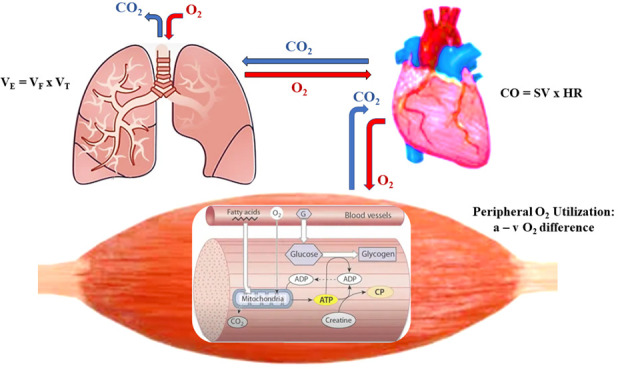
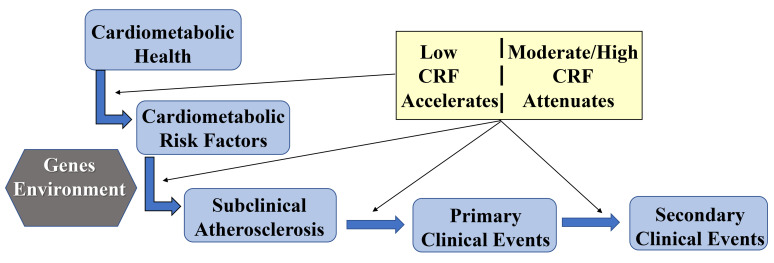
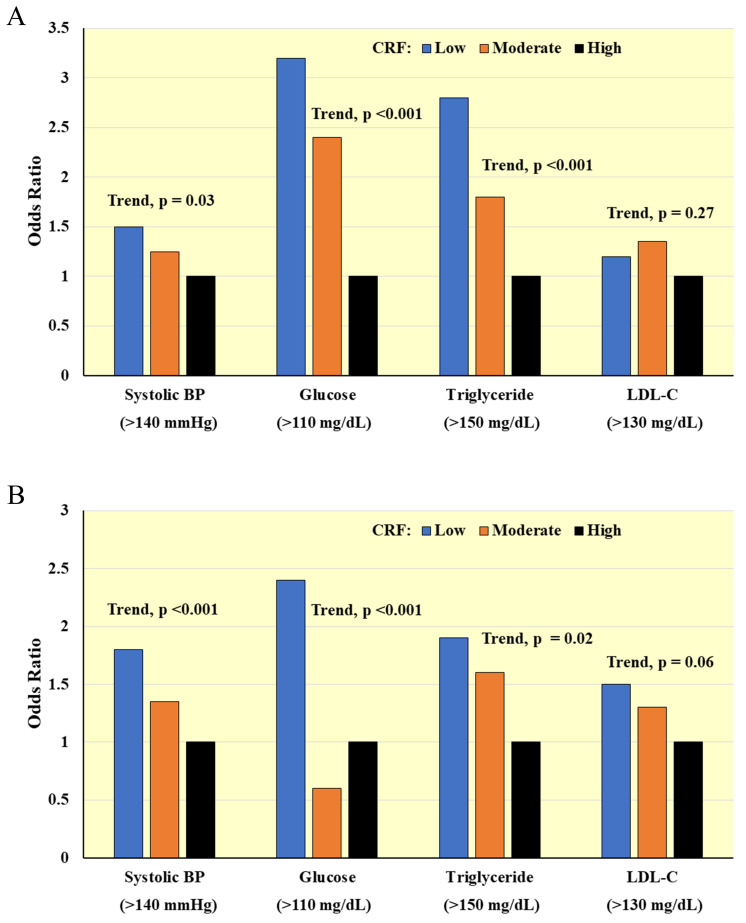
Cardiovascular disease (CVD) is the leading cause of death among adults in the U.S. and elsewhere. Variation in the presence, severity, and control of major modifiable risk factors accounts for much of the variation in CVD rates worldwide. Cardiorespiratory fitness (CRF) reflects the integration of ventilation, circulation, and metabolism for the delivery and utilization of oxygen in support of dynamic aerobic physical activity. The gold standard measure of CRF is maximal oxygen uptake. Because the primary factor underlying differences in this measure between individuals is maximal cardiac output, it can serve as a clinical indicator of cardiac function. Higher CRF is associated with favorable levels of major CVD risk factors, lower prevalence and severity of subclinical atherosclerosis, and lower risks of developing both primary and secondary clinical CVD events. The beneficial associations between CRF and CVD are seen in women and men, older and younger adults, in those with multiple coexisting risk factors or prior diagnosis of CVD. Exercise training and regular physical activity of at least moderate intensities and volumes improves CRF in adults, and improvements in CRF are associated with lower risks of subsequent CVD and mortality. Routine assessment of CRF in primary care settings could enhance individual-level CVD risk assessment and thereby guide implementation of appropriate measures to prevent future clinical events.
Keywords: exercise; exercise prescription; heart disease; maximal oxygen uptake; physical activity; prognosis; risk assessment.
Copyright: © 2022 The Author(s). Published by IMR Press.
Conflict of interest statement
The author declares no conflict of interest.
Figures
References
-
- U.S. Department of Health and Human Services . Physical activity and health: A report of the Surgeon General . U.S. Department of Health and Human Services, Centers for Disease Control and Prevention, National Center for Chronic Disease Prevention and Health Promotion; Atlanta, GA: 1996.
-
- Physical Activity Guidelines Advisory Committee . Physical Activity Guidelines Advisory Committee Report, 2008 . U.S. Department of Health and Human Services; Washington, DC: 2008. - PubMed
-
- Physical Activity Guidelines Advisory Committee . 2018 Physical Activity Guidelines Advisory Committee Scientific Report . U.S. Department of Health and Human Services; Washington, DC: 2018.
-
- Fletcher GF, Ades PA, Kligfield P, Arena R, Balady GJ, Bittner VA, et al. Exercise Standards for Testing and Training: a scientific statement from the American Heart Association. Circulation . 2013;128:873–934. - PubMed
-
- Ross R, Blair SN, Arena R, Church TS, Després J, Franklin BA, et al. Importance of Assessing Cardiorespiratory Fitness in Clinical Practice: a Case for Fitness as a Clinical Vital Sign: a Scientific Statement from the American Heart Association. Circulation . 2016;134:e653–e699. - PubMed
Publication types
LinkOut - more resources
Full Text Sources