Association of Sodium-Glucose Cotransporter 2 Inhibitors (SGLT2i) with Cardiac Arrhythmias: A Systematic Review and Meta-Analysis of Cardiovascular Outcome Trials
- PMID: 39076384
- PMCID: PMC11262450
- DOI: 10.31083/j.rcm2409258
Association of Sodium-Glucose Cotransporter 2 Inhibitors (SGLT2i) with Cardiac Arrhythmias: A Systematic Review and Meta-Analysis of Cardiovascular Outcome Trials
Abstract
Background: Sodium-glucose cotransporter 2 inhibitors (SGLT2i) are a class of widely used hypoglycemic agents for the treatment of type 2 diabetes mellitus (T2DM). In addition to lowering blood glucose, SGLT2i protects the heart and kidney, significantly reduces cardiovascular events, and delays the progression of heart failure and chronic kidney disease. However, previous studies have not exhaustively discussed the association between SGLT2i and the risk of developing cardiac arrhythmias. The purpose of this study is to assess the association of SGLT2i with cardiac arrhythmias in patients with T2DM and without T2DM in cardiovascular outcome trials (CVOTs).
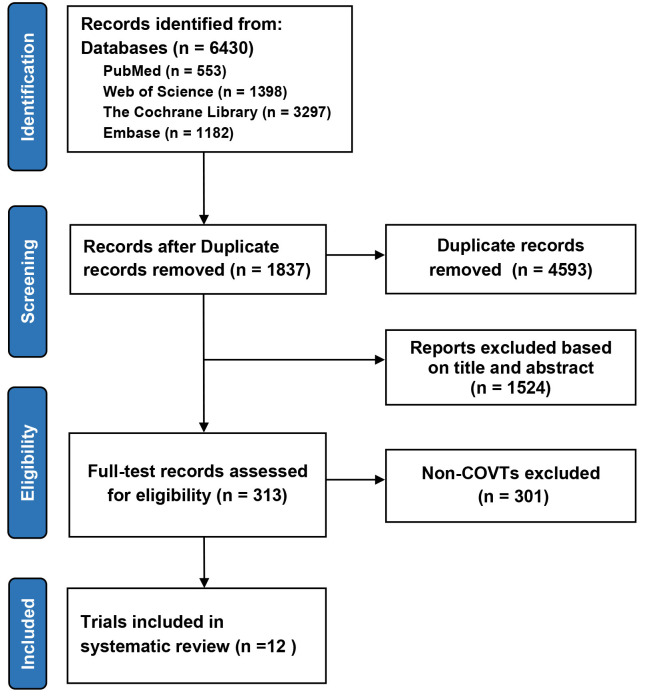
Methods: We performed a meta-analysis and systematic review of CVOTs that compared SGLT2i with placebo. MEDLINE, Web of Science, The Cochrane Library and Embase were systematically searched from inception to December 2022. We included CVOTs reporting cardiovascular or renal outcomes with a follow-up duration of at least 6 months.
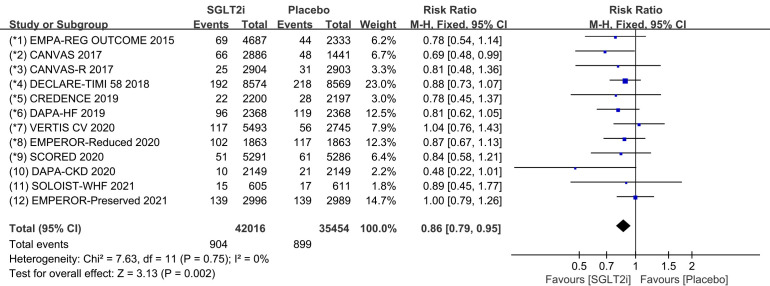
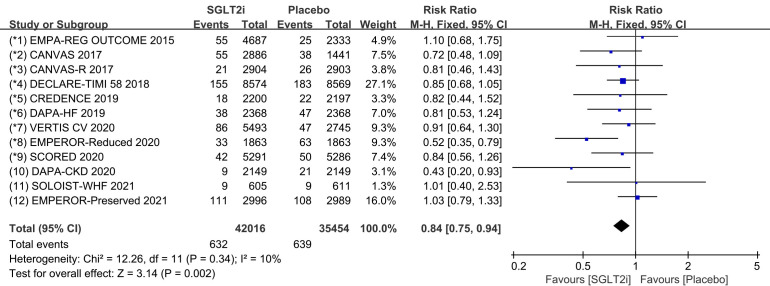
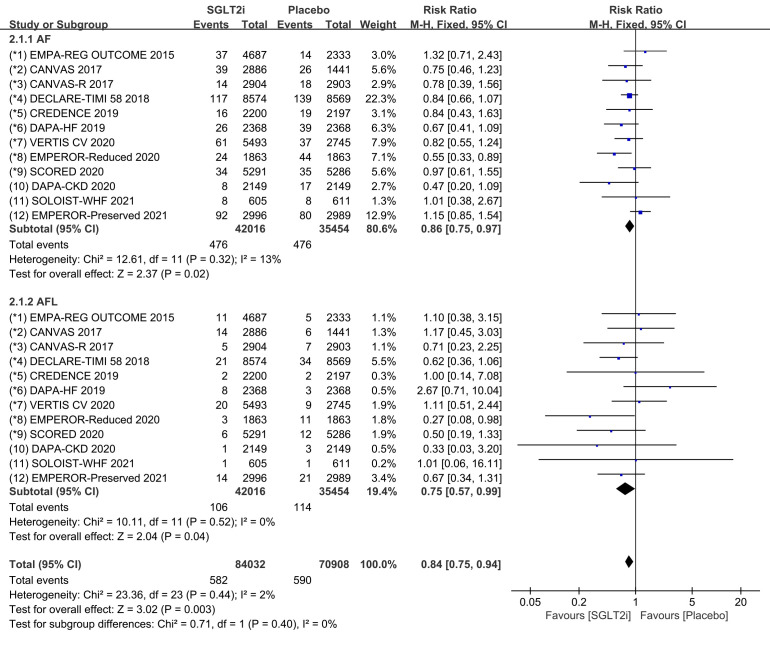
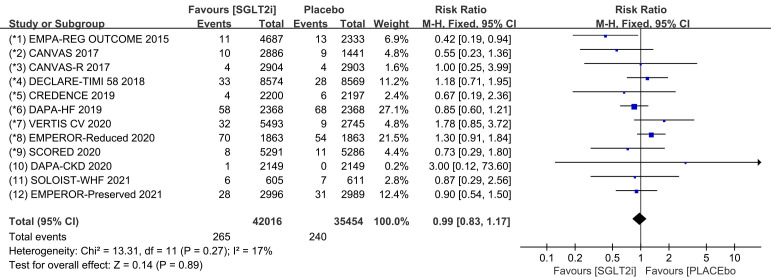
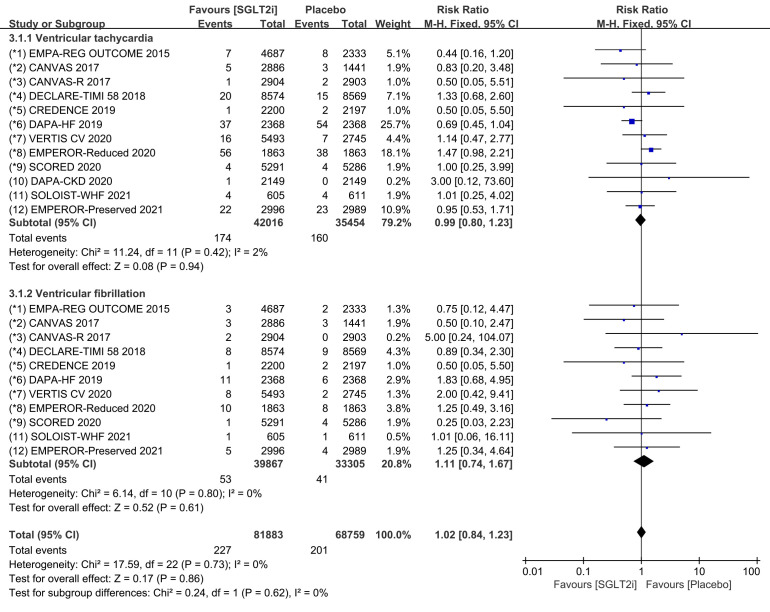
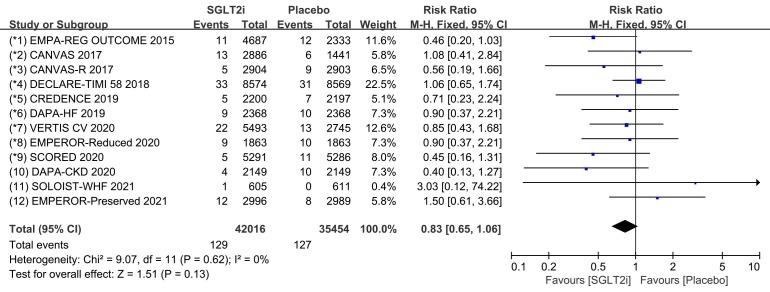
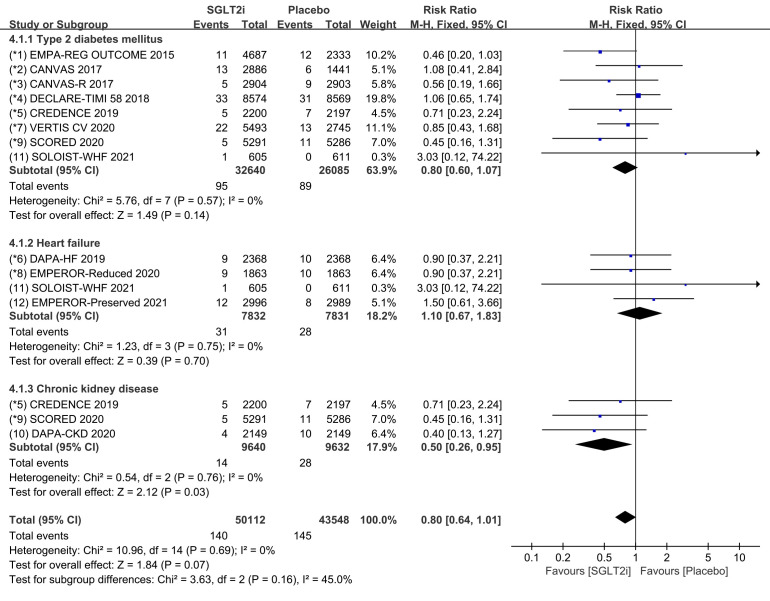
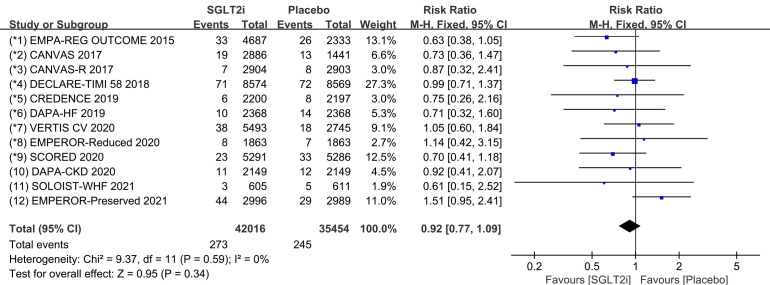
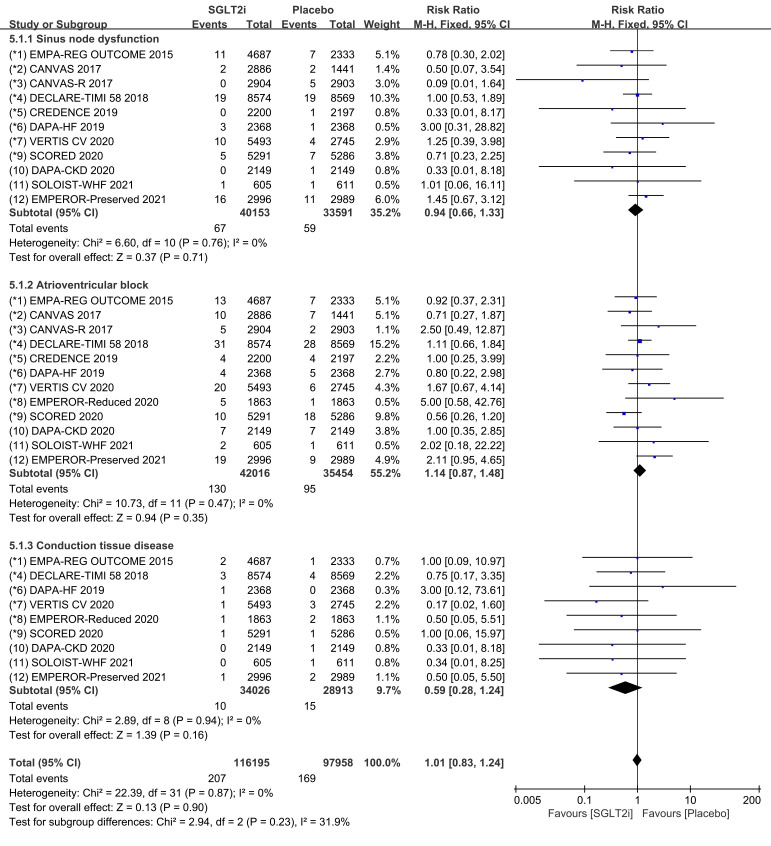
Results: A total of 12 CVOTs with 77,470 participants were included in this meta-analysis (42,016 SGLT2i vs 35,454 control), including patients with T2DM, heart failure (HF), or chronic kidney disease (CKD). Follow-up duration ranged from 9 months to 5.65 years. Medications included empagliflozin, canagliflozin, dapagliflozin and ertugliflozin. SGLT2i were associated with a lower risk of tachycardia (risk ratio (RR) 0.86; 95% confidence interval (CI) 0.79-0.95), supraventricular tachycardia (SVT; RR 0.84; 95% CI 0.75-0.94), atrial fibrillation (AF; RR 0.86; 95% CI 0.75-0.97) and atrial flutter (AFL; RR 0.75; 95% CI 0.57-0.99) in patients with T2DM, HF and CKD. SGLT2i could also reduce the risk of cardiac arrest in CKD patients (RR 0.50; 95% CI 0.26-0.95). Besides, SGLT2i therapy was not associated with a lower risk of ventricular arrhythmia and bradycardia.
Conclusions: SGLT2i therapy is associated with significantly reduced the risk of tachycardia, SVT, AF, and AFL in patients with T2DM, HF, and CKD. In addition, SGLT2i could also reduce the risk of cardiac arrest in CKD patients. Further researches are needed to fully elucidate the antiarrhythmic mechanism of SGLT2i.
Keywords: arrhythmia; bradyarrhythmia; bradycardia; cardiac arrest; meta-analysis; sodium-glucose cotransporter 2 inhibitors; systematic review; tachyarrhythmia; tachycardia.
Copyright: © 2023 The Author(s). Published by IMR Press.
Conflict of interest statement
The authors declare no conflict of interest.
Figures
References
-
- Tonelli M, Straus S. Increasing Societal Benefit From Cardiovascular Drugs. Circulation . 2022;146:1627–1635. - PubMed
-
- Scheen AJ. Sodium-glucose cotransporter type 2 inhibitors for the treatment of type 2 diabetes mellitus. Nature Reviews Endocrinology . 2020;16:556–577. - PubMed
-
- US Food and Drug Administration . Guidance for industry on diabetes mellitus—evaluating cardiovascular risk in new antidiabetic therapies to treat type 2 diabetes . Food and Drug Administration; Silver Spring: 2008.
-
- Sarapultsev P, Yushkov B, Sarapultsev A. Prevalence of arrhythmias in patients with type 2 diabetes and the role of structural changes in myocardium in their development. Diabetes & Metabolic Syndrome . 2017;11:S567–S576. - PubMed
Publication types
LinkOut - more resources
Full Text Sources
Research Materials
Miscellaneous