


Variations in definitions used for describing restrictive care practices (seclusion and restraint) in adult mental health inpatient units: a systematic review and content analysis
- PMID: 39080007
- PMCID: PMC11790767
- DOI: 10.1007/s00127-024-02739-6
Variations in definitions used for describing restrictive care practices (seclusion and restraint) in adult mental health inpatient units: a systematic review and content analysis
Abstract
Purpose: The main purpose of this review was to (1) identify thematic elements within definitions used by recently published literature to describe the constructs of physical/mechanical restraint, seclusion and chemical restraint in adult mental health inpatient units.
Methods: We conducted a comprehensive literature search of six databases (Scopus, MEDLINE, PsycINFO, Web of Science, Embase, and CINAHL-Plus). In this review, we conducted content analysis to synthesize evidence to understand and compare the commonalities and discrepancies in conceptual elements that were incorporated within the definitions of different forms of restrictive care practices.
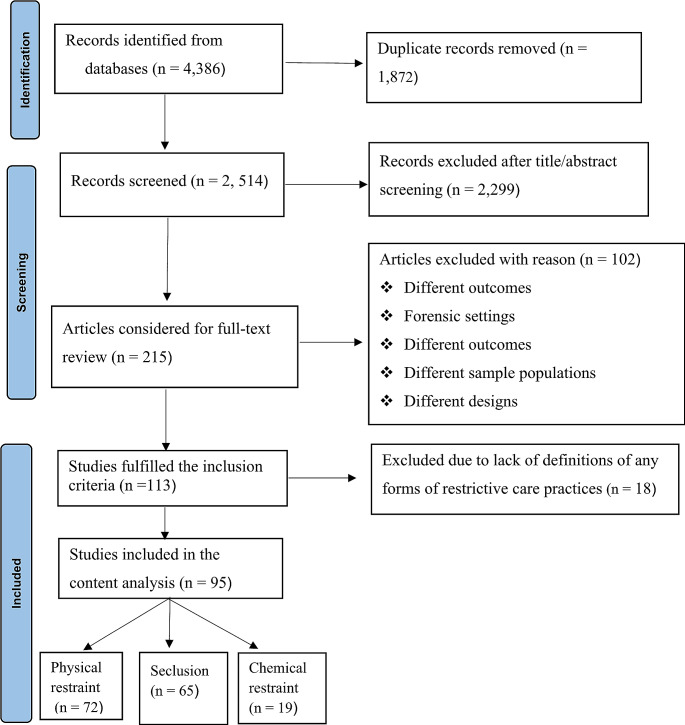
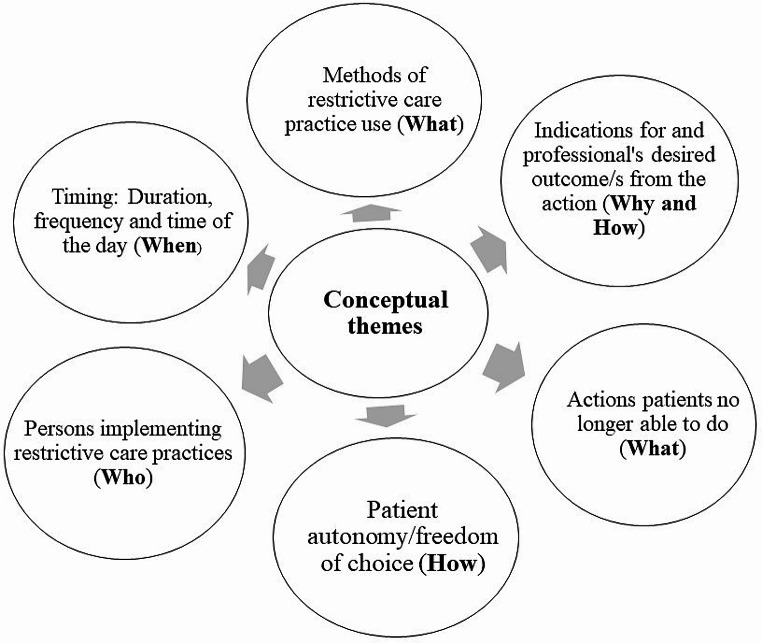
Results: A total of 95 studies that provided definitions for different forms of restrictive care practices [physical/mechanical restraint (n = 72), seclusion (n = 65) and chemical restraint (n = 19)] were included in this review. Significant variations existed in the conceptual domains presented within the applied definitions of physical/mechanical restraint, seclusion, and chemical restraint. Conceptual themes identified in this review were methods of restrictive care practice, reasons and desired outcomes, the extent of patient restriction during restrictive care practice episodes, timing (duration, frequency, and time of the day), the level of patient autonomy, and the personnel implementing these practices.
Conclusions: Inconsistencies in the terminologies and conceptual boundaries used to describe the constructs of different forms of restrictive care practices underscore the need to move forward in endorsing consensus definitions that reflect the diverse perspectives, ensuring clarity and consistency in practice and research. This will assist in validly measuring and comparing the actual trends of restrictive care practice use across different healthcare institutions and jurisdictions.
Keywords: Classification; Coercion; Definition; Immobilization; Mental health; Perception; Restraint; Restrictive practice; Seclusion; Understanding.
© 2024. The Author(s).
Conflict of interest statement
Declarations. Competing interests: The authors declare no competing interests.
Figures
References
-
- Lickiewicz J, Adamczyk N, Hughes PP, Jagielski P, Stawarz B, Makara-Studzińska M (2021) Reducing aggression in psychiatric wards using Safewards—A Polish study. Perspect Psychiatr Care 57(1) - PubMed
-
- Kawai Y, Hamamoto M, Miura A, Yamaguchi M, Masuda Y, Iwata M, Kanbe M, Ikematsu Y Prevalence of and factors associated with physical restraint use in the intensive care unit: a multicenter prospective observational study in Japan. Intern Emerg Med 2021:1–6 - PubMed
-
- Wilson C, Rouse L, Rae S, Kar Ray M (2017) Is restraint a ‘necessary evil’in mental health care? Mental health inpatients’ and staff members’ experience of physical restraint. Int J Ment Health Nurs 26(5):500–512 - PubMed
-
- Gaskin C (2013) Reducing restrictive interventions: literature review and document analysis. Department of Health and Human Services, Melbourne, Vic
Publication types
MeSH terms
LinkOut - more resources
Full Text Sources
Medical
