


Harnessing DNA replication stress to target RBM10 deficiency in lung adenocarcinoma
- PMID: 39080280
- PMCID: PMC11289143
- DOI: 10.1038/s41467-024-50882-0
Harnessing DNA replication stress to target RBM10 deficiency in lung adenocarcinoma
Abstract
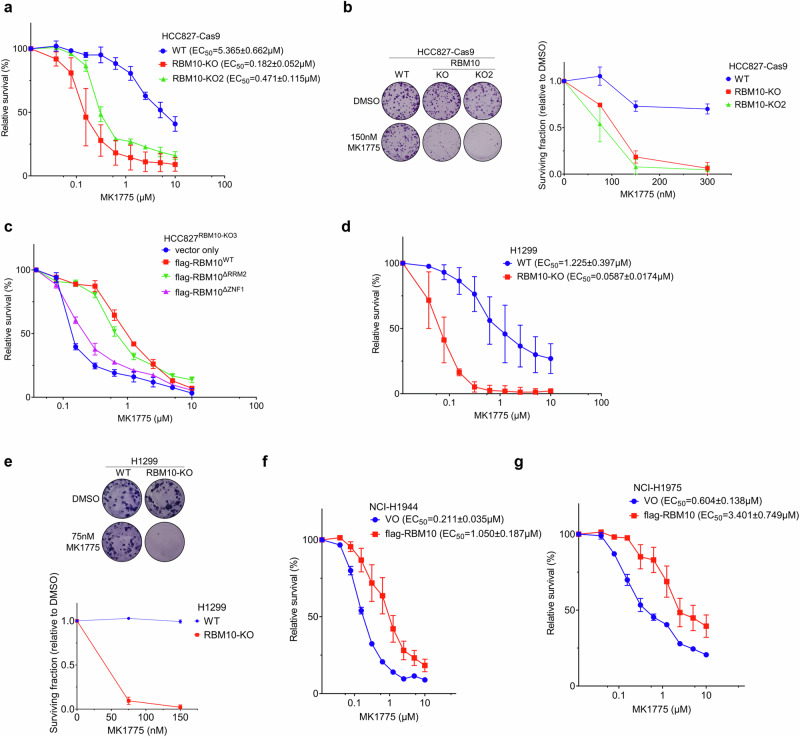
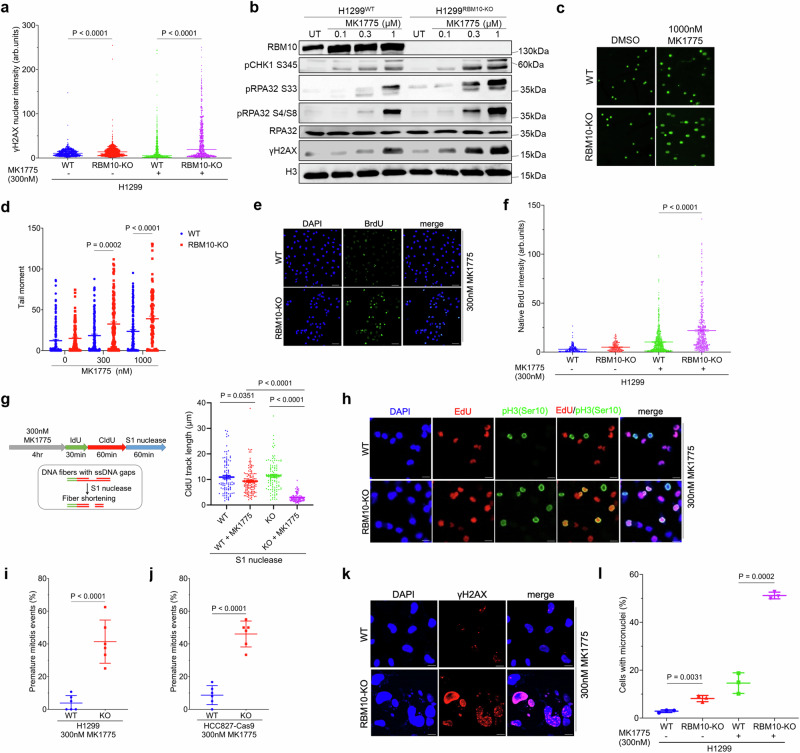
The splicing factor RNA-binding motif protein 10 (RBM10) is frequently mutated in lung adenocarcinoma (LUAD) (9-25%). Most RBM10 cancer mutations are loss-of-function, correlating with increased tumorigenesis and limiting the efficacy of current LUAD targeted therapies. Remarkably, therapeutic strategies leveraging RBM10 deficiency remain unexplored. Here, we conduct a CRISPR-Cas9 synthetic lethality (SL) screen and identify ~60 RBM10 SL genes, including WEE1 kinase. WEE1 inhibition sensitizes RBM10-deficient LUAD cells in-vitro and in-vivo. Mechanistically, we identify a splicing-independent role of RBM10 in regulating DNA replication fork progression and replication stress response, which underpins RBM10-WEE1 SL. Additionally, RBM10 interacts with active DNA replication forks, relying on DNA Primase Subunit 1 (PRIM1) that synthesizes Okazaki RNA primers. Functionally, we demonstrate that RBM10 serves as an anchor for recruiting Histone Deacetylase 1 (HDAC1) to facilitate H4K16 deacetylation and R-loop homeostasis to maintain replication fork stability. Collectively, our data reveal a role of RBM10 in fine-tuning DNA replication and provide therapeutic arsenal for targeting RBM10-deficient tumors.
© 2024. The Author(s).
Conflict of interest statement
The authors declare no competing interests.
Figures




References
MeSH terms
Substances
Grants and funding
LinkOut - more resources
Full Text Sources
Medical
Miscellaneous
