Heart Failure With Preserved Ejection Fraction and Frailty: From Young to Superaged Coexisting HFpEF and Frailty
- PMID: 39081641
- PMCID: PMC11284337
- DOI: 10.36628/ijhf.2023.0064
Heart Failure With Preserved Ejection Fraction and Frailty: From Young to Superaged Coexisting HFpEF and Frailty
Abstract
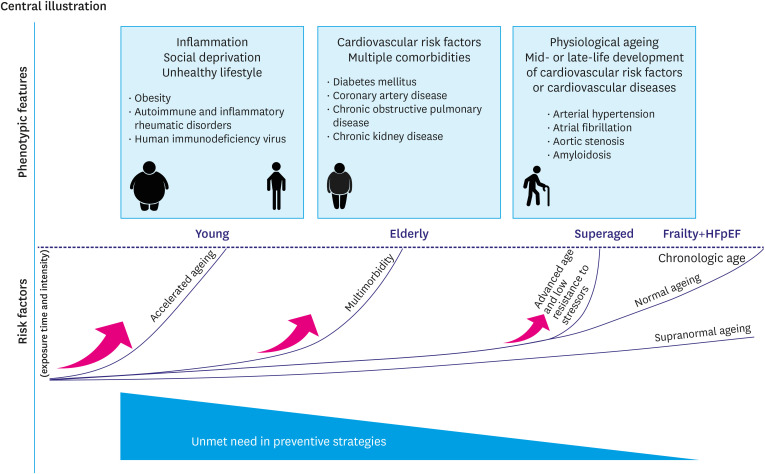
Being commonly diagnosed in elderly women and associated with comorbidities as well as ageing-related cardio-vascular changes, heart failure with preserved ejection fraction (HFpEF) has been recently considered as a distinct cardiogeriatric syndrome. Frailty is another frequent geriatric syndrome. HFpEF and frailty share common underlying mechanisms, often co-exist, and represent each other's risk factors. A threshold of 65 years old is usually used to screen patients for both frailty and HFpEF in research and clinical settings. However, both HFpEF and frailty are very heterogenous conditions that may develop at younger ages. In this review we aim to provide a broader overview on the coexistence of HFpEF and frailty throughout the lifetime. We hypothesize that HFpEF and frailty patients' profiles (young, elderly, superaged) represent a continuum of the common ageing process modified by cumulative exposure to risk factors resulting to a presentation of HFpEF and frailty at different ages. We believe, that suggested approach might stimulate assessment of frailty in HFpEF assessment and vice versa regardless of age and early implementation of targeted interventions. Future studies of pathophysiology, clinical features, and outcomes of frailty in HFpEF by age are needed.
Keywords: Diagnosis; Frail elderly; Frailty; Heart failure; Middle aged; Young adult.
Copyright © 2024. Korean Society of Heart Failure.
Conflict of interest statement
Conflict of Interest: The authors have no financial conflicts of interest.
Figures
References
Publication types
LinkOut - more resources
Full Text Sources