


Structures, Organization, and Delivery of Kidney Care to Children Living in Low-Resource Settings
- PMID: 39081753
- PMCID: PMC11284437
- DOI: 10.1016/j.ekir.2024.04.060
Structures, Organization, and Delivery of Kidney Care to Children Living in Low-Resource Settings
Abstract
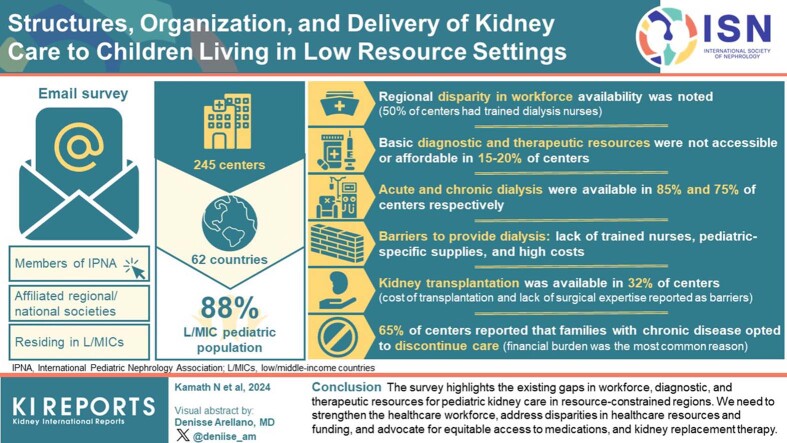
Introduction: There is a disparity in the availability of health care for children in resource-constrained countries. The International Pediatric Nephrology Association (IPNA) commissioned an initiative exploring the challenges in the care of children with kidney disease in low- or middle-income countries (LMICs) with a focus on human, diagnostic, and therapeutic resources.
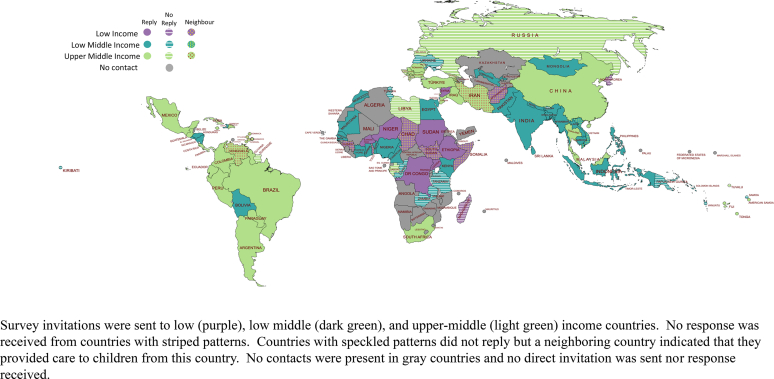
Methods: A survey was sent by e-mail to all members of IPNA and its affiliated regional or national societies residing in LMICs. Data were extracted from individual responses after merging duplicate data. Descriptive analysis was done using Microsoft Excel.
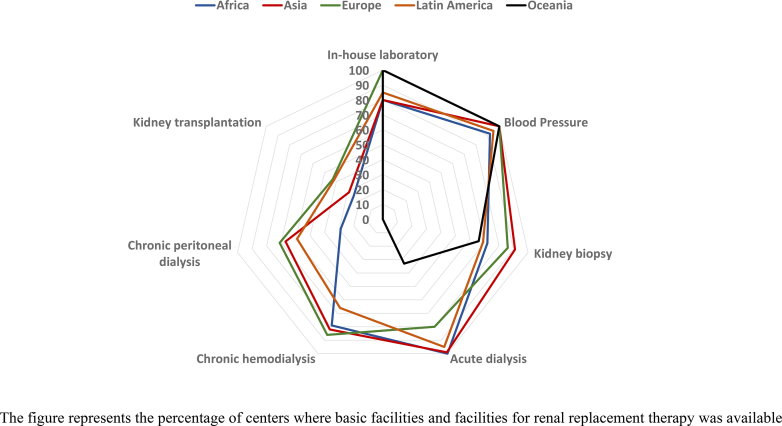
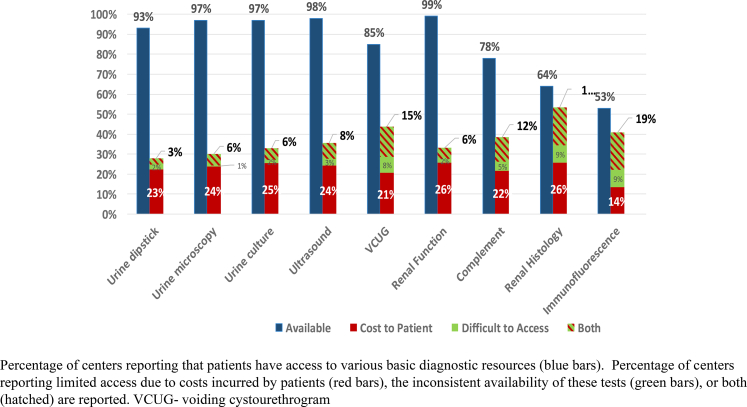
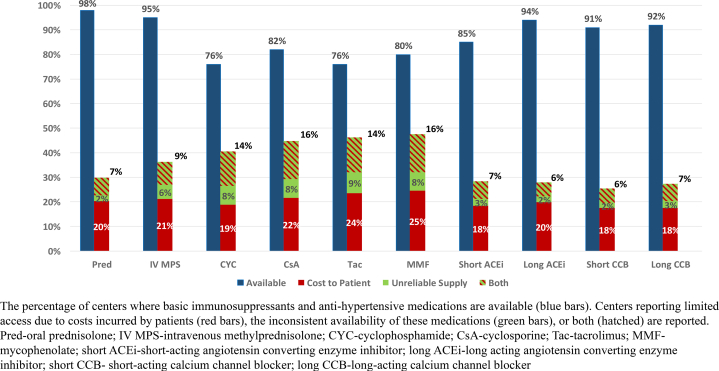
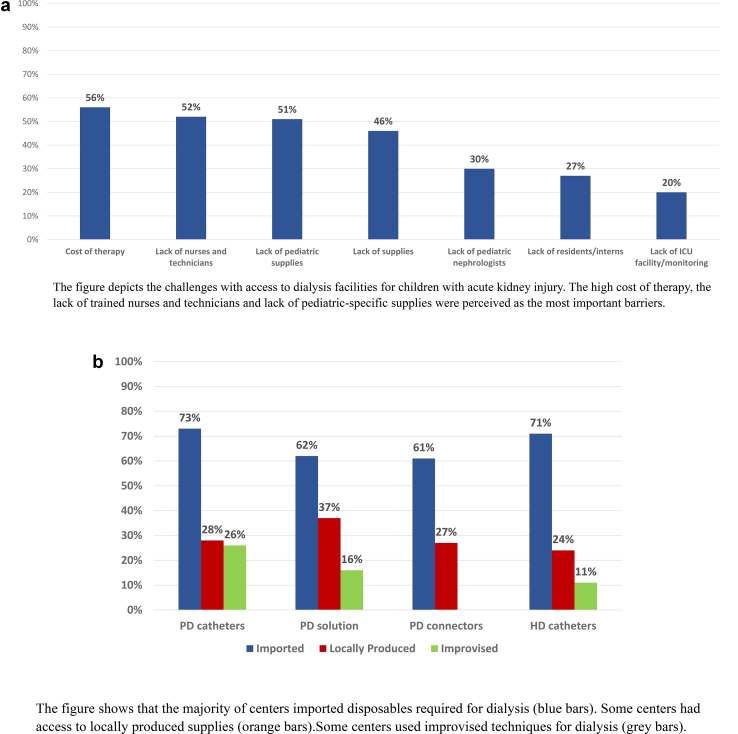
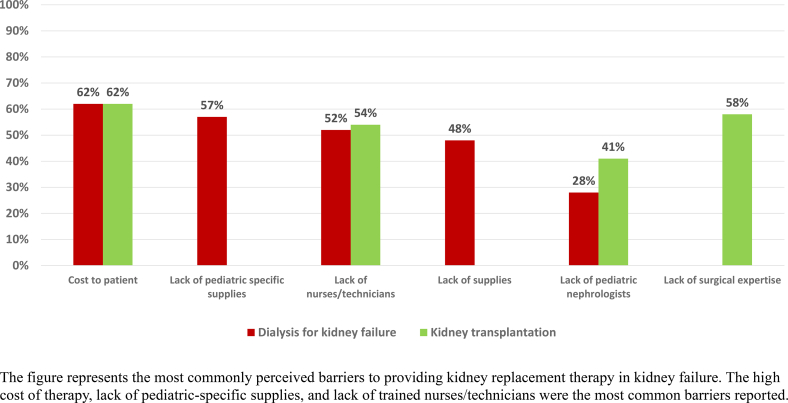
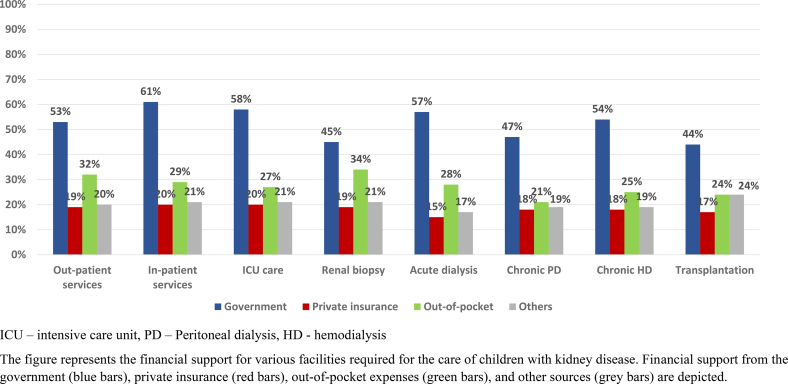
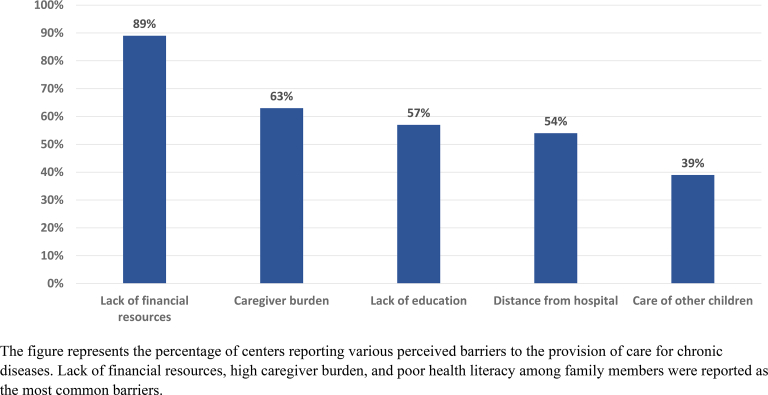
Results: Responses were obtained from 245 centers across 62 countries representing 88% of the LMIC pediatric population. Regional disparity in the availability of basic diagnostic and therapeutic resources was noted. Even when resources were available, they were not accessible or affordable in 15% to 20% of centers. Acute and chronic dialysis were available in 85% and 75% of centers respectively. Lack of trained nurses, pediatric-specific supplies, and high costs were barriers to providing dialysis in these regions. Kidney transplantation was available in 32% of centers, with the cost of transplantation and lack of surgical expertise reported as barriers. About 65% of centers reported that families with chronic disease opted to discontinue care, with financial burden as the most common reason cited.
Conclusion: The survey highlights the existing gaps in workforce, diagnostic, and therapeutic resources for pediatric kidney care in resource-constrained regions. We need to strengthen the health care workforce, address disparities in health care resources and funding, and advocate for equitable access to medications, and kidney replacement therapy (KRT).
Keywords: barriers; challenges; dialysis; low and middle-income countries; pediatric kidney care resources.
© 2024 International Society of Nephrology. Published by Elsevier Inc.
Figures
References
-
- International Society of Nephrology Global kidney health atlas 2023. www.theisn.org/global-atlas
-
- International Society of Nephrology Global Kidney Health Atlas 2019. https://archive.theisn.org/global-atlas
-
- James S.L., Abate D., Abate K.H. Global, regional, and national incidence, prevalence, and years lived with disability for 354 diseases and injuries for 195 countries and territories, 1990-2017: a systematic analysis for the Global Burden of Disease Study 2017. Lancet. 2018;392:1789–1858. doi: 10.1016/S0140-6736(18)32279-7. - DOI - PMC - PubMed
LinkOut - more resources
Full Text Sources
Research Materials
