


Case report: Anti-ARHGAP26 autoantibodies in atypical dementia with Lewy bodies
- PMID: 39081998
- PMCID: PMC11285637
- DOI: 10.3389/frdem.2023.1227823
Case report: Anti-ARHGAP26 autoantibodies in atypical dementia with Lewy bodies
Abstract
Background: Dementia with Lewy bodies (DLB) is the second most common type of neurodegenerative dementia. Here, we report a case of dementia associated with anti-Rho-GTPase-activating protein 26 (ARHGAP26) autoantibodies, which have never been previously linked to DLB.
Methods: We describe the case of a 78-year-old man who underwent cerebrospinal fluid (CSF) analysis, magnetic resonance imaging (MRI), 18F-fluorodesoxyglucose positron emission tomography (FDG-PET), and a detailed neuropsychological evaluation.
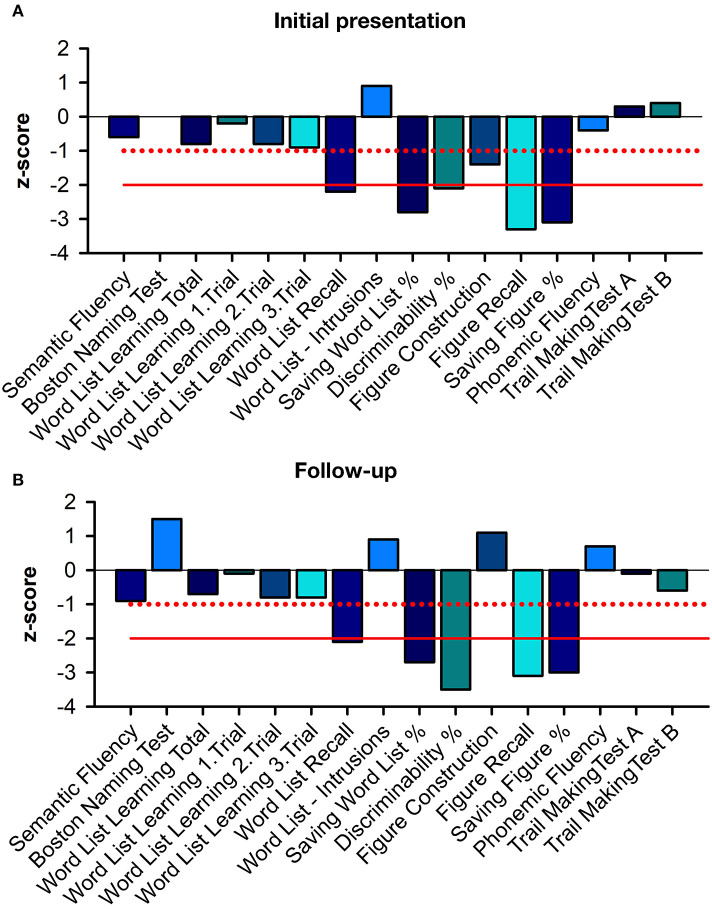
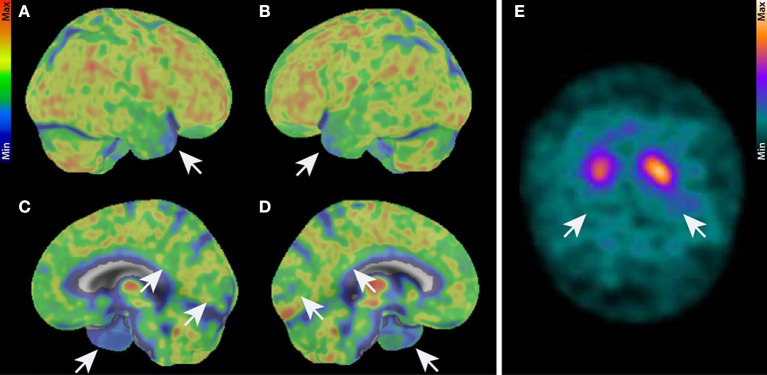
Results: The patient presented with mild dementia syndrome associated with extrapyramidal symptoms. Neuropsychological testing revealed impaired cognitive flexibility, figural memory, and verbal memory. Fluctuating cognitive abilities with deficits in attention-executive dysfunction and visuoconstruction also developed over time. A brain MRI showed reduced biparietal and cerebellar brain volume with generalized accentuation of the outer CSF spaces. The patient's CSF revealed anti-ARHGAP26 autoantibodies, which were also detectable in serum. In the differential complementary imaging diagnosis at 2 years, an FDG-PET revealed decreased occupancy of the posterior cingulum and precuneus. Although the FDG-PET, MRI, and clinical findings were potentially consistent with Alzheimer's disease, negative amyloid biomarkers in the CSF made an AD diagnosis highly unlikely. Single photon emission computed tomography (SPECT) with [(123)I] N-omega-fluoropropyl-2beta-carbomethoxy-3beta-{4-iodophenyl}nortropane ([(123)I]FP-CIT) showed right-sided predominance, reduced dopamine transporter uptake in the putamen, consistent with a positive indicative biomarker finding typical of DLB. Considering the clinically probable DLB associated with the two core features of Parkinsonism and fluctuating cognition with deficits in attention, supported by an abundant tracer uptake in the right putamen and lower uptake in the left putamen on 123I-FP-CIT-SPECT as an indicative biomarker, we started an antidementia drug using a cholinesterase inhibitor.
Conclusions: Our report shows that atypical DLB may be associated with anti-ARHGAP26 autoantibodies, although their role and significance in the pathogenesis of DLB are unknown. However, it has to be mentioned that it is also possible that antibody-specific synthesis of anti-ARHGAP26 autoantibodies is a hallmark of a rare autoimmune disease that may cause the clinical and laboratory features involving altered dopamine transporter uptake on 123I-FP-CIT-SPECT, dementia, and mild Parkinson's symptoms rather than idiopathic DLB with only two core DLB features and inconsistent cognitive and imaging findings. Further research is needed to investigate the role of these autoantibodies in different dementias, particularly in DLB and mixed DLB-AD types.
Keywords: ARHGAP26 autoantibodies; Alzheimer's dementia; autoimmunity; cognition; dementia with Lewy bodies.
Copyright © 2023 Hansen, Rentzsch, Hirschel, Wiltfang, Schott, Bartels, Lange and Bouter.
Conflict of interest statement
The authors declare that the research was conducted in the absence of any commercial or financial relationships that could be construed as a potential conflict of interest. NH declared that he was an editorial board member of Frontiers, at the time of submission. This had no impact on the peer review process and the final decision.
Figures
References
-
- Bastiaansen A. E. M., vam Steenhoven R. W., Te Vaarwerk E. S., van der Flier W. M., Teunissen C., de Graaff E., et al. (2023). Antibodies associated with autoimmune encephalitis in patients with presumed neurodegenerative dementia. Neurol. Neuroimmunol. Neuroinflamm. 10, e200137. 10.1212/NXI.0000000000200137 - DOI - PMC - PubMed
Publication types
LinkOut - more resources
Full Text Sources
