


Family meals are associated with lower substance use in female adolescents
- PMID: 39082079
- PMCID: PMC11781996
- DOI: 10.1111/famp.13039
Family meals are associated with lower substance use in female adolescents
Abstract
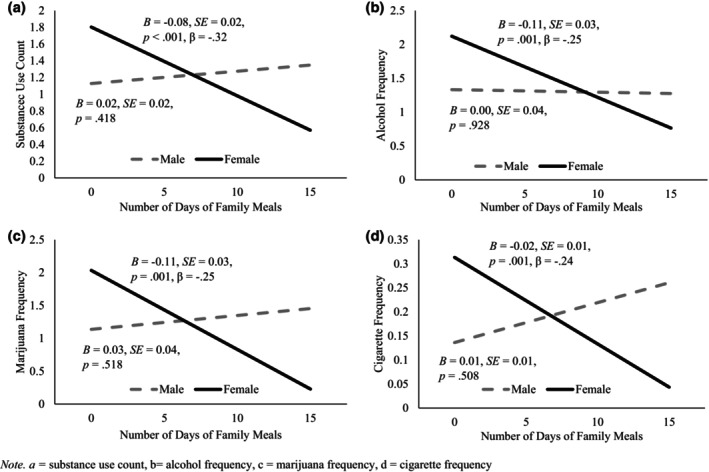
Adolescents, especially female youth, who have more family meals tend to be at lower risk for substance use. The present study tested whether family meals relate to substance use count and frequency during high school, whether associations differ by gender, and whether other family-related variables explain these associations. A community sample of 316 adolescents (M age = 16.40, SD = 0.74; 56.96% female; 41.77% Latine, 23.10% Asian American, 29.11% European American, 6.01% from other ethnic backgrounds including Middle Eastern and African American) reported the number of substances they have ever used and how often they used alcohol, marijuana, and cigarettes, and completed measures of parental support and family cohesion. Across 15 days, they reported whether they had a family meal, got along with parents, and spent leisure time with their family each day. Regression models tested associations between frequency of family meals and substance use, whether associations differed by gender, and whether associations were explained by other family-related variables. Results indicated that more frequent family meals were associated with lower substance use count and less frequent alcohol, marijuana, and cigarette use among female adolescents but not male adolescents. Other daily family experiences were unrelated to substance use, and family meal frequency was independently related to lower substance use after accounting for parental support and family cohesion. Taken together, more frequent family meals in high school may reduce substance use risk for female adolescents, and interventions could consider promoting family meals in addition to other positive family values.
Keywords: adolescent; family dinner; family meals; substance use.
© 2024 The Author(s). Family Process published by Wiley Periodicals LLC on behalf of Family Process Institute.
Figures
References
-
- Andretta, J. R. , McKay, M. T. , Harvey, S. A. , & Perry, J. L. (2017). Inventory of parent and peer attachment–revised scores in adolescents: A psychometric and person‐oriented study. Family Relations, 66(3), 527–540. 10.1111/fare.12252 - DOI
-
- Berge, J. M. , Beebe, M. , Martínez Smith, M. C. , Tate, A. , Trofholz, A. , & Loth, K. (2019). Ecological momentary assessment of the breakfast, lunch, and dinner family meal environment in racially/ethnically diverse and immigrant households. Journal of Nutrition Education and Behavior, 51(6), 658–676. 10.1016/j.jneb.2019.03.002 - DOI - PMC - PubMed
MeSH terms
Grants and funding
LinkOut - more resources
Full Text Sources
Medical
