Epidemiological, and molecular investigation of Canine parvovirus-2 infection in Egypt
- PMID: 39083208
- PMCID: PMC11291436
- DOI: 10.4142/jvs.23270
Epidemiological, and molecular investigation of Canine parvovirus-2 infection in Egypt
Abstract
Importance: Canine parvovirus enteritis (CPE) is a contagious viral disease of dogs caused by the canine parvovirus-2 (CPV-2) associated with high morbidity and mortality rates. CPV-2 has a high global evolutionary rate. Molecular characterization of CPV-2 and understanding its epidemiology are essential for controlling CPV-2 infections.
Objective: This study examined the risk factors and survival outcomes of dogs infected with CPV-2. Molecular characterization of CPV-2 genotypes circulating in Egypt was performed to determine the evolution of CPV-2 nationally and globally.
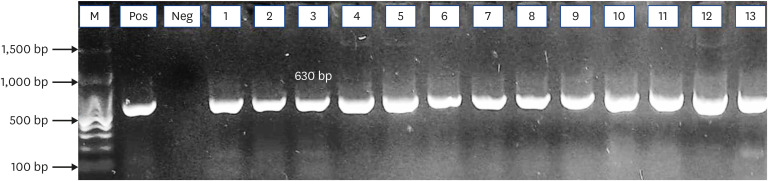
Methods: An age-matched case-control study was conducted on 47 control and 47 CPV-infected dogs. Conditional logistic regression analysis examined the association between the potential risk factors and CPE in dogs. Survival analysis was performed to determine the survival pattern of the infected dogs. Thirteen fecal samples from infected dogs were collected to confirm the CPV genotype by CPV-2 VP2 gene sequencing, assembly of nucleotide sequences, and phylogenic analysis.
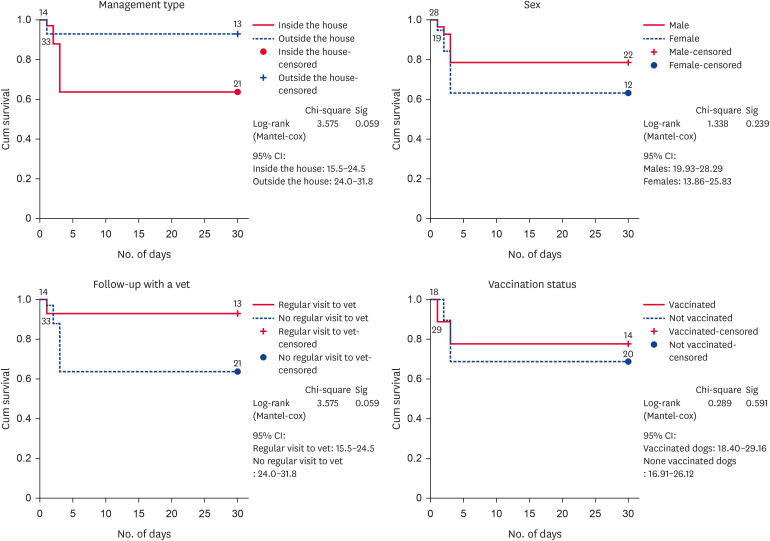
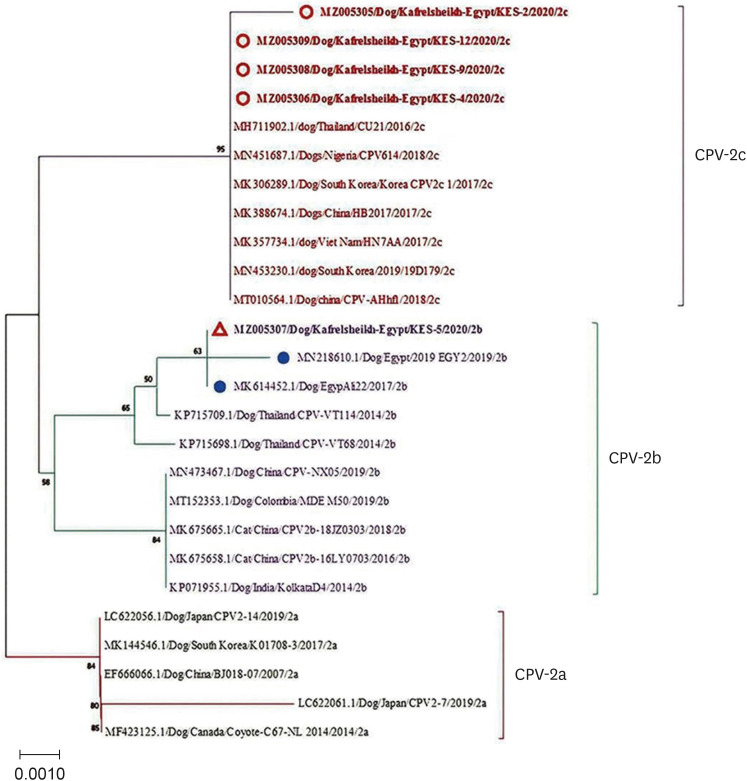
Results: Unvaccinated and roamer dogs had eight and 2.3 times higher risks of CPV infection than vaccinated dogs and non-roamer dogs, respectively. The risk of death from CPE was high among dogs without routine visits to veterinary clinics and among non-roamer dogs. Molecular characterization of CPV-2 confirmed its genotype identity and relationship with the CPV-2 c and b clade types.
Conclusions and relevance: This study highlights the potential factors for CPE control, especially vaccination and preventing dogs from roaming freely outside houses. Isolated CPV genotypes are closely related to southern Asian genotypes, suggesting a substantial opportunity for global transmission.
Keywords: Canine parvovirus; case-control study; phylogenetic biogeography; risk factors; sequence analysis.
© 2024 The Korean Society of Veterinary Science.
Conflict of interest statement
The authors declare no conflicts of interest.
Figures
References
-
- Appel MJ, Scott FW, Carmichael LE. Isolation and immunisation studies of a canine parco-like virus from dogs with haemorrhagic enteritis. Vet Rec. 1979;105(8):156–159. - PubMed
-
- Black JW, Holscher MA, Powell HS, Byerly CS. Parvoviral enteritis and panleukopenia in dogs. Vet Med Small Anim Clin. 1979;74(1):47–50. - PubMed
-
- Greene CE. In: Infectious Diseases of the Dog and Cat. 4th ed. Sykes JE, Greene CE, editors. Saint Louis: Elsevier Saunders; 2013. Canine enteric viral infections; pp. 80–91.
-
- Decaro N, Campolo M, Desario C, Elia G, Martella V, Lorusso E, et al. Maternally-derived antibodies in pups and protection from canine parvovirus infection. Biologicals. 2005;33(4):261–267. - PubMed
-
- Prittie J. Canine parvoviral enteritis: a review of diagnosis, management, and prevention. J Vet Emerg Crit Care. 2004;14(3):167–176.
MeSH terms
Grants and funding
LinkOut - more resources
Full Text Sources
Research Materials
Miscellaneous