


'Everyone has heard of it, but no one knows what it is': a qualitative study of patient understandings and experiences of herpes zoster
- PMID: 39084872
- PMCID: PMC11755566
- DOI: 10.3399/BJGP.2024.0025
'Everyone has heard of it, but no one knows what it is': a qualitative study of patient understandings and experiences of herpes zoster
Abstract
Background: Shingles (herpes zoster), caused by reactivation of the varicella-zoster virus, is usually diagnosed and managed in primary care. The lifetime risk of shingles in the general population is approximately 30%, and it can have a detrimental effect on quality of life. There has been little qualitative research about patient experience and understanding of shingles.
Aim: To explore patient experiences and understanding of shingles.
Design and setting: Qualitative interviews with people with shingles recruited from primary care in England.
Method: Qualitative semi-structured remote interviews were undertaken with 29 participants in a randomised controlled trial in primary care in England (ATHENA, ISRCTN14490832). Participants were aged >49 years and were diagnosed within 6 days of shingles rash onset. Interviewees were sampled for diversity in terms of pain, intervention adherence, age, gender, and ethnicity. Data were analysed using reflexive thematic analysis.
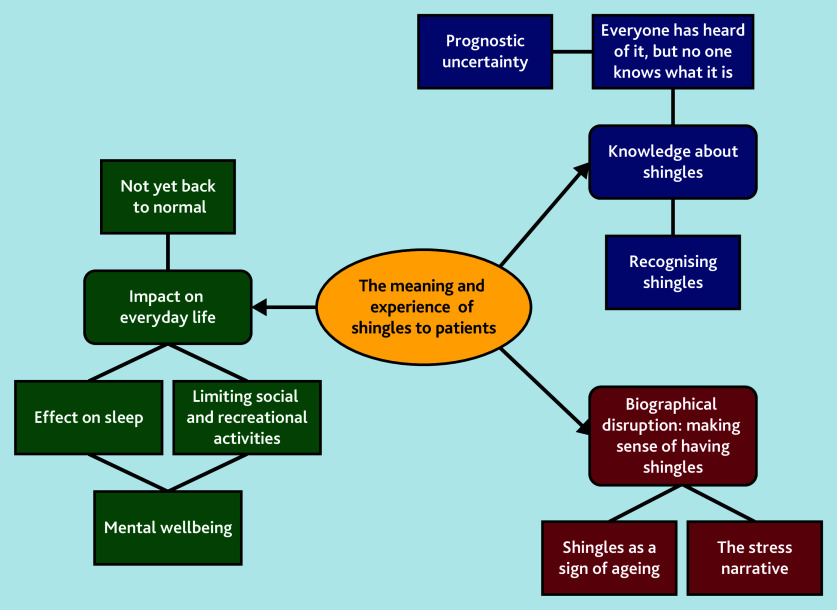
Results: Interviews took place in November 2022 to April 2023. Participants' understanding of shingles was limited, particularly pre-diagnosis. A common theme was that 'everyone has heard of it, but no one knows what it is'. Television campaigns about the shingles vaccination programme helped some to recognise the rash. Shingles was understood as a disease with a variable prognosis, resulting in a sense of uncertainty about the significance when diagnosed. Participants reported a range of symptoms, which impacted on everyday life. Some people thought their diagnosis was caused by poor mental health or challenging life circumstances, a perception sometimes reinforced by healthcare professionals. Many participants sought meaning in their diagnosis, reflecting on, and sometimes changing, their life and circumstances.
Conclusion: Primary care practitioners should be aware of the broad spectrum of patient knowledge, and the potential for better understanding to promote early attendance and treatment to reduce the impact of shingles.
Keywords: general practice; pain; patient experience; qualitative research; shingles.
© The Authors.
Conflict of interest statement
Robert Johnson is a member of a Data Safety Monitoring Board for GSK zoster vaccine studies. Anthony E Pickering receives research funding from Eli Lilly and is a member of an advisory board for Lateral Pharma. The remaining authors have declared no competing interests.
References
-
- Johnson RW, Rice ASC. Clinical practice. Postherpetic neuralgia. N Engl J Med. 2014;371(16):1526–1533. - PubMed
MeSH terms
Substances
LinkOut - more resources
Full Text Sources
Medical
Miscellaneous
