


A new model for determining risk of male infertility from serum hormone levels, without semen analysis
- PMID: 39085312
- PMCID: PMC11291977
- DOI: 10.1038/s41598-024-67910-0
A new model for determining risk of male infertility from serum hormone levels, without semen analysis
Abstract
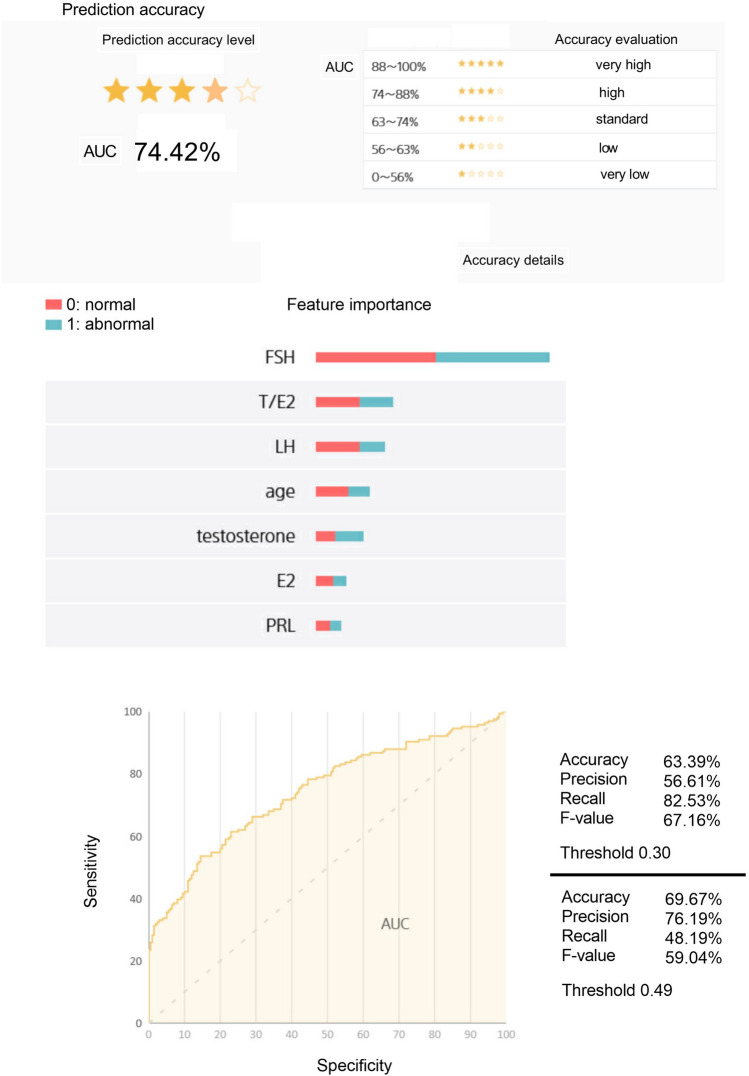
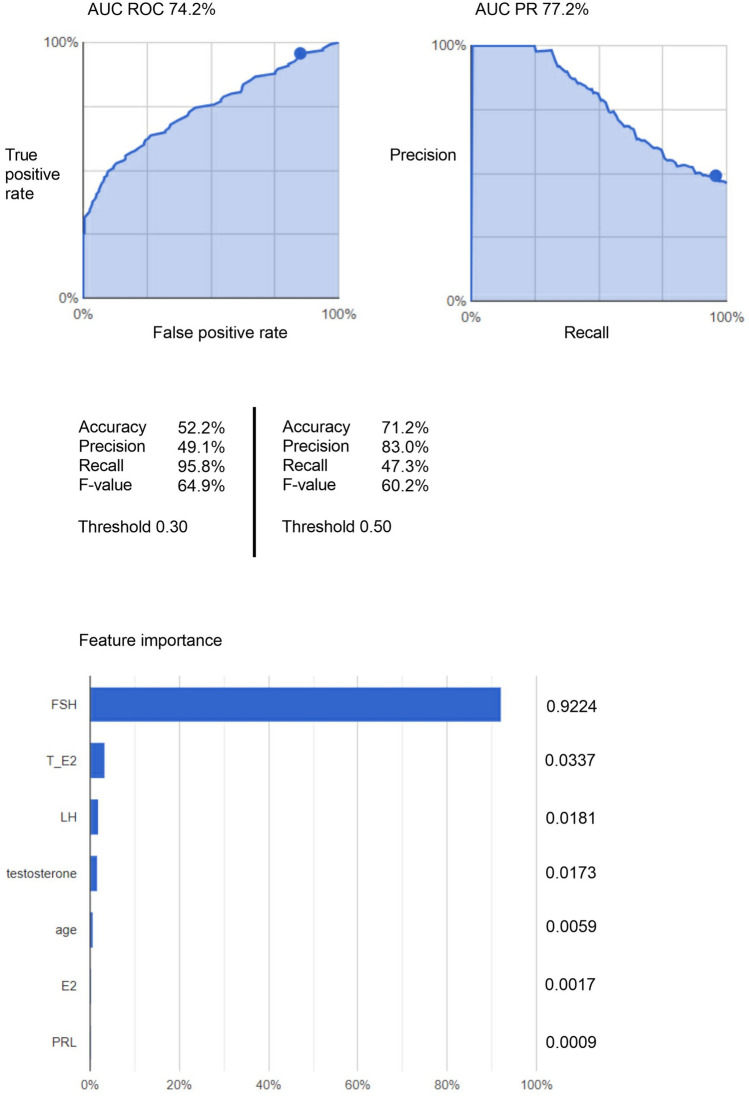
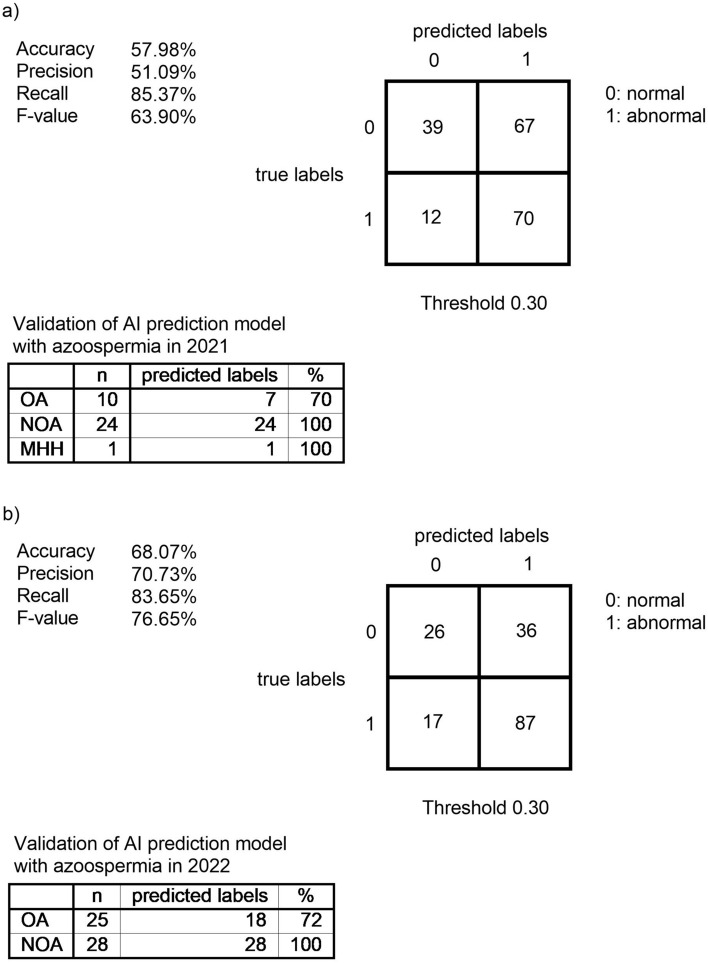
We investigated a screening method using only serum hormone levels and AI (artificial intelligence) predictive analysis. Among 3662 patients, numbers for NOA (non-obstructive azoospermia), OA (obstructive azoospermia), cryptozoospermia, oligozoospermia and/or asthenozoospermia, normal, and ejaculation disorder were 448, 210, 46, 1619, 1333, and 6, respectively. "Normal" was defined as semen findings normal according to the WHO (World Health Organization) Manual for Human Semen Testing of 2021. We extracted age, LH (luteinizing hormone), FSH (follicle stimulating hormone), PRL (prolactin), testosterone, E2 (estradiol), and T (testosterone)/E2 from medical records. A total motility sperm count of 9.408 × 10⁶ (1.4 ml × 16 × 106/ml × 42%) was defined as the lower limit of normal. The Prediction One-based AI model had an AUC (area under the curve) of 74.42%. For the AutoML Tables-based model, AUC ROC (receiver operating characteristic) was 74.2% and AUC PR (precision-recall) 77.2%. In a ranking of feature importance from 1st to 3rd, FSH came a clear 1st. T/E2 and LH ranked 2nd and 3rd for both Prediction One and AutoML Tables. Using data from 2021 and 2022 to verify the Prediction One-based AI model, the predicted and actual results for NOA were 100% matched in both years.
Keywords: Artificial intelligence; Hormonal evaluation; Machine learning; Male infertility; Semen analysis.
© 2024. The Author(s).
Conflict of interest statement
The authors declare no competing interests.
Figures
References
-
- Organization, W. H. WHO laboratory manual for the examination and processing of human semen 6th edition. (2021).
MeSH terms
Substances
LinkOut - more resources
Full Text Sources
Medical
Research Materials
