


Successful management of large incarcerated inguinal hernia: A case report and literature review
- PMID: 39088976
- PMCID: PMC11342190
- DOI: 10.1016/j.ijscr.2024.110101
Successful management of large incarcerated inguinal hernia: A case report and literature review
Abstract
Introduction and importance: Hernias containing organs like the cecum, appendix, sigmoid colon, ureter, and omentum are less common compared to typical inguinal hernias involving the small intestine. Patients typically present with inguinoscrotal swelling.
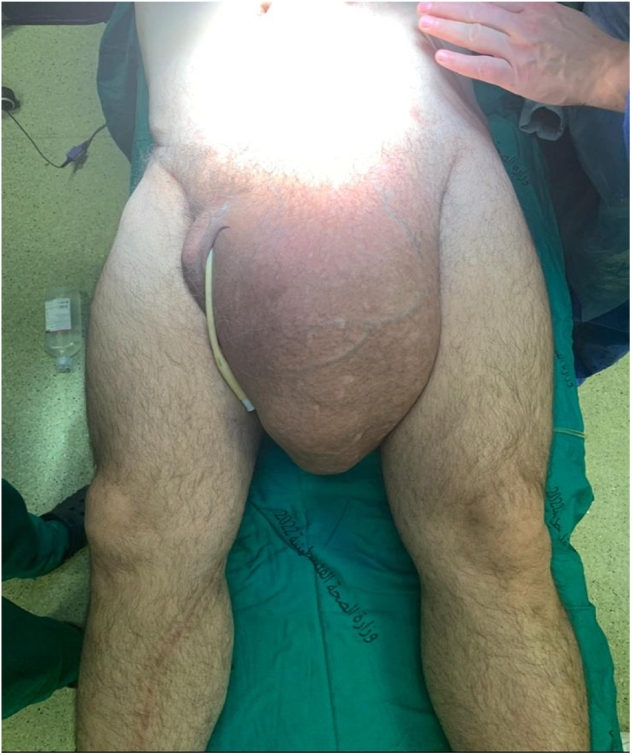
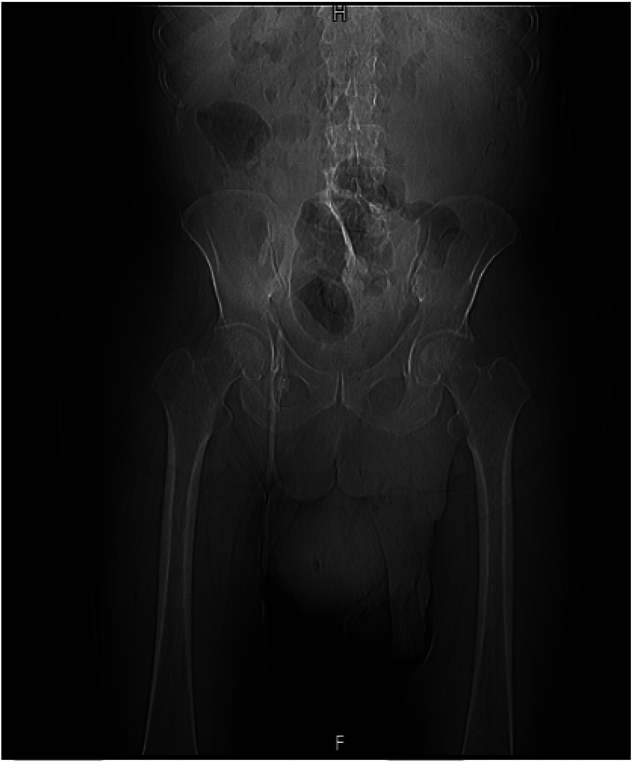
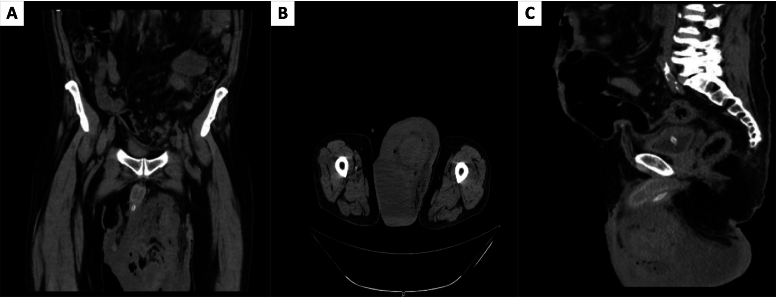
Case presentation: A 53-year-old male with ischemic heart disease, diabetes, and hypertension presented with vomiting and no bowel movement for 24 h. He had a long-standing left inguinoscrotal hernia and recently underwent cardiac catheterization. Examination showed a massive hernia and an empty rectum. Imaging confirmed a small bowel obstruction. Surgery revealed an incarcerated hernia containing multiple organs, which were reduced, and hernioplasty was performed. Postoperatively, he developed abdominal compartment syndrome, necessitating decompressive laparotomy. His abdomen was closed on day 13, and he was discharged on day 30.
Clinical discussion: Hernias, particularly when they become incarcerated, pose significant risks to patients. If untreated, they can progress to strangulated hernias, leading to bowel ischemia and potentially fatal outcomes.
Conclusion: Inguinal hernias are diagnosed primarily through clinical examination. It is rare for these hernias to contain the cecum, appendix, sigmoid colon, ureter, and omentum, and such cases are typically associated with intestinal obstruction.
Keywords: Case report; Hernia; Incarcerated; Inguinal; Scrotal.
Copyright © 2024 The Authors. Published by Elsevier Ltd.. All rights reserved.
Conflict of interest statement
Conflict of interest statement None.
Figures
References
-
- Hammoud M., Gerken J. StatPearls Publishing; Treasure Island, FL: 2022. Inguinal Hernia. ([PubMed] [Google Scholar]) - PubMed
-
- LeBlanc K.E., LeBlanc L.L., LeBlanc K.A. Inguinal hernias: diagnosis and management. https://pubmed.ncbi.nlm.nih.gov/23939566/ ([PubMed] [Google Scholar]) - PubMed
-
- Simsek A., Kocaaslan H., Dirican A., Ateş M. Factors affecting strangulation and necrosis in incarcerated abdominal wall hernias. Cyprus J. Med. Sci. 2021;5:279–283. (Google Scholar)
Publication types
LinkOut - more resources
Full Text Sources
