


GS-441524 and molnupiravir are similarly effective for the treatment of cats with feline infectious peritonitis
- PMID: 39091389
- PMCID: PMC11291256
- DOI: 10.3389/fvets.2024.1422408
GS-441524 and molnupiravir are similarly effective for the treatment of cats with feline infectious peritonitis
Abstract
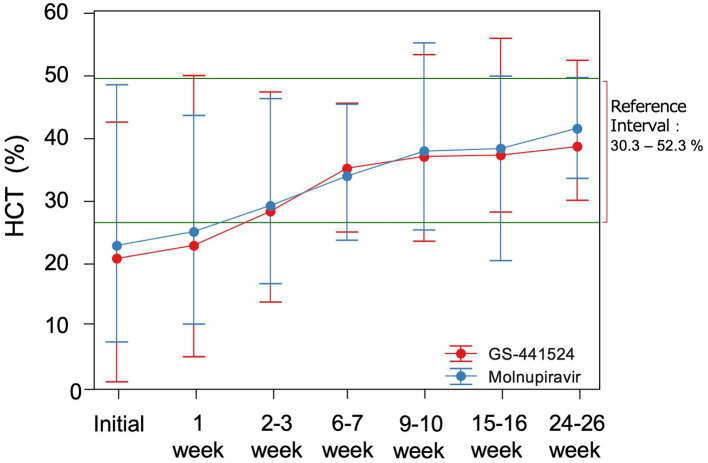
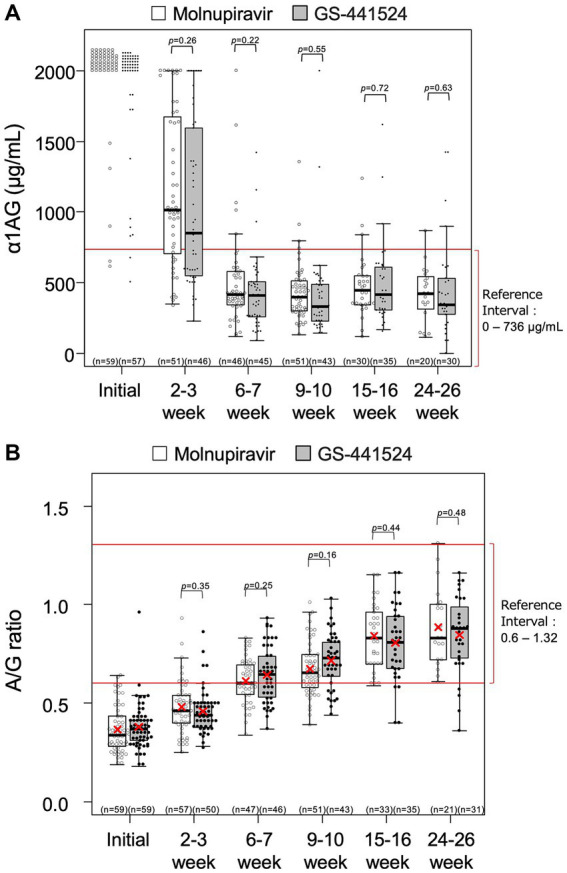
Although not registered for feline infectious peritonitis (FIP) in Japan, nucleoside analogs have shown efficacy and we have been offering them to owners of cats with FIP at our clinic since January 2020. The aim of this study was to investigate outcomes in cats with FIP who received GS-441524 or molnupiravir. Diagnosis of FIP was based on clinical signs, laboratory test results, and the presence of feline coronavirus RNA in blood or effusion aspirate. After providing verbal and written information, owners of cats with a presumptive diagnosis of FIP with a were offered antiviral treatment with commercially sourced GS-441524 from June 2020, and either GS-441524 or compounded molnupiravir from January 2022. Dosing was 12.5-25 mg/kg/day for GS-441524 and 20-40 mg/kg/day for molnupiravir, depending on the presence of effusion and neurological and/or ocular signs, and continued for 84 days. Overall, 118 cats with FIP (effusive in 76) received treatment, 59 with GS-4421524 and 59 with molnupiravir. Twenty cats died, 12/59 (20.3%) in the GS-441524 group and 8/59 (13.6%) in the molnupiravir group (p = 0.326), with most deaths within the first 10 days of starting treatment. Among survivors, neurological and ocular signs resolved in all but one cat, who had persistent seizures. Of the cats completing treatment, 48/48 in the GS-441524 group and 51/52 in the molnupiravir group achieved remission. Laboratory parameters normalized within 6 to 7 weeks of starting drug administration. Adverse events, such as primarily hepatic function abnormalities, were transient and resolved without specific intervention. Our data indicate that GS-441524 and molnupiravir show similar effects and safety in cats with FIP.
Keywords: GS-441524; feline infectious peritonitis; molnupiravir; outcomes; treatment.
Copyright © 2024 Sase, Iwami, Sasaki and Sano.
Conflict of interest statement
The authors declare that the research was conducted in the absence of any commercial or financial relationships that could be construed as a potential conflict of interest.
Figures
References
LinkOut - more resources
Full Text Sources
Miscellaneous
