


Trajectory of depressive symptoms in the context of romantic relationship breakup: Characterizing the "natural course" of response and recovery in young adults
- PMID: 39092184
- PMCID: PMC11290389
- DOI: 10.1177/21676968231184922
Trajectory of depressive symptoms in the context of romantic relationship breakup: Characterizing the "natural course" of response and recovery in young adults
Abstract
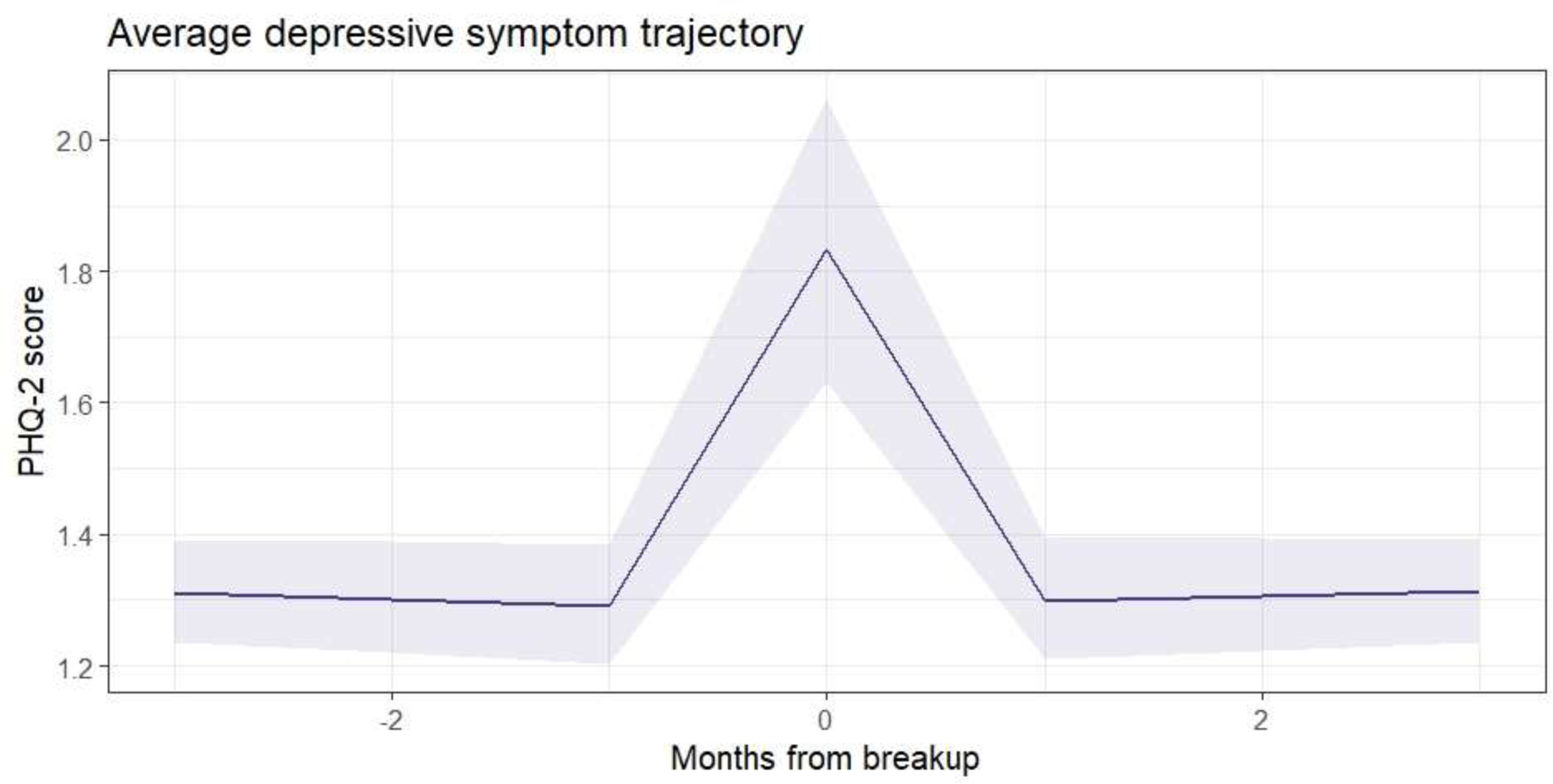
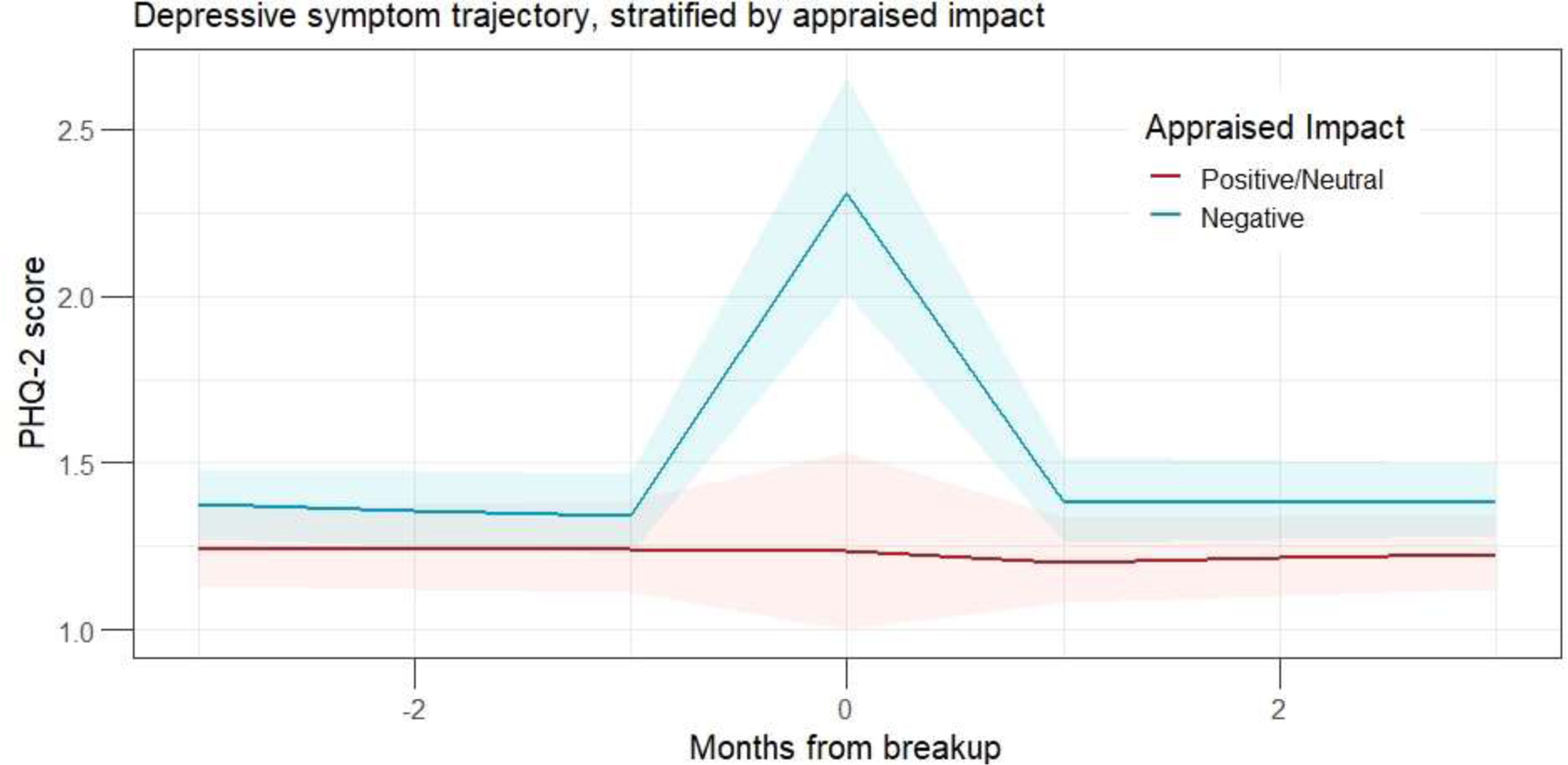
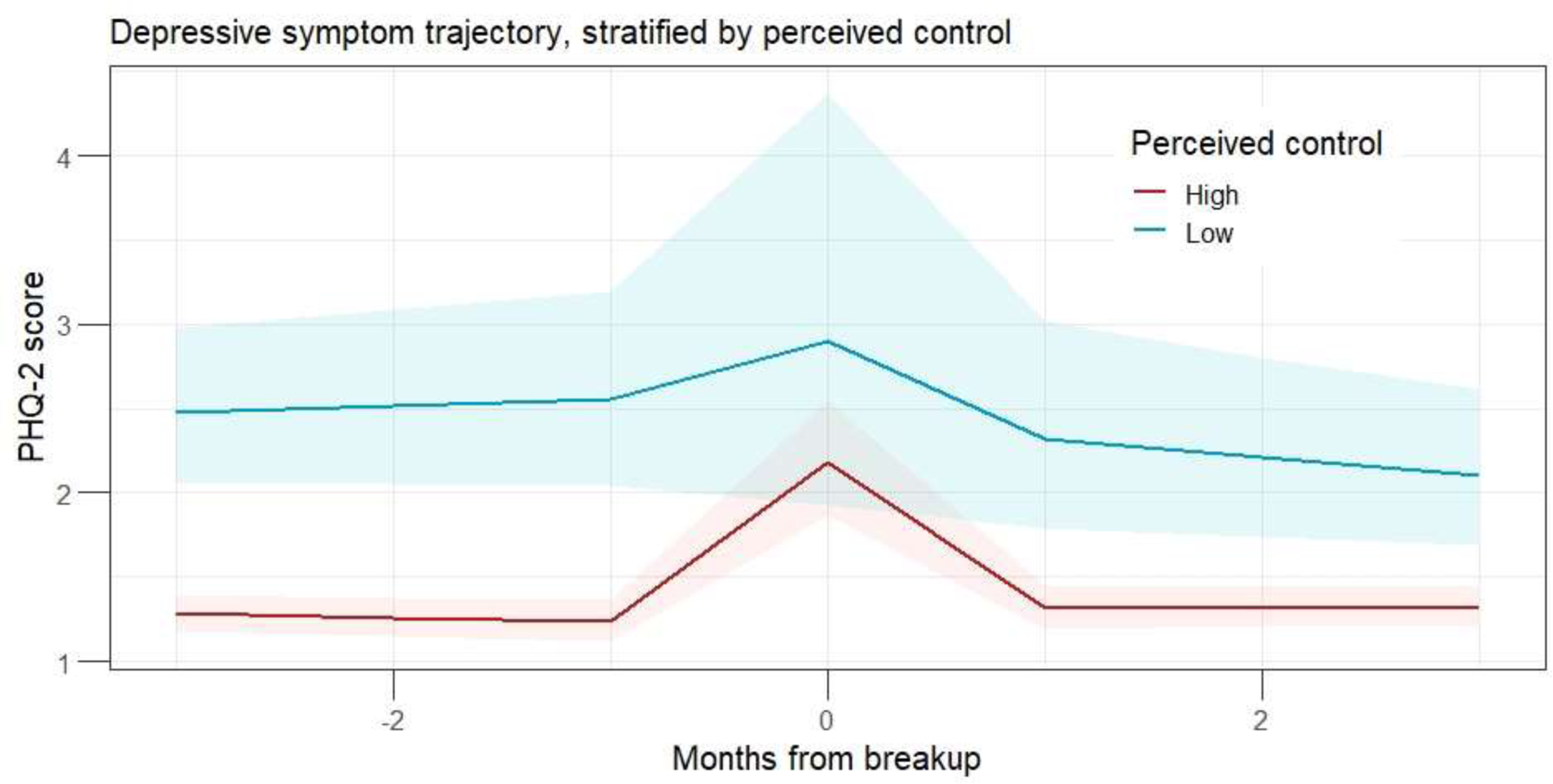
Young adults face stressful role transitions as well as increased risk for poor mental health, but little is known about a "natural course" of response to such events. We used the PHQ-2 to characterize the trajectory of depressive symptoms before, during, and after relationship breakup and examined subjective appraisal and sense of control as moderators. In our sample of participants reporting a single breakup during the 2-year study period (N=156), breakup was associated with a temporary increase in depressive symptoms that returned to pre-breakup levels within three months. We observed increased symptoms among negatively appraised, but not positive or neutral, events. A general low sense of control was associated with higher depressive symptoms at all time points. Our results suggest that a natural course of response to young adult breakups is characterized by recovery within three months and that subjective appraisal and sense of control contribute to this adaptive response.
Keywords: depressive symptoms; romantic relationships; sense of control; subjective appraisal; transitions to adulthood; young adulthood.
Conflict of interest statement
Conflicts of Interest: None.
Figures
References
-
- Arnett JJ (2000). Emerging adulthood: A theory of development from the late teens through the twenties. American psychologist, 55(5), 469. - PubMed
-
- Asselmann E, & Specht J (2022a). Changes in happiness, sadness, anxiety, and anger around romantic relationship events. Emotion - PubMed
-
- Bachman JG, O’Malley PM, Schulenberg JE, Johnston LD, Bryant AL, & Merline AC (2014). The decline of substance use in young adulthood: Changes in social activities, roles, and beliefs: Psychology Press.
-
- Beck AT, & Bredemeier K (2016). A Unified Model of Depression:Integrating Clinical, Cognitive, Biological, and Evolutionary Perspectives. Clinical Psychological Science, 4(4), 596–619. doi:10.1177/2167702616628523 - DOI
Grants and funding
LinkOut - more resources
Full Text Sources