


An Alternatively Spliced Gain-of-Function NT5C2 Isoform Contributes to Chemoresistance in Acute Lymphoblastic Leukemia
- PMID: 39094066
- PMCID: PMC11474164
- DOI: 10.1158/0008-5472.CAN-23-3804
An Alternatively Spliced Gain-of-Function NT5C2 Isoform Contributes to Chemoresistance in Acute Lymphoblastic Leukemia
Abstract
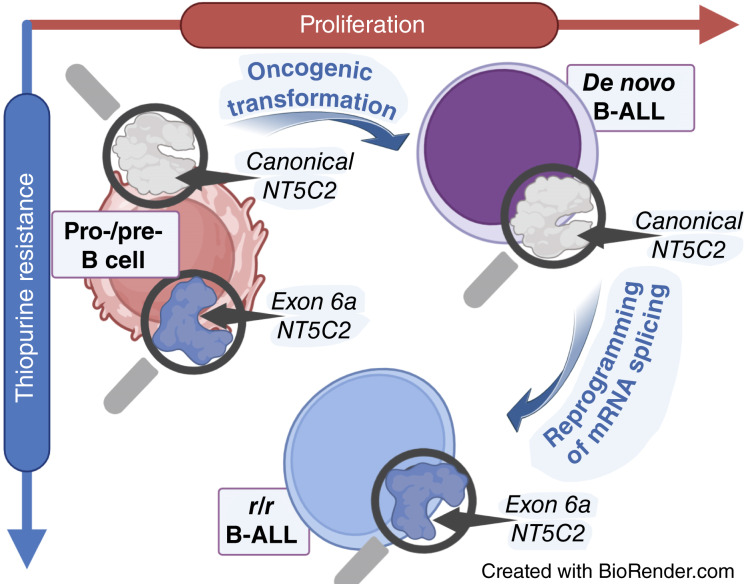
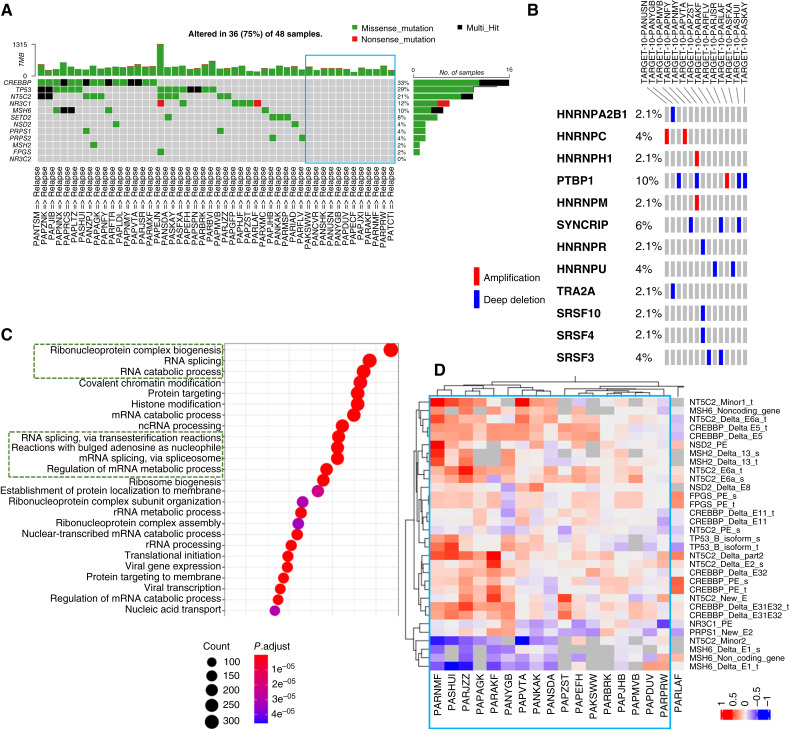
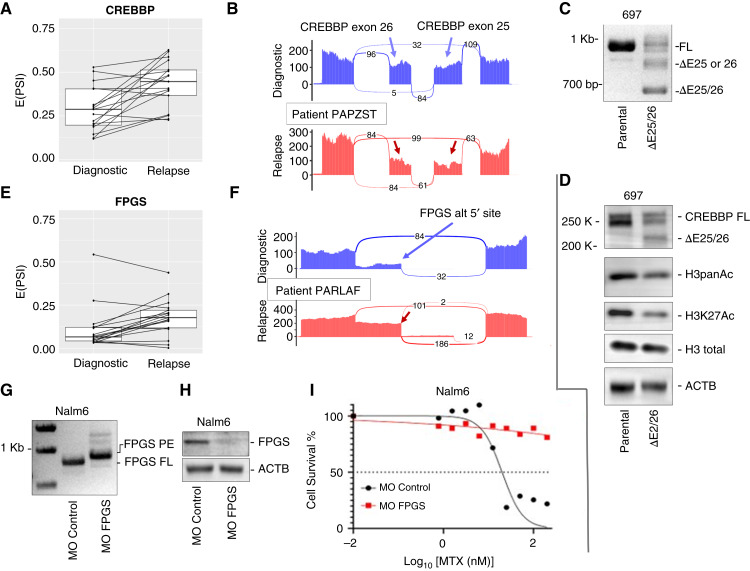
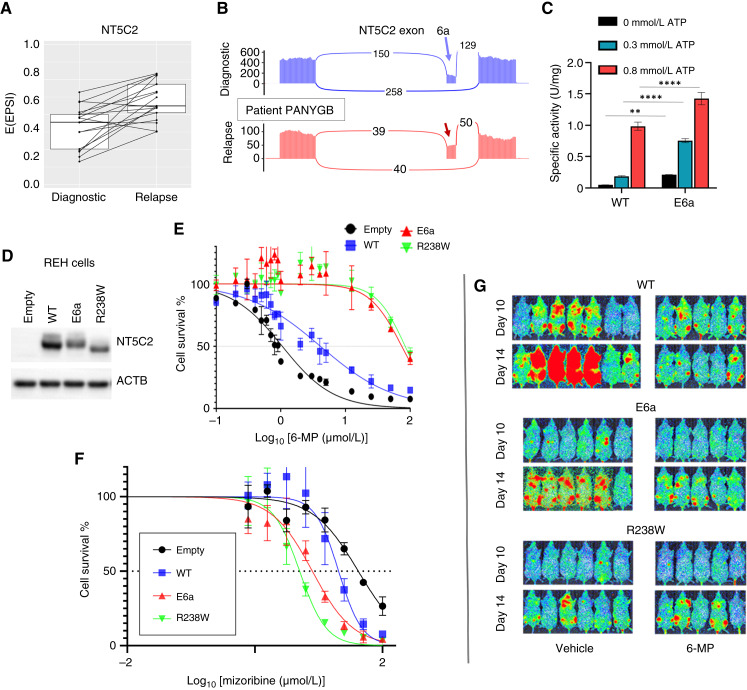
Relapsed or refractory B-cell acute lymphoblastic leukemia (B-ALL) is a major cause of pediatric cancer-related deaths. Relapse-specific mutations do not account for all chemotherapy failures in B-ALL patients, suggesting additional mechanisms of resistance. By mining RNA sequencing datasets of paired diagnostic/relapse pediatric B-ALL samples, we discovered pervasive alternative splicing (AS) patterns linked to relapse and affecting drivers of resistance to glucocorticoids, antifolates, and thiopurines. Most splicing variations represented cassette exon skipping, "poison" exon inclusion, and intron retention, phenocopying well-documented loss-of-function mutations. In contrast, relapse-associated AS of NT5C2 mRNA yielded an isoform with the functionally uncharacterized in-frame exon 6a. Incorporation of the 8-amino acid sequence SQVAVQKR into this enzyme created a putative phosphorylation site and resulted in elevated nucleosidase activity, which is a known consequence of gain-of-function mutations in NT5C2 and a common determinant of 6-mercaptopurine resistance. Consistent with this finding, NT5C2ex6a and the R238W hotspot variant conferred comparable levels of resistance to 6-mercaptopurine in B-ALL cells both in vitro and in vivo. Furthermore, both NT5C2ex6a and the R238W variant induced collateral sensitivity to the inosine monophosphate dehydrogenase inhibitor mizoribine. These results ascribe to splicing perturbations an important role in chemotherapy resistance in relapsed B-ALL and suggest that inosine monophosphate dehydrogenase inhibitors, including the commonly used immunosuppressive agent mycophenolate mofetil, could be a valuable therapeutic option for treating thiopurine-resistant leukemias. Significance: Alternative splicing is a potent mechanism of acquired drug resistance in relapsed/refractory acute lymphoblastic leukemias that has diagnostic and therapeutic implications for patients who lack mutations in known chemoresistance genes.
©2024 The Authors; Published by the American Association for Cancer Research.
Conflict of interest statement
M. Torres-Diz reports a patent for PCT/US2023/025031 pending. C. Reglero reports her work was supported by a Leukemia and Lymphoma Society Special Fellow award. M.M. Li reports personal fees from Bayer HealthCare Pharmaceuticals Inc. and Agilent Technologies outside the submitted work. Y. Barash reports grants from the NIH during the conduct of the study and grants from the NIH, CureBRCA, and Basser Institute outside the submitted work. MAJIQ 2.0 used in this study is available for licensing for free for academics and for a fee for commercial usage. Some of the commercial licensing revenue goes to Y. Barash and members of the Barash laboratoy. A. Ferrando reports grants from the NIH, Leukemia and Lymphoma Society, Alex’s Lemonade Stand Foundation, and Irving Institute for Clinical and Translational Research of Columbia University during the conduct of the study and other support from Regeneron Pharmaceuticals outside the submitted work; in addition, A. Ferrando has a patent for NT5C2 inhibitors issued. A. Thomas-Tikhonenko reports grants from the NIH, Pennsylvania Department of Health, St. Baldrick’s Foundation, Stand Up To Cancer (SU2C), The V Foundation for Cancer Research, The Emerson Collective, and Alex’s Lemonade Stand Foundation during the conduct of the study and grants from CureSearch for Childhood Cancer, Pfizer ASPIRE Onc/Hem Program and personal fees from the University of Miami, the Italian Association for Cancer Research, Guidepoint, and Houston Methodist outside the submitted work; in addition, A. Thomas-Tikhonenko has a patent for PCT/US2023/025031 pending. No disclosures were reported by the other authors.
Figures
Update of
-
An Alternatively Spliced Gain-of-Function NT5C2 Isoform Contributes to Chemoresistance in Acute Lymphoblastic Leukemia.bioRxiv [Preprint]. 2024 Jul 22:2023.09.14.557413. doi: 10.1101/2023.09.14.557413. bioRxiv. 2024. Update in: Cancer Res. 2024 Oct 15;84(20):3327-3336. doi: 10.1158/0008-5472.CAN-23-3804. PMID: 39091882 Free PMC article. Updated. Preprint.
References
MeSH terms
Substances
Grants and funding
- R35 CA210065/CA/NCI NIH HHS/United States
- U01 CA232563/CA/NCI NIH HHS/United States
- U01 CA243072/CA/NCI NIH HHS/United States
- R01 CA216981/CA/NCI NIH HHS/United States
- P30 CA013696/CA/NCI NIH HHS/United States
- U01 CA232486/CA/NCI NIH HHS/United States
- CA180683P1/U.S. Department of Defense (DOD)
- St. Baldrick's Foundation (SBF)
- V Foundation for Cancer Research (VFCR)
- Emerson Collective (Emerson)
- Alex's Lemonade Stand Foundation for Childhood Cancer (ALSF)
- Leukemia and Lymphoma Society (LLS)
- P30 CA013696/CA/NCI NIH HHS/United States
- U01 CA232563/CA/NCI NIH HHS/United States
- U01 CA232486/CA/NCI NIH HHS/United States
- 67-173/Pennsylvania Department of Health (PA DOH)
LinkOut - more resources
Full Text Sources
Research Materials
