


Predictors of improvement in disease activity in childhood and adolescent Crohn's disease: an analysis of age, localization, initial severity and drug therapy - data from the Saxon Registry for Inflammatory Bowel Disease in Children in Germany (2000-2014)
- PMID: 39096385
- PMCID: PMC11413072
- DOI: 10.1007/s00431-024-05671-8
Predictors of improvement in disease activity in childhood and adolescent Crohn's disease: an analysis of age, localization, initial severity and drug therapy - data from the Saxon Registry for Inflammatory Bowel Disease in Children in Germany (2000-2014)
Abstract
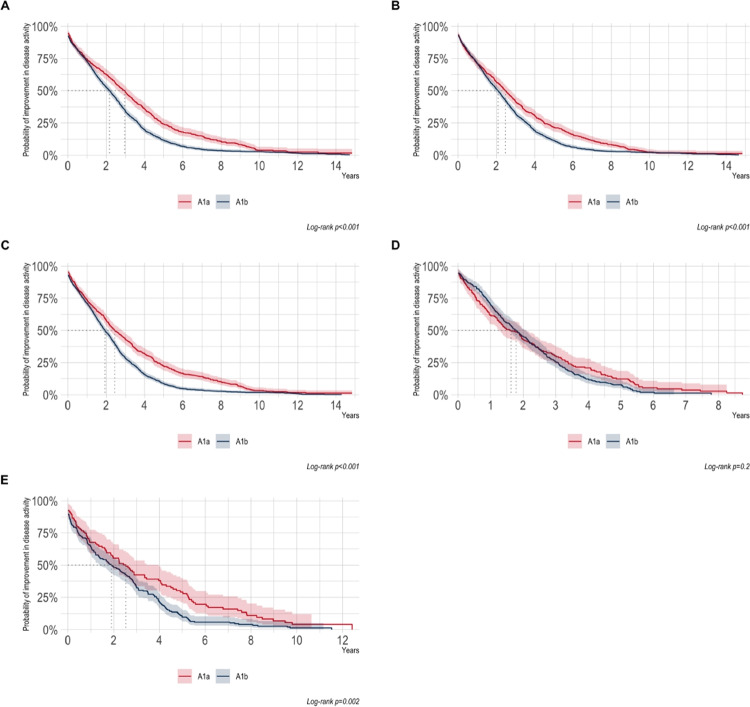
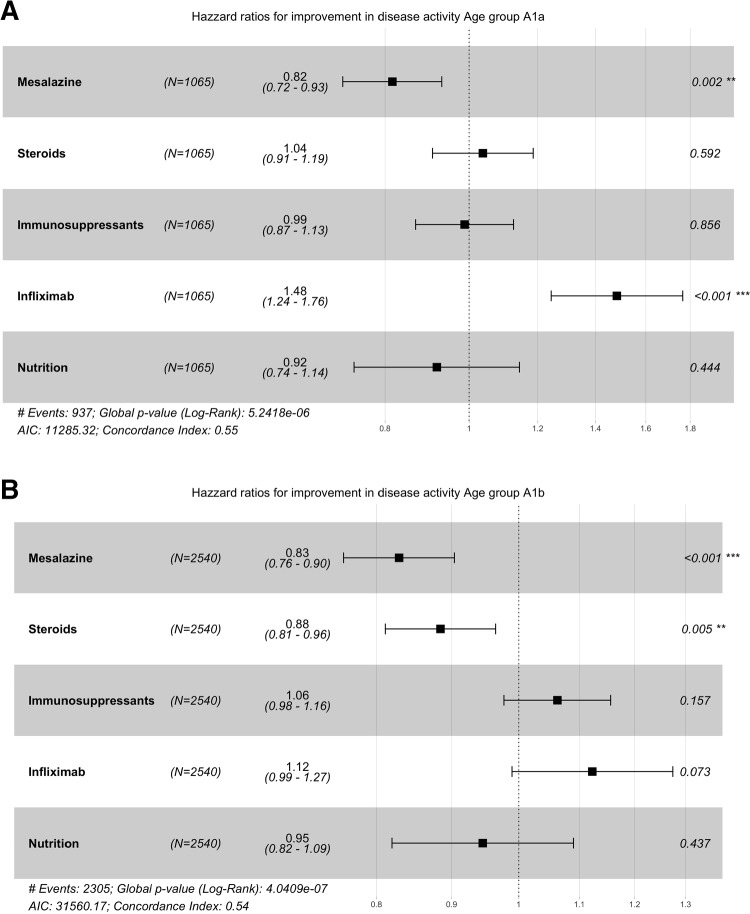
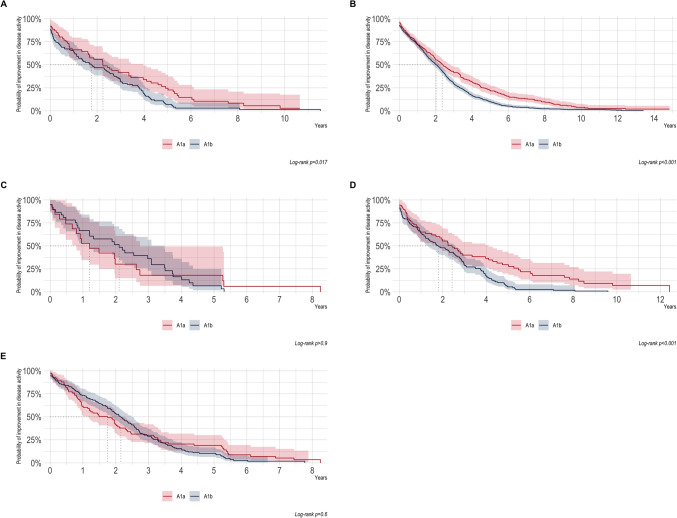
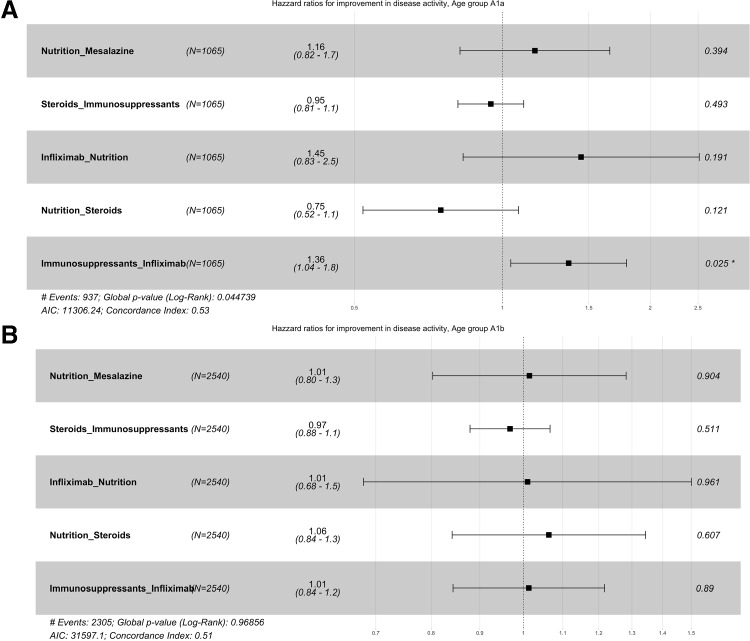
The escalating worldwide prevalence of Crohn's disease (CD) among children and adolescents, coupled with a trend toward earlier onset, presents significant challenges for healthcare systems. Moreover, the chronicity of this condition imposes substantial individual burdens. Consequently, the principal objective of CD treatment revolves around rapid inducing remission. This study scrutinizes the impact of age, gender, initial disease localization, and therapy on the duration to achieve disease activity amelioration. Data from the Saxon Pediatric IBD Registry in Germany were analyzed over a period of 15 years. In addition to descriptive methods, logistic and linear regression analyses were conducted to identify correlations. Furthermore, survival analyses and Cox regressions were utilized to identify factors influencing the time to improvement in disease activity. These effects were expressed as Hazard Ratios (HR) with 95% confidence intervals. Data on the clinical course of 338 children and adolescents with CD were available in the registry. The analyses showed a significant correlation between a young age of onset and the severity of disease activity. It was evident that treatment with anti-TNF (Infliximab) was associated with a more favorable prognosis in terms of the time required for improvement in disease activity. Similarly, favorable outcomes were observed with the combination therapies of infliximab with enteral nutrition therapy and Infliximab with immunosuppressants.Conclusion: Our analysis of data from the Saxon Pediatric IBD Registry revealed that the timeframe for improvement of disease activity in pediatric Crohn's disease is influenced by several factors. Specifically, patient age, treatment modality, and initial site of inflammation were found to be significant factors. The study provides important findings that underline the need for individualized treatment.
Keywords: Crohn’s disease; IBD; Pediatrics; Therapy.
© 2024. The Author(s).
Conflict of interest statement
The authors declare no competing interests.
Figures


References
-
- Ng SC, Shi HY, Hamidi N, Underwood FE, Tang W, Benchimol EI et al (2017) Worldwide incidence and prevalence of inflammatory bowel disease in the 21st century: a systematic review of population-based studies. The Lancet 390(10114):2769–2778. 10.1016/S0140-6736(17)2932448-0 - PubMed
-
- Benchimol EI, Mack DR, Nguyen GC, Snapper SB, Li W, Mojaverian N et al (2014) Incidence, outcomes, and health services burden of very early onset inflammatory bowel disease. Gastroenterology 147(4):803–813.e7; quiz e14–5. Edition: 2014/06/22. 10.1053/j.gastro.2014.06.023 - PubMed
-
- Kern I, Schoffer O, Richter T, Kiess W, Flemming G, Winkler U et al (2022) Current and projected incidence trends of pediatric-onset inflammatory bowel disease in Germany based on the Saxon Pediatric IBD Registry 2000–2014 -a 15-year evaluation of trends. PLoS ONE 17(9):e0274117. 10.1371/journal.pone.0274117 - PMC - PubMed
MeSH terms
Substances
Supplementary concepts
LinkOut - more resources
Full Text Sources
Medical
