


Angiographic evaluation of coronary artery disease in diabetic patients with and without end-stage kidney disease
- PMID: 39097989
- PMCID: PMC11298246
- DOI: 10.14814/phy2.16180
Angiographic evaluation of coronary artery disease in diabetic patients with and without end-stage kidney disease
Abstract
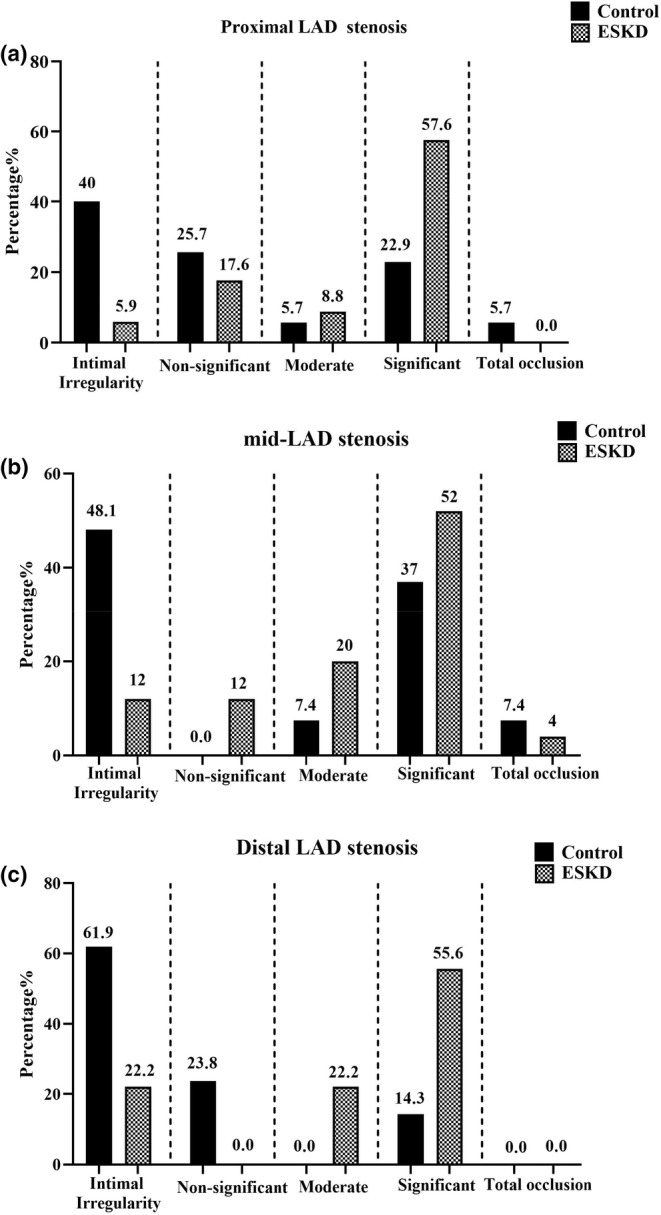
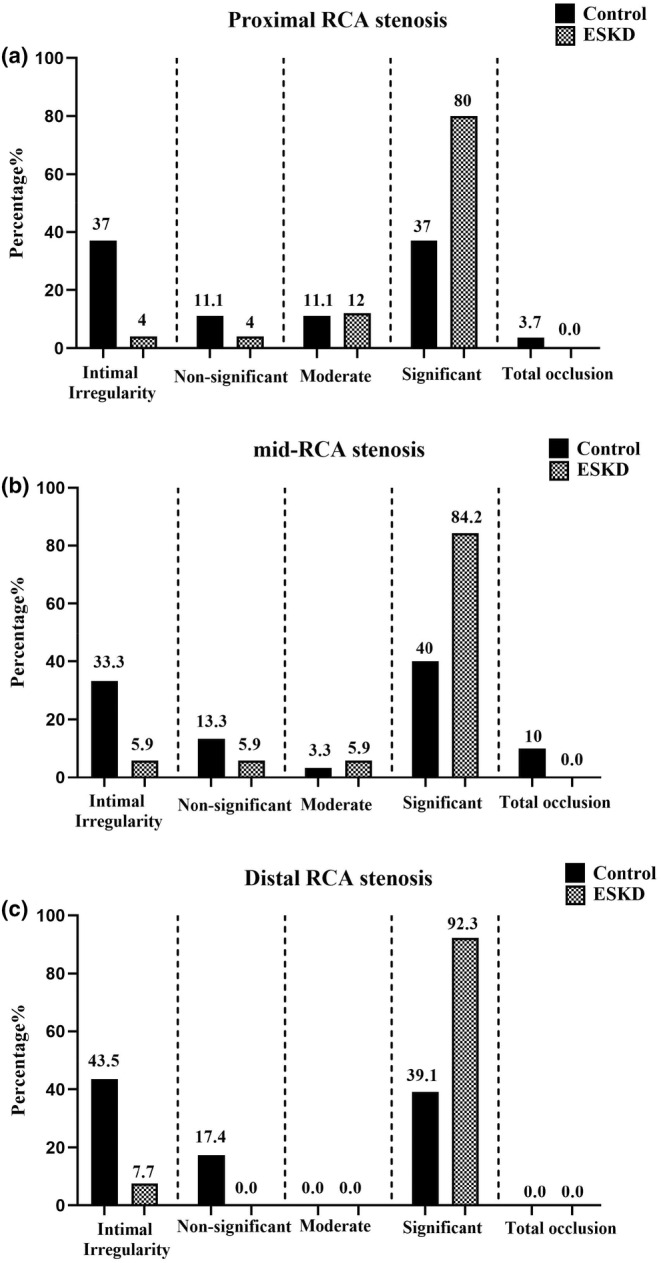
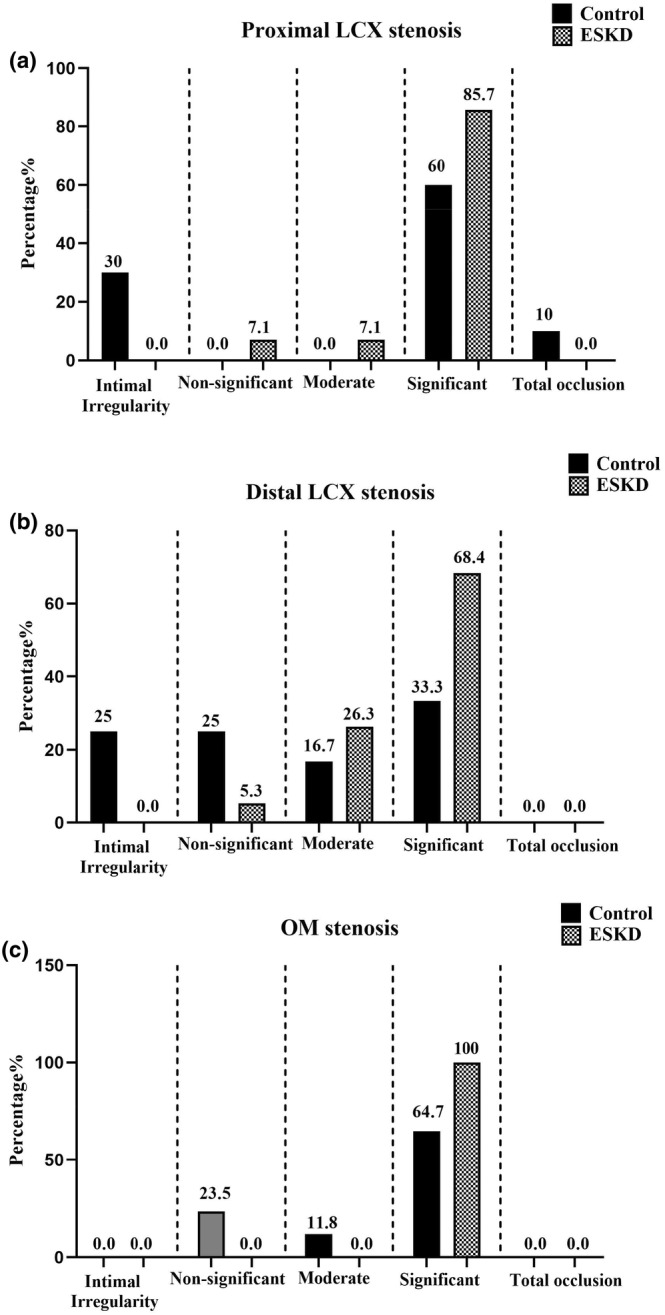
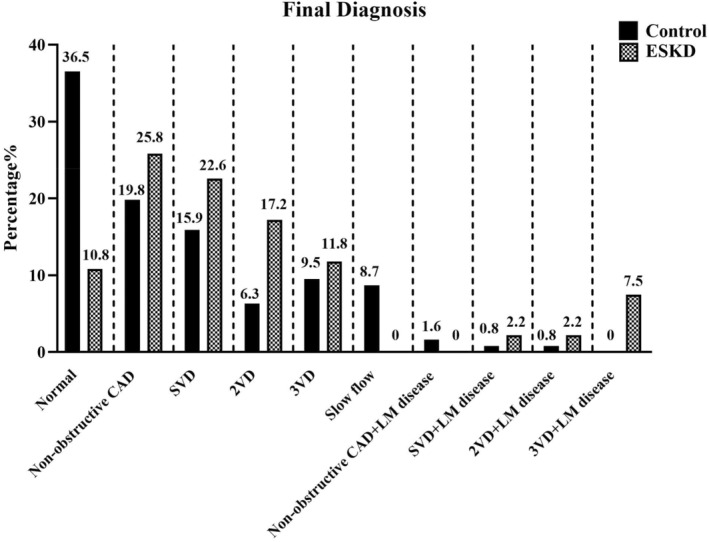
The objective of the present investigation was to compare the coronary angiography results in diabetic patients with and without end-stage kidney disease (ESKD). We included prolonged diabetic patients with ESKD (93 patients) and without ESKD (control group, 126 patients). Angiography of the coronary arteries was performed on all patients. Our results revealed that the ESKD patients tended to have a higher degree of coronary artery stenosis in all parts of LAD (p = 0.001, 0.024, and 0.005), proximal and distal RCA (p = 0.013, and 0.008), and proximal and distal LCX artery (p = 0.001, 0.008) than non-ESKD patients. Furthermore, we found that the ESKD group had higher significant coronary artery stenosis in the LAD artery (60.5% vs. 39.5%, p < 0.001), RCA (60.3% vs. 39.7%, p < 0.001), LCX artery (79.5% vs. 20.5%, p < 0.001), and LMCA (84.6% vs 15.4%, p = 0.002) compared to control group. There was a greater prevalence of multiple vessels coronary artery disease (≥ two) among ESKD patients (29%), compared with the non-ESKD group (16.8%, p < 0.001). Significant coronary artery stenosis was meaningfully higher in asymptomatic diabetic ESKD patients on hemodialysis than non-ESKD diabetic patients. Coronary angiography may be beneficial in diabetic patients with ESKD regardless of whether they have ischemic symptoms with low complication rate through radial access.
Keywords: coronary angiography; coronary artery stenosis; diabetes; end‐stage kidney disease.
© 2024 The Author(s). Physiological Reports published by Wiley Periodicals LLC on behalf of The Physiological Society and the American Physiological Society.
Conflict of interest statement
Conflicts of interest were not present.
Figures
References
-
- Beddhu, S. , Allen‐Brady, K. , Cheung, A. K. , Horne, B. D. , Bair, T. , Muhlestein, J. B. , & Anderson, J. L. (2002). Impact of renal failure on the risk of myocardial infarction and death. Kidney International, 62(5), 1776–1783. - PubMed
-
- Cano‐Megías, M. , Guisado‐Vasco, P. , Bouarich, H. , de Arriba‐de la Fuente, G. , de Sequera‐Ortiz, P. , Álvarez‐Sanz, C. , & Rodríguez‐Puyol, D. (2019). Coronary calcification as a predictor of cardiovascular mortality in advanced chronic kidney disease: A prospective long‐term follow‐up study. BMC Nephrology, 20(1), 188. - PMC - PubMed
-
- Chen, R. Y. , & Shi, J. (2024). Evaluation of the CKD‐EPI 2021 creatinine equation using laboratory data: Considerations for practice changes among clinical laboratories in British Columbia, Canada . Clinical Biochemistry, 123, 110686. - PubMed
-
- Dai, L. , et al. (2017). End‐stage renal disease, inflammation and cardiovascular outcomes. Contributions to Nephrology, 191, 32–43. - PubMed
-
- Dastani, M. , Rahimi, H. R. , Askari, V. R. , Jaafari, M. R. , Jarahi, L. , Yadollahi, A. , & Rahimi, V. B. (2022). Three months of combination therapy with nano‐curcumin reduces the inflammation and lipoprotein (a) in type 2 diabetic patients with mild to moderate coronary artery disease: Evidence of a randomized, double‐blinded, placebo‐controlled clinical trial. BioFactors, 49, 108–118. - PubMed
MeSH terms
Grants and funding
LinkOut - more resources
Full Text Sources
Medical
