


Development of an algorithm to guide management of cardiorespiratory arrest in a diving bell
- PMID: 39100390
- PMCID: PMC11295632
- DOI: 10.1016/j.resplu.2024.100724
Development of an algorithm to guide management of cardiorespiratory arrest in a diving bell
Abstract
Aim: The management of cardiorespiratory arrest in a diving bell presents multiple clinical, technical, and environmental considerations that standard resuscitation algorithms do not address, and no situation-specific algorithm exists. The development and testing of an algorithm to guide the management of cardiorespiratory arrest in a bell is described.
Methods: An iterative approach to algorithm development was used. Phase 1 involved a small multidisciplinary group and took place in a simulation centre and a decommissioned diving bell. The algorithm was then refined in a purpose-build simulation complex with repeated simulation by a group of divers, and with input from industry experts. ALS principles were followed unless contextual or technical factors necessitated deviation.
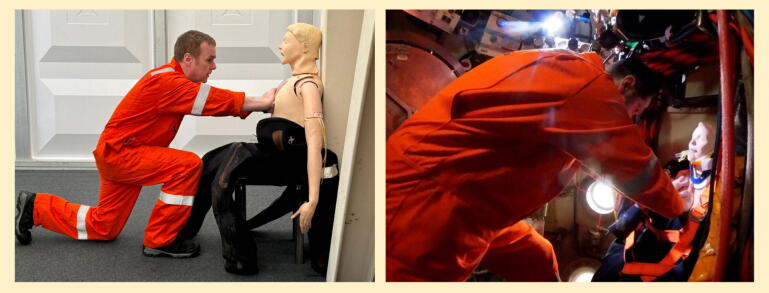
Results: Clinical and technical aspects of the resuscitation are addressed. Key priorities that conflict with standard ALS principles are: prioritisation of rescue breaths; use of mechanical CPR when available; and the provision of CPR with the casualty in a seated position where necessary.
Conclusion: This is the first algorithm to guide the delivery of resuscitation in a diving bell. It incorporates adapted ALS principles and available data concerning compression technique effectiveness, and was informed by industry and clinical expertise. It provides guiding principles that can be adapted to setting-specific needs, and we would encourage its industry-wide international adoption.
Keywords: Algorithm; Austere environment; Diving bell; Mechanical CPR; Pre-hospital; Resuscitation.
© 2024 The Author(s).
Conflict of interest statement
The authors declare that they have no known competing financial interests or personal relationships that could have appeared to influence the work reported in this paper.
Figures


References
-
- Helix Well Ops. North Sea Divers Age Survey. Helix Well Ops; 2024.
-
- Perkins GD, Nolan JP, Soar J, Hawkes C, Wyllie J, Skellett S, et al. Epidemiology of cardiac arrest. Resusc Counc U K 2021. https://www.resus.org.uk/library/2021-resuscitation-guidelines/epidemiol... (accessed April 28, 2022).
-
- Merritt A. Torquay deep sea diver died in Gulf of Mexico tragedy. DevonLive 2021. https://www.devonlive.com/news/devon-news/torquay-deep-sea-diver-died-61... (accessed April 28, 2022).
LinkOut - more resources
Full Text Sources
Miscellaneous
