


Effectiveness of Vortioxetine for the Treatment of Emotional Blunting in Patients with Major Depressive Disorder Experiencing Inadequate Response to SSRI/SNRI Monotherapy in Spain: Results from the COMPLETE Study
- PMID: 39100571
- PMCID: PMC11297586
- DOI: 10.2147/NDT.S473056
Effectiveness of Vortioxetine for the Treatment of Emotional Blunting in Patients with Major Depressive Disorder Experiencing Inadequate Response to SSRI/SNRI Monotherapy in Spain: Results from the COMPLETE Study
Abstract
Background: The multinational, open-label COMPLETE study (NCT03835715) investigated the effectiveness of vortioxetine in alleviating emotional blunting in patients with major depressive disorder (MDD) experiencing inadequate response and emotional blunting while being treated with a selective serotonin reuptake inhibitor (SSRI) or serotonin-noradrenaline reuptake inhibitor (SNRI). This paper presents results for the subgroup of patients enrolled in Spain.
Methods: Patients with MDD (n = 67) experiencing partial response and emotional blunting during monotherapy with an SSRI or SNRI were switched to vortioxetine (10-20 mg/day) for 8 weeks. The primary study outcome was emotional blunting, assessed by the Oxford Depression Questionnaire (ODQ).
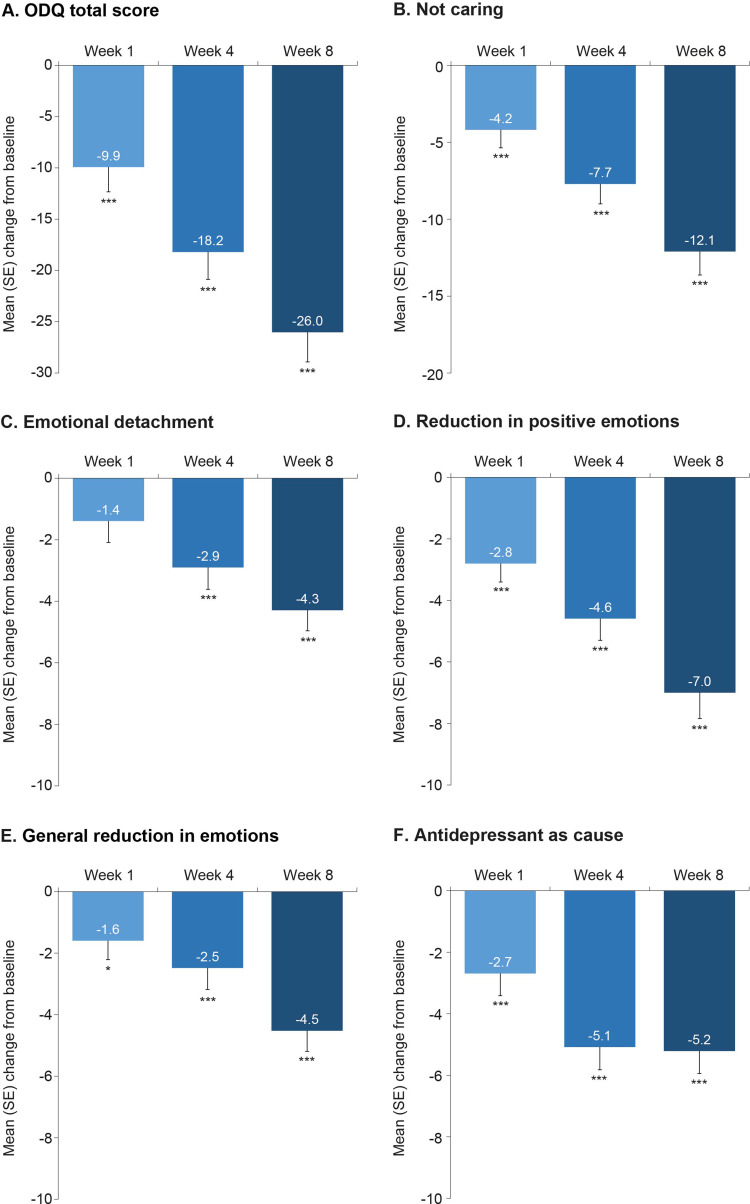
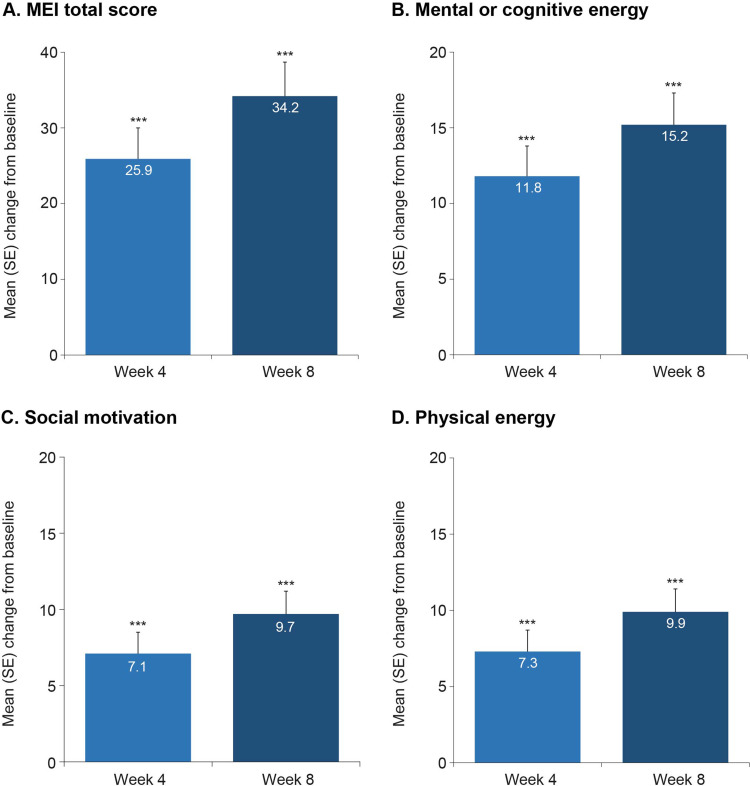
Results: After 8 weeks of vortioxetine, the mean (SE) change in ODQ total score from baseline was -26.0 (2.9) (P < 0.001). Respective changes in Montgomery-Åsberg Depression Rating Scale (MADRS), Motivation and Energy Inventory, Digit Symbol Substitution Test, and Sheehan Disability Scale (SDS) total scores were -14.9 (0.8), +34.2 (4.5), +6.3 (1.6), and ‒9.0 (1.3) (all P < 0.001 vs baseline). At week 8, 70.4% of patients no longer reported emotional blunting and 53.7% had achieved remission from their depressive symptoms (defined as a MADRS total score ≤10). Mediation analysis showed 77.1% of the change in SDS total score to be a direct effect of the improvement in ODQ total score after switching to vortioxetine. Adverse events were reported by 35 patients (52.2%), most commonly nausea (14 patients, 20.9%). At week 8, 33/54 patients (61.1%) were receiving vortioxetine 20 mg/day.
Conclusion: In this study investigating the effectiveness of vortioxetine in Spanish patients with MDD who experienced inadequate response and emotional blunting on SSRI/SNRI monotherapy, significant improvements in emotional blunting, core depressive symptoms (including anhedonia), sleep duration, motivation and energy, cognitive performance, and overall patient functioning were observed during the 8 weeks of treatment. Two-thirds of patients no longer reported emotional blunting and over half were in remission from their depressive symptoms at week 8.
Keywords: emotional blunting; energy; major depressive disorder; motivation; patient functioning; vortioxetine.
© 2024 Christensen et al.
Conflict of interest statement
MCC and HL are employees of H. Lundbeck A/S. FC has received consultancy fees or honoraria/research grants in the last 5 years from Exeltis, IdISBa, Janssen Cilag, Lundbeck, Otsuka, Pfizer Angelini, Servier. ALM has received consultancy fees or honoraria/research grants in the last 5 years from Boehringer Ingelheim, Casen Recordati, Eli Lilly, Forum Pharmaceuticals, Instituto de Salud Carlos III, Janssen Cilag, Lundbeck, Otsuka, Pfizer, Roche, ROVI, Servier, and the Junta de Castilla y León. The authors report no other conflicts of interest in this work.
Figures
References
-
- World Health Organization. Depression and Other Common Mental Disorders: Global Health Estimates. Geneva: World Health Organization; 2017. Available from: https://apps.who.int/iris/bitstream/handle/10665/254610/WHO-MSD-MER-2017.... Accessed February 22, 2023.
LinkOut - more resources
Full Text Sources
