


Epidemiologic and Virologic Characteristics of Influenza in Lao PDR, 2016-2023
- PMID: 39104091
- PMCID: PMC11300510
- DOI: 10.1111/irv.13353
Epidemiologic and Virologic Characteristics of Influenza in Lao PDR, 2016-2023
Abstract
Background: Influenza sentinel surveillance in Lao PDR is used to inform seasonal vaccination programs. This analysis reviews epidemiologic and virologic characteristics of influenza virus infection over 8 years, before and after emergence of SARS-CoV-2.
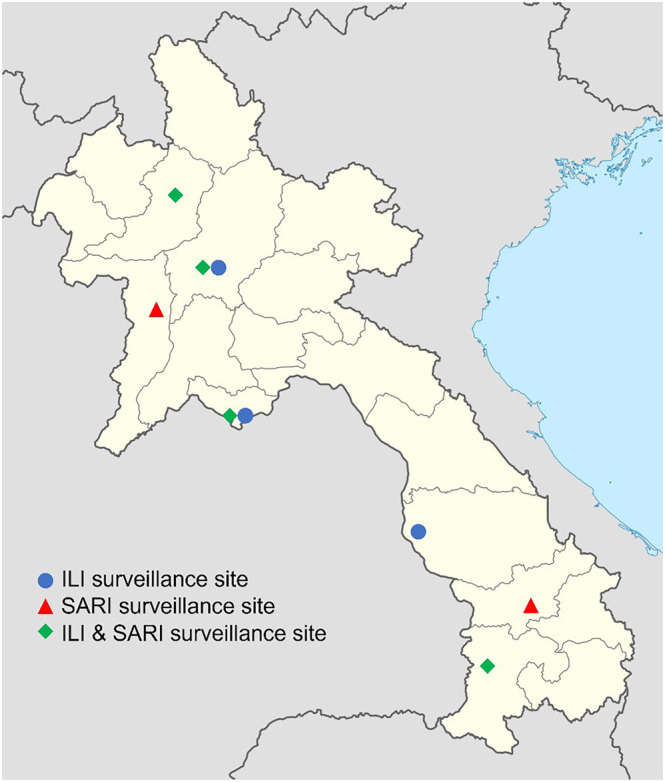
Methods: Data collected for ILI and SARI surveillance during January 2016 through December 2023 were analyzed from nine hospitals. Respiratory specimens from ILI and SARI cases were tested by reverse transcriptase polymerase chain reaction to determine influenza positivity and subtype and lineage. Aggregate counts of outpatient visits and hospitalizations were collected from hospital logbooks. Epidemiologic trends of influenza activity were described, and the proportional contribution of influenza-associated ILI and SARI to outpatient and inpatient loads was estimated.
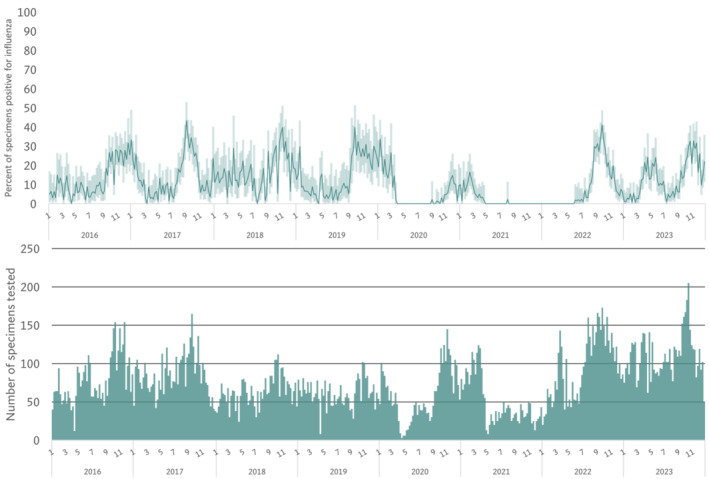
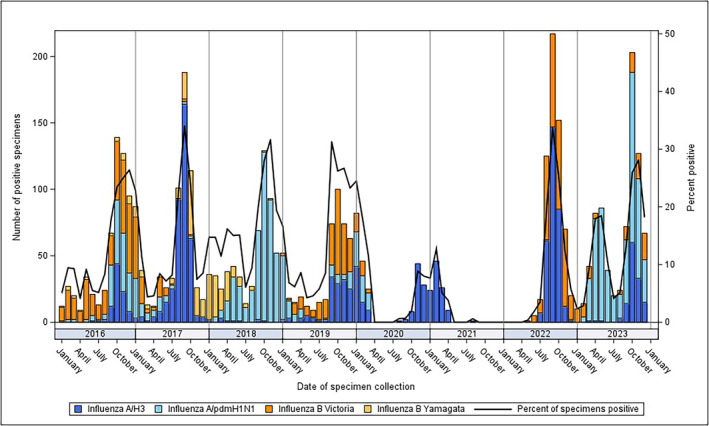
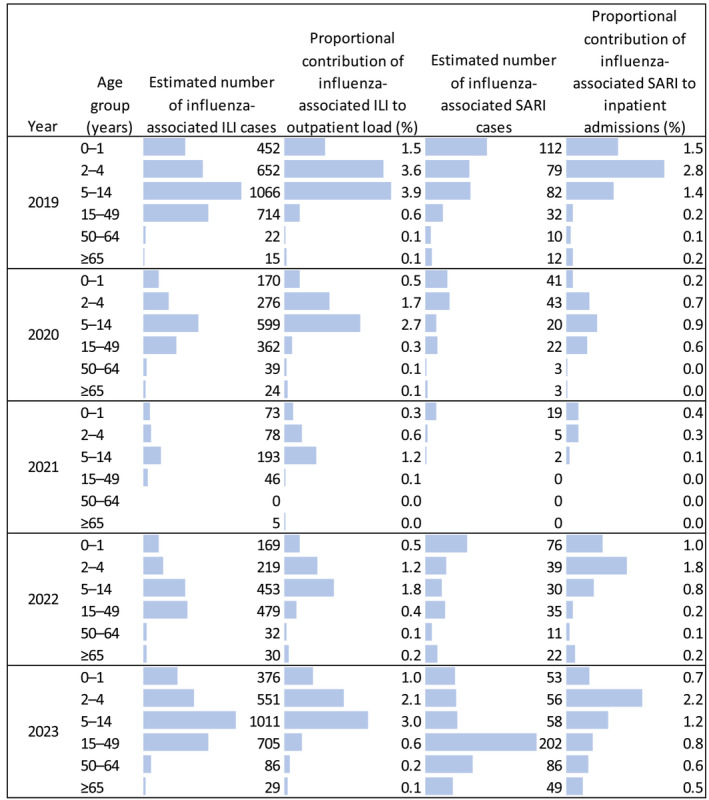
Results: Influenza was detected year-round with positivity peaking during September through January and occurring in most years approximately 1 month earlier in the south than the north. After decreasing in 2 years following the emergence of SARS-CoV-2, influenza positivity increased in 2022 and resumed its typical temporal trend. Influenza-associated ILI contribution to outpatient visits was highest among children ages 5-14 years (3.0% of all outpatient visits in 2023), and influenza-associated SARI contribution to inpatient hospitalizations was highest among children ages 2-4 years (2.2% of all hospitalizations in 2023).
Conclusions: Influenza surveillance in Lao PDR provides clinicians and public health authorities with information on geographic and temporal patterns of influenza transmission. Influenza surveillance data support current vaccination timing and recommendations to vaccinate certain populations, especially young children.
Keywords: epidemiology; hospitalization; human influenza; reverse transcriptase polymerase chain reaction; sentinel surveillance; vaccination.
© 2024 World Health Organization; licensed by John Wiley & Sons Ltd and The Author(s). Influenza and Other Respiratory Viruses published by John Wiley & Sons Ltd. This article has been contributed to by U.S. Government employees and their work is in the public domain in the USA.
Conflict of interest statement
The findings and conclusions in this article are those of the authors and do not necessarily represent the official position of the U.S. Centers for Disease Control and Prevention (CDC).
May Chiew, Pakapak Ketmayoon, Melissa Jiao, Sonesavanh Phimmasine, Kim Carmela Co, Phetdavanh Leuangvilay, and Satoko Otsu reported receiving financial support from U.S. Centers for Disease Control and Prevention and U.S. Defense Threat Reduction Agency for attending meetings and for official travel.
Figures
References
-
- Cowling B. J., Caini S., Chotpitayasunondh T., et al., “Influenza in the Asia‐Pacific Region: Findings and Recommendations From the Global Influenza Initiative,” Vaccine 35, no. 6 (2017): 856–864. - PubMed
Publication types
MeSH terms
Grants and funding
LinkOut - more resources
Full Text Sources
Medical
Miscellaneous
