


Review of the microbiome and metabolic pathways associated with psychoneurological symptoms in children with cancer
- PMID: 39104728
- PMCID: PMC11298867
- DOI: 10.1016/j.apjon.2024.100535
Review of the microbiome and metabolic pathways associated with psychoneurological symptoms in children with cancer
Abstract
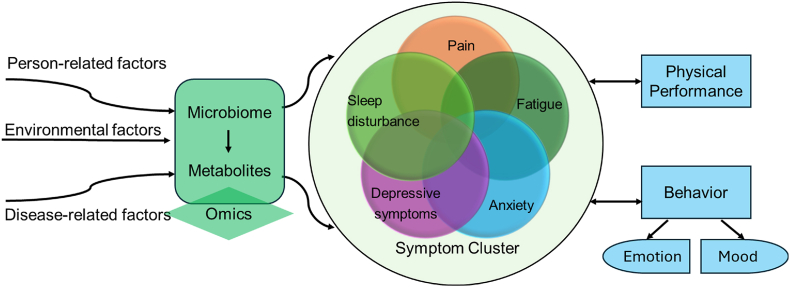
Children with cancer often endure a range of psychoneurological symptoms (PNS), including pain, fatigue, cognitive impairment, anxiety, depressive symptoms, and sleep disturbance. Despite their prevalence, the underlying pathophysiology of PNS remains unclear. Hypotheses suggest an interplay between the gut microbiome and the functional metabolome, given the immune, neurological, and inflammatory influences these processes exert. This mini-review aims to provide a synopsis of the literature that examines the relationship between microbiome-metabolome pathways and PNS in children with cancer, drawing insights from the adult population when applicable. While there is limited microbiome research in the pediatric population, promising results in adult cancer patients include an association between lower microbial diversity and compositional changes, including decreased abundance of the beneficial microbes Fusicatenibacter, Ruminococcus, and Odoribacter, and more PNS. In pediatric patients, associations between peptide, tryptophan, carnitine shuttle, and gut microbial metabolism pathways and PNS outcomes were found. Utilizing multi-omics methods that combine microbiome and metabolome analyses provide insights into the functional capacity of microbiomes and their associated microbial metabolites. In children with cancer receiving chemotherapy, increased abundances of Intestinibacter and Megasphaera correlated with six metabolic pathways, notably carnitine shuttle and tryptophan metabolism. Interventions that target the underlying microbiome-metabolome pathway may be effective in reducing PNS, including the use of pre- and probiotics, fecal microbiome transplantation, dietary modifications, and increased physical activity. Future multi-omics research is needed to corroborate the associations between the microbiome, metabolome, and PNS outcomes in the pediatric oncology population.
Keywords: Metabolome; Microbiome; Multi-omics; Pediatric oncology; Psychoneurological symptoms.
© 2024 The Author(s).
Figures
References
Publication types
Grants and funding
LinkOut - more resources
Full Text Sources
