. 2024 Sep;11(5):e200285.
doi: 10.1212/NXI.0000000000200285. Epub 2024 Aug 6.

Absence of Pathogenic Mutations and Strong Association With HLA-DRB1*11:01 in Statin-Naïve Early-Onset Anti-HMGCR Necrotizing Myopathy

Affiliations

Absence of Pathogenic Mutations and Strong Association With HLA-DRB1*11:01 in Statin-Naïve Early-Onset Anti-HMGCR Necrotizing Myopathy

Laura Llansó et al. Neurol Neuroimmunol Neuroinflamm. 2024 Sep.

Abstract

Background and objectives: Immune-mediated necrotizing myopathy (IMNM) caused by antibodies against 3-hydroxy-3-methylglutaryl coenzyme A reductase (HMGCR) is an inflammatory myopathy that has been epidemiologically correlated with previous statin exposure. We characterized in detail a series of 11 young statin-naïve patients experiencing a chronic disease course mimicking a limb-girdle muscular dystrophy. With the hypothesis that HMGCR upregulation may increase immunogenicity and trigger the production of autoantibodies, our aim was to expand pathophysiologic knowledge of this distinct phenotype.

Methods: Clinical and epidemiologic data, autoantibody titers, creatine kinase (CK) levels, response to treatment, muscle imaging, and muscle biopsies were assessed. HMGCR expression in patients' muscle was assessed by incubating sections of affected patients with purified anti-HMGCR+ serum. Whole-exome sequencing (WES) with a special focus on cholesterol biosynthesis-related genes and high-resolution human leukocyte antigen (HLA) typing were performed.

Results: Patients, aged 3-25 years and mostly female (90.9%), presented with subacute proximal weakness progressing over many years and high CK levels (>1,000 U/L). Diagnostic delay ranged from 3 to 27 years. WES did not reveal any pathogenic variants. HLA-DRB1*11:01 carrier frequency was 60%, a significantly higher proportion than in the control population. No upregulation or mislocalization of the enzyme in statin-exposed or statin-naïve anti-HMGCR+ patients was observed, compared with controls.

Discussion: WES of a cohort of patients with dystrophy-like anti-HMGCR IMNM did not reveal any common rare variants of any gene, including cholesterol biosynthesis-related genes. HLA analysis showed a strong association with HLA-DRB1*11:01, previously mostly described in statin-exposed adult patients; consequently, a common immunogenic predisposition should be suspected, irrespective of statin exposure. Moreover, we were unable to conclusively demonstrate muscle upregulation/mislocalization of HMGCR in IMNM, whether or not driven by statins.


Conflict of interest statement

L. Llansó, C. Domínguez-González, A. Hernandez-Lain, E. Malfatti, L. González-Mera, A. Nascimento-Osorio, C. Jou, C. Lleixà, M. Caballero-Ávila, A. Carbayo, A. Vesperinas, E. Gallardo, and M. Olivé are members of the European Reference Network for Neuromuscular Diseases. Go to Neurology.org/NN for full disclosures.

Figures

Figure 1
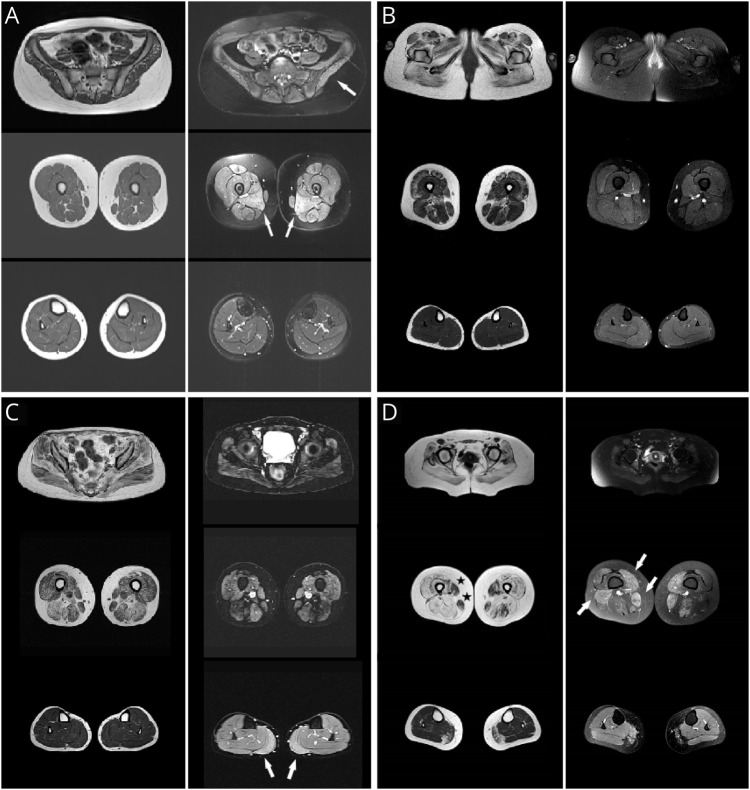
Figure 1. Lower-Limb MRI Scans (T1w and STIR Images) From 4 Patients
Disease progression in years. (A) Patient 1 (P1), 3 years. (B) P2, 12 years. (C) P3, 20 years. (D) P4, 18 years. Left columns: Axial T1w images in the pelvis, thigh, and leg. Right columns: Matched STIR images. Note progressive symmetric muscle involvement in relation to disease progression. T1w images initially show fatty infiltration in the gluteal muscles that later spreads to the thigh muscles, and in more advanced disease stages, leg involvement affecting the medial gastrocnemius muscle. Note also the preservation of the gracilis and sartorius muscles (asterisks), even in late disease stages. STIR images show increased water content in some muscles (patchy inflammation) in 3 patients irrespective of disease evolution: bilaterally in the gluteal and adductor mayor muscles in P1 (A, arrows), in the thighs and medial gastrocnemius muscle in P3 (C, arrows), and in the thighs in P4 (D, arrows).
Figure 2
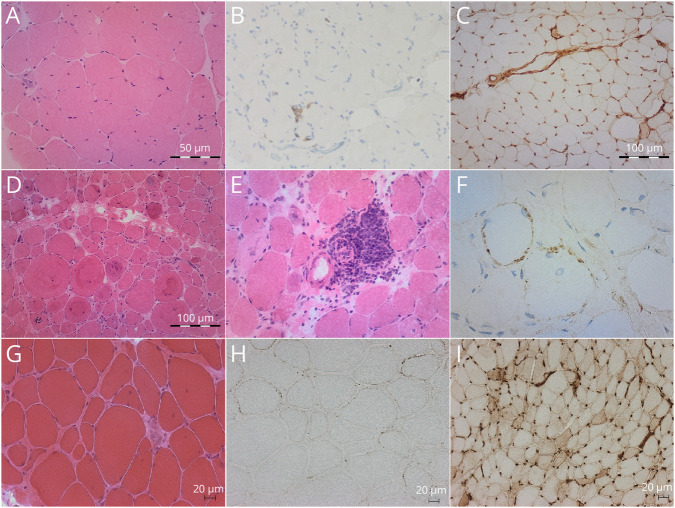
Figure 2. Muscle Biopsy Findings From 3 Patients
(A–C) Patient 5 (P5). (D–F) P6. (G–I): P8. (A, D, E, G) Hematoxylin and eosin staining (H&E). (B) CD8 immunohistochemistry. (C, I) MHC class I immunohistochemistry; (F, H) MAC/C5b-9 immunohistochemistry. Histology shows mild to severe changes ranging from minimal to important variability in muscle fiber size, variable numbers of necrotic fibers, and absent to moderate endomysial fibrosis. Note the large number of whorled fibers in P6. Note also the few CD8 lymphocytes present in P5, in contrast with the large mononuclear perivascular inflammatory infiltrate in P6. MHC class I overexpression is absent in P5 but is diffusely overexpressed in P8. Membrane attack complex (MAC) deposition in the muscle fiber membrane can be observed in P6 and P8.

References

    1. Mohassel P, Mammen AL. Anti-HMGCR myopathy. J Neuromuscul Dis. 2018;5(1):11-20. doi:10.3233/JND-170282 - DOI - PMC - PubMed
    1. Fauchais AL, Iba Ba J, Maurage P, et al. . Polymyositis induced or associated with lipid-lowering drugs: five cases. La Revue de Médecine Interne. 2004;25(4):294-298. doi:10.1016/j.revmed.2003.10.013 - DOI - PubMed
    1. Needham M, Fabian V, Knezevic W, Panegyres P, Zilko P, Mastaglia FL. Progressive myopathy with up-regulation of MHC-I associated with statin therapy. Neuromuscul Disord. 2007;17(2):194-200. doi:10.1016/j.nmd.2006.10.007 - DOI - PubMed
    1. Grable-Esposito P, Katzberg HD, Greenberg SA, Srinivasan J, Katz J, Amato AA. Immune-mediated necrotizing myopathy associated with statins. Muscle Nerve. 2010;41(2):185-190. doi:10.1002/mus.21486 - DOI - PubMed
    1. Tiniakou E, Pinal-Fernandez I, Lloyd TE, et al. . More severe disease and slower recovery in younger patients with anti-3-hydroxy-3-methylglutarylcoenzyme A reductase-associated autoimmune myopathy. Rheumatology (Oxford). 2017;56(5):787-794. doi:10.1093/rheumatology/kew470 - DOI - PMC - PubMed

Substances