


A 15-year experience in pediatric palliative care: a retrospective hospital-based study
- PMID: 39107734
- PMCID: PMC11301942
- DOI: 10.1186/s12904-024-01532-1
A 15-year experience in pediatric palliative care: a retrospective hospital-based study
Abstract
Background: The current Italian scenario of pediatric palliative care (PPC) services is characterized by inadequate coverage of the territory. Therefore, it is important to improve the referral of patients to the most appropriate setting (community care, general PPC, or specialized PPC) and to improve the delivery of PPC care.
Methods: Aiming at obtaining information about the referrals to the Padua Pediatric Hospice that could help estimate the investments needed to improve the provision of care, a retrospective analysis has been carried out. The rate of proper referral and discharge, the number of patients followed at the hospice, the mortality rate, and the length of follow-up were analyzed, and, when possible, data were stratified by oncological and non-oncological diseases.
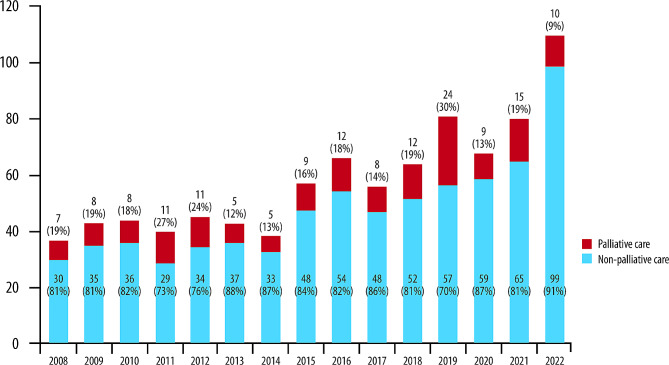
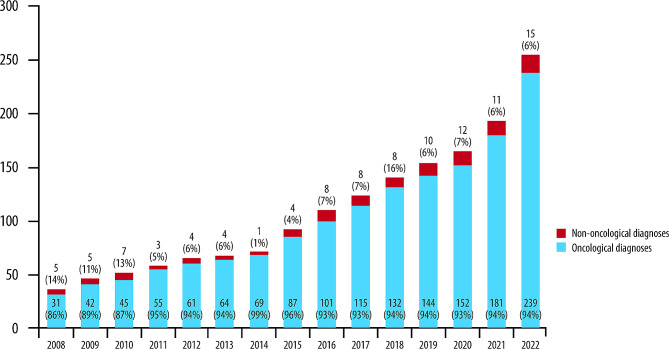
Results: The analysis showed that of the 870 patients referred to the Padua Pediatric Hospice between 2008 and 2022, 76% were affected by non-oncological conditions. 82% of patients referred were taken in charge and most of the remaining patients have been inappropriately referred. The analysis showed a growing number of total referrals, which increased by 195% from 2008 to 2022. An increase in proper referrals and referrals of non-oncological patients was observed alongside a decrease in oncological patient referrals and a trend toward a decrease in discharge rates. A decreased mortality was observed in patients with non-oncological conditions, with only 6% of deceased patients in 2022. Moreover, a longer survival with a median follow-up length of 43 months was observed among patients with non-oncological conditions who were followed up at the Padua Pediatric Hospice for more than 12 months. Conversely, the short survival rate observed for oncological patients suggests that those patients should have been referred to PPC earlier to benefit from palliative care for longer periods.
Conclusions: Considering these data, it is expected that the number of patients needing PPC services will steadily increase in the next years. Hence, there is a need to invest resources to provide the best care delivery model encompassing specific pathways for the transition into adulthood, the establishment of networks within all the Italian regions, and an efficient referral to the more suitable setting of care.
Keywords: Follow-up; Mortality; Pediatric palliative care.
© 2024. The Author(s).
Conflict of interest statement
The authors declare that they have no competing interests.
Figures
References
-
- World Health Organization. (2020). Global Atlas of Palliative Care, 2nd Ed 2020. (Accessed 5th May 2023). www.thewhpca.org/resources/global-atlas-on-end-of-life-care
-
- World Health Organization (WHO). Integrating palliative care and symptom relief into pediatrics: a WHO guide for health planners, implementers and managers. Geneva: World Health Organization; 2018. https://apps.who.int/iris/handle/10665/274561.
-
- Accreditamento della rete di terapia del dolore. e cure palliative pediatriche https://www.sicp.it/wp-content/uploads/2021/04/CSR-cure-palliative-pedia...
MeSH terms
LinkOut - more resources
Full Text Sources
Medical
