


Impaired glymphatic function as a biomarker for subjective cognitive decline: An exploratory dual cohort study
- PMID: 39107995
- PMCID: PMC11497721
- DOI: 10.1002/alz.14149
Impaired glymphatic function as a biomarker for subjective cognitive decline: An exploratory dual cohort study
Abstract
Background: Subjective cognitive decline (SCD) has been recognized as a potential risk stage for progression to Alzheimer's disease (AD), while glymphatic dysfunction is considered an important characteristic of AD. We hypothesize that glymphatic dysfunction occurs during the SCD stage, aiming to discover potential biomarkers for SCD.
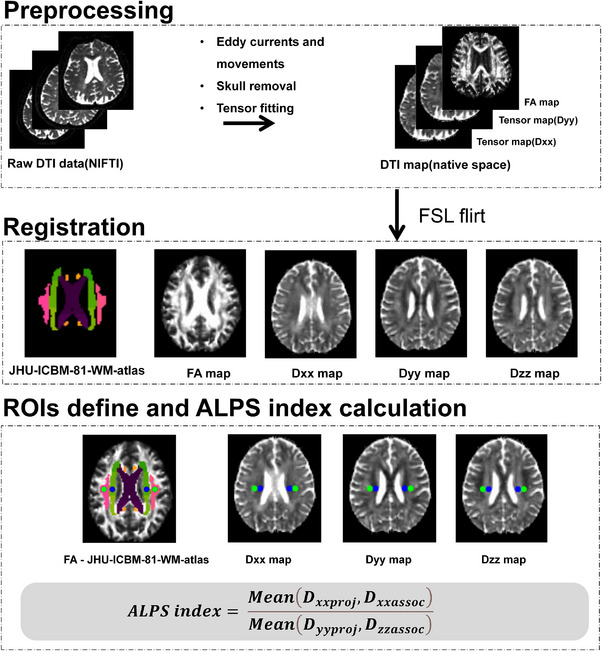
Methods: Participants from two independent studies, Sino Longitudinal Study on Cognitive Decline (SILCODE, n = 654) and the Alzheimer's Disease Neuroimaging Initiative (ADNI, n = 650), representing different ethnicities and disease stages, were included to assess glymphatic function using diffusion tensor image analysis along the perivascular space (DTI-ALPS).
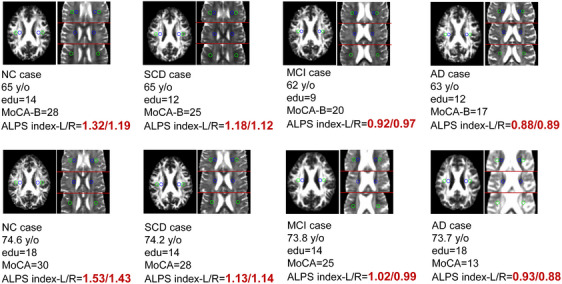
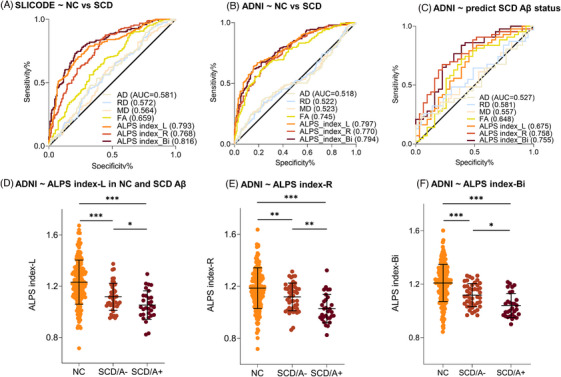
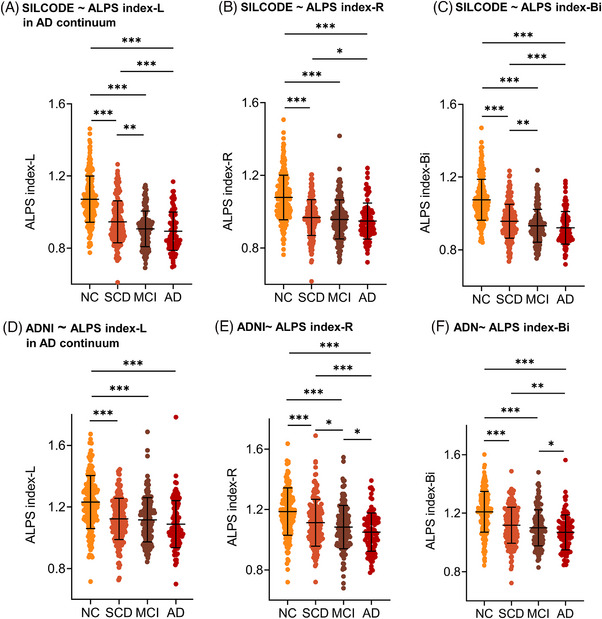
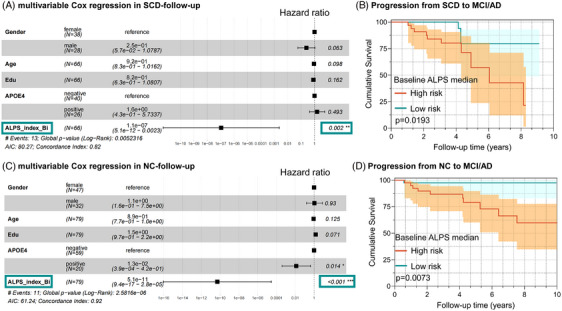
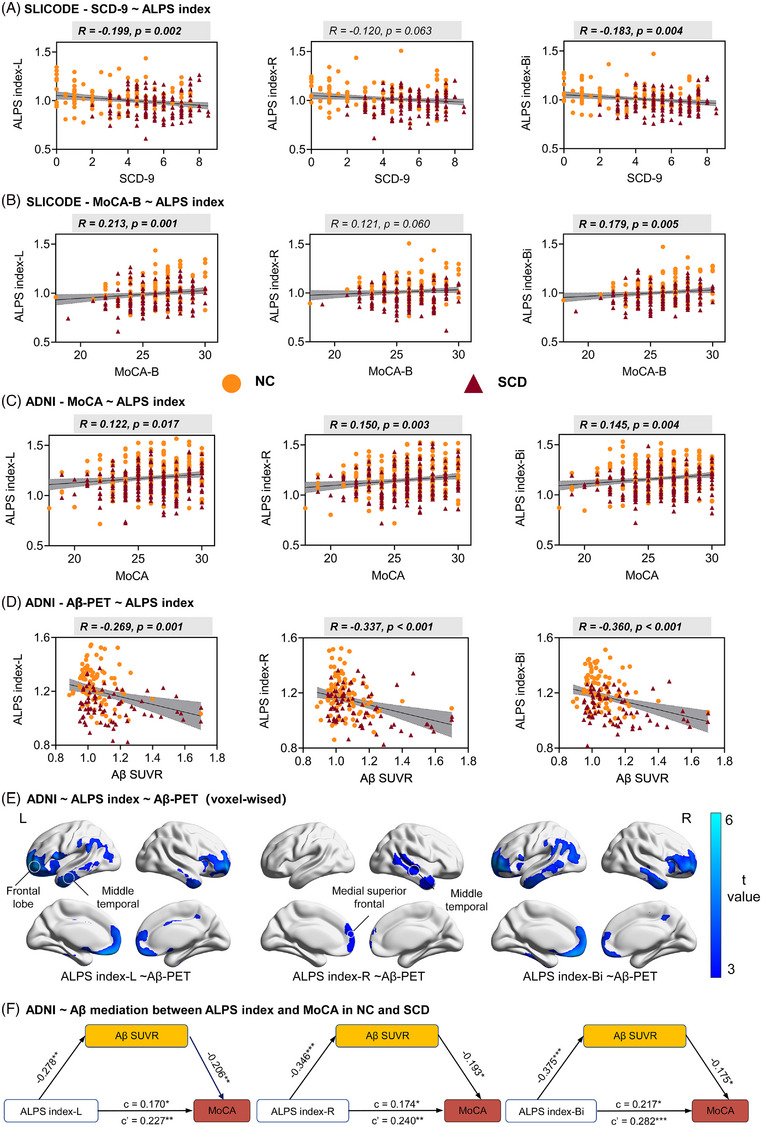
Results: Abnormal glymphatic function occurs during the SCD stage, with the ALPS index demonstrating excellent classification performance for SCD and normal controls (area under the receiver operating characteristic curve [AUC]SILCODE = 0.816, AUCADNI = 0.797). Lower ALPS index indicates higher risk of cognitive progression, which is negatively correlated with Subjective Cognitive Decline Questionnaire 9 scores and amyloid positron emission tomography burden.
Disscusion: Our study suggests the ALPS index has the potential to serve as a biomarker for SCD.
Highlights: Glymphatic function characterized by the analysis along the perivascular space (ALPS) index becomes abnormal in subjective cognitive decline (SCD), the earliest symptomatic manifestation and preclinical stage of Alzheimer's disease (AD). The ALPS index demonstrates excellent classification performance for SCD and normal controls in the East Asian and Western cohorts. Participants with a lower ALPS index show a higher risk of clinical progression. The ALPS index is closely associated with serval cognitive scales and amyloid beta burden.
Keywords: Alzheimer's disease; biomarker; diffusion tensor image analysis along the perivascular space; glymphatic; subjective cognitive decline.
© 2024 The Author(s). Alzheimer's & Dementia published by Wiley Periodicals LLC on behalf of Alzheimer's Association.
Conflict of interest statement
The authors declare no conflicts of interest. Author disclosures are available in the supporting information.
Figures
References
-
- Dementia: World Health Organization (WHO) . World Health Organization. 2021. Accessed January 15, 2023. https://www.who.int/news‐room/fact‐sheets/detail/dementi
MeSH terms
Substances
Grants and funding
- 62206165/National Natural Science Foundation of China
- 62376150/National Natural Science Foundation of China
- 82020108013/National Natural Science Foundation of China
- 82272039/National Natural Science Foundation of China
- 82021002/National Natural Science Foundation of China
- 81971641/National Natural Science Foundation of China
- 82001773/National Natural Science Foundation of China
- 82327809/National Natural Science Foundation of China
- No. XTCX-KJ-2023-37/Shanghai Industrial Collaborative Innovation Project
- 22YF1413900/Shanghai Science and Technology Development Funds
- 20221842/Medical Science Research Project of Hebei Province
- Construction Project of Academician Cooperation Key Unit of Hebei Province
- 2020YJZX0111/Research project of Shanghai Health Commission
- 2022YFC2009902/National Key R&D Program of China
- 2022YFC2009900/National Key R&D Program of China
- M-0759/Sino-German Cooperation Grant
- 2022ZD0211800:2022ZD0211600:2022ZD021600/Scientific and Technological Innovation 2030
- SHDC2020CR1038B/Clinical Research Plan of Shanghai Hospital Development
- Shenzhen Bay Scholars Program
LinkOut - more resources
Full Text Sources
Medical
