


Perceptions, prevalence, and patterns of cannabis use among cancer patients treated at 12 NCI-Designated Cancer Centers
- PMID: 39108244
- PMCID: PMC11303851
- DOI: 10.1093/jncimonographs/lgae029
Perceptions, prevalence, and patterns of cannabis use among cancer patients treated at 12 NCI-Designated Cancer Centers
Erratum in
-
Correction to: Perceptions, prevalence, and patterns of cannabis use among cancer patients treated at 12 NCI-Designated Cancer Centers.J Natl Cancer Inst Monogr. 2025 Nov 15:lgaf038. doi: 10.1093/jncimonographs/lgaf038. Online ahead of print. J Natl Cancer Inst Monogr. 2025. PMID: 41240388 No abstract available.
Abstract
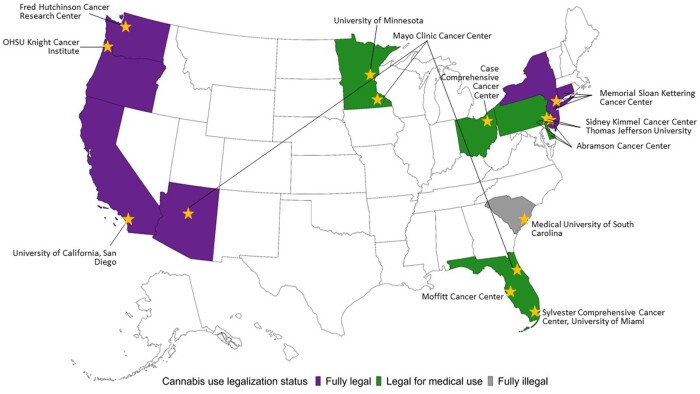
Background: The legal climate for cannabis use has dramatically changed with an increasing number of states passing legislation legalizing access for medical and recreational use. Among cancer patients, cannabis is often used to ameliorate adverse effects of cancer treatment. Data are limited on the extent and type of use among cancer patients during treatment and the perceived benefits and harms. This multicenter survey was conducted to assess the use of cannabis among cancer patients residing in states with varied legal access to cannabis.
Methods: A total of 12 NCI-Designated Cancer Centers, across states with varied cannabis-access legal status, conducted surveys with a core questionnaire to assess cannabis use among recently diagnosed cancer patients. Data were collected between September 2021 and August 2023 and pooled across 12 cancer centers. Frequencies and 95% confidence intervals for core survey measures were calculated, and weighted estimates are presented for the 10 sites that drew probability samples.
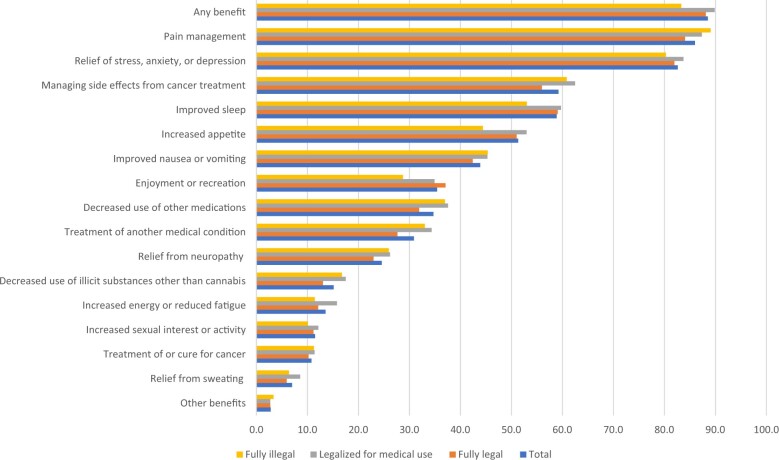
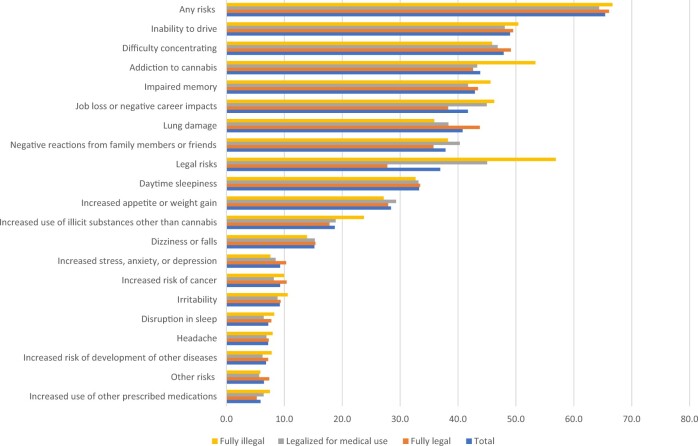
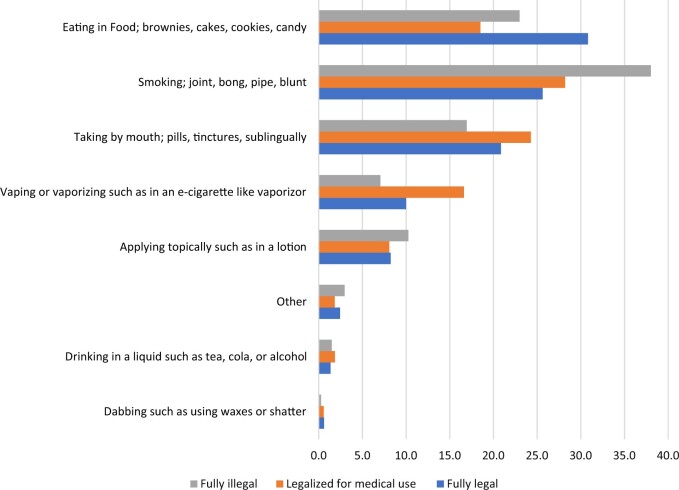
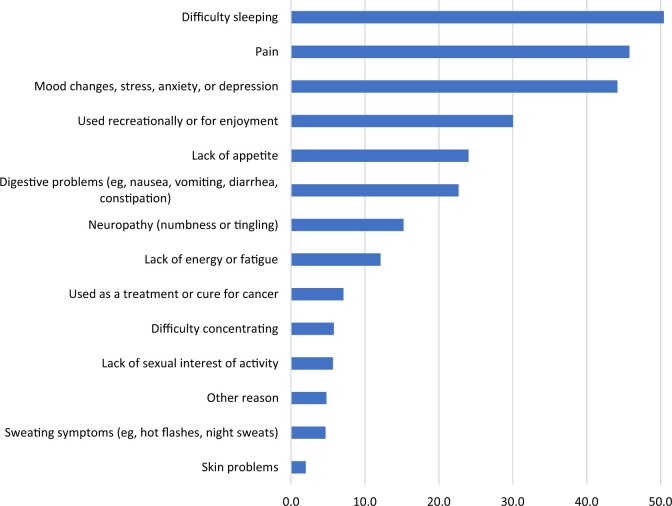
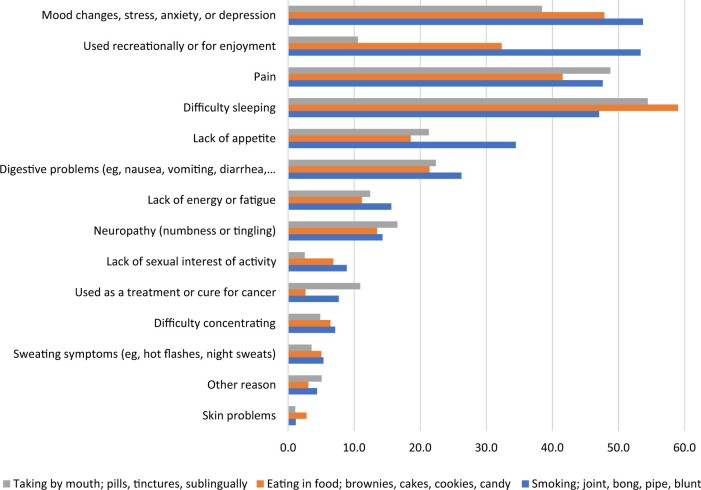
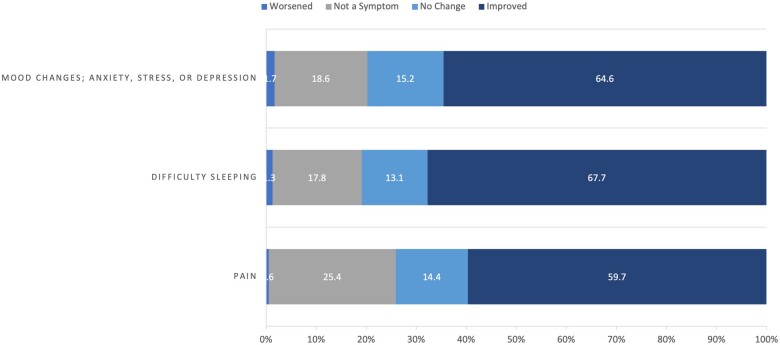
Results: Overall reported cannabis use since cancer diagnosis among survey respondents was 32.9% (weighted), which varied slightly by state legalization status. The most common perceived benefits of use were for pain, sleep, stress and anxiety, and treatment side effects. Reported perceived risks were less common and included inability to drive, difficulty concentrating, lung damage, addiction, and impact on employment. A majority reported feeling comfortable speaking to health-care providers though, overall, only 21.5% reported having done so. Among those who used cannabis since diagnosis, the most common modes were eating in food, smoking, and pills or tinctures, and the most common reasons were for sleep disturbance, followed by pain and stress and anxiety with 60%-68% reporting improved symptoms with use.
Conclusion: This geographically diverse survey demonstrates that patients use cannabis regardless of its legal status. Addressing knowledge gaps concerning benefits and harms of cannabis use during cancer treatment is critical to enhance patient-provider communication.
Published by Oxford University Press 2024.
Conflict of interest statement
Dr Jon O. Ebbert has consulting agreements with K Health, Exact Sciences, and MedinCell and serves on the scientific advisory board for Applied Aerosol Technologies, which are not related to the current work.
Figures
References
-
- Reynolds JR. Therapeutical uses and toxic effects of cannabis indica. Lancet. 1890;135(3473):637-638.
-
- DEA. Drug Scheduling. 10 July 2018. https://www.dea.gov/drug-information/drug-scheduling. Accessed November 8, 2023.
-
- NCoS Legislatures. State Medical Cannabis Laws. https://www.ncsl.org/health/state-medical-cannabis-laws. Accessed November 8, 2023.
Publication types
MeSH terms
Substances
Grants and funding
- P30CA016520/12 NCI-Designated Cancer Centers
- P30 CA077598/CA/NCI NIH HHS/United States
- P30 CA015704/CA/NCI NIH HHS/United States
- P30 CA008748/CA/NCI NIH HHS/United States
- P30 CA076292/CA/NCI NIH HHS/United States
- P30 CA015083/CA/NCI NIH HHS/United States
- P30 CA023100/CA/NCI NIH HHS/United States
- P30 CA016520/CA/NCI NIH HHS/United States
- P30 CA043703/CA/NCI NIH HHS/United States
- P30 CA138313/CA/NCI NIH HHS/United States
- NH/NIH HHS/United States
- HH/HHS/United States
- P30 CA240139/CA/NCI NIH HHS/United States
- P30 CA069533/CA/NCI NIH HHS/United States
- P30 CA056036/CA/NCI NIH HHS/United States
