[Preprint]. 2024 Jul 22:2024.04.23.24306238.
doi: 10.1101/2024.04.23.24306238.

Mass incarceration as a driver of the tuberculosis epidemic in Latin America and projected impacts of policy alternatives: A mathematical modeling study

Affiliations

Mass incarceration as a driver of the tuberculosis epidemic in Latin America and projected impacts of policy alternatives: A mathematical modeling study

Yiran E Liu et al. medRxiv. .

Update in

Abstract

Background: Tuberculosis incidence is increasing in Latin America, where the incarcerated population has nearly quadrupled since 1990. The full impact of incarceration on the tuberculosis epidemic, accounting for effects beyond prisons, has never been quantified.

Methods: We calibrated dynamic compartmental transmission models to historical and contemporary data from Argentina, Brazil, Colombia, El Salvador, Mexico, and Peru, which comprise approximately 80% of the region's incarcerated population and tuberculosis burden. Using historical counterfactual scenarios, we estimated the transmission population attributable fraction (tPAF) for incarceration and the excess population-level burden attributable to increasing incarceration prevalence since 1990. We additionally projected the impact of alternative incarceration policies on future population tuberculosis incidence.

Findings: Population tuberculosis incidence in 2019 was 29.4% (95% UI, 23.9-36.8) higher than expected without the rise in incarceration since 1990, corresponding to 34,393 (95% UI, 28,295-42,579) excess incident cases across countries. The incarceration tPAF in 2019 was 27.2% (95% UI, 20.9-35.8), exceeding estimates for other risk factors like HIV, alcohol use disorder, and undernutrition. Compared to a scenario where incarceration rates remain stable at current levels, a gradual 50% reduction in prison admissions and duration of incarceration by 2034 would reduce population tuberculosis incidence by over 10% in all countries except Mexico.

Interpretation: The historical rise in incarceration in Latin America has resulted in a large excess tuberculosis burden that has been under-recognized to-date. International health agencies, ministries of justice, and national tuberculosis programs should collaborate to address this health crisis with comprehensive strategies, including decarceration.

Funding: National Institutes of Health.


Conflict of interest statement

Declaration of interests We declare no competing interests.

Figures
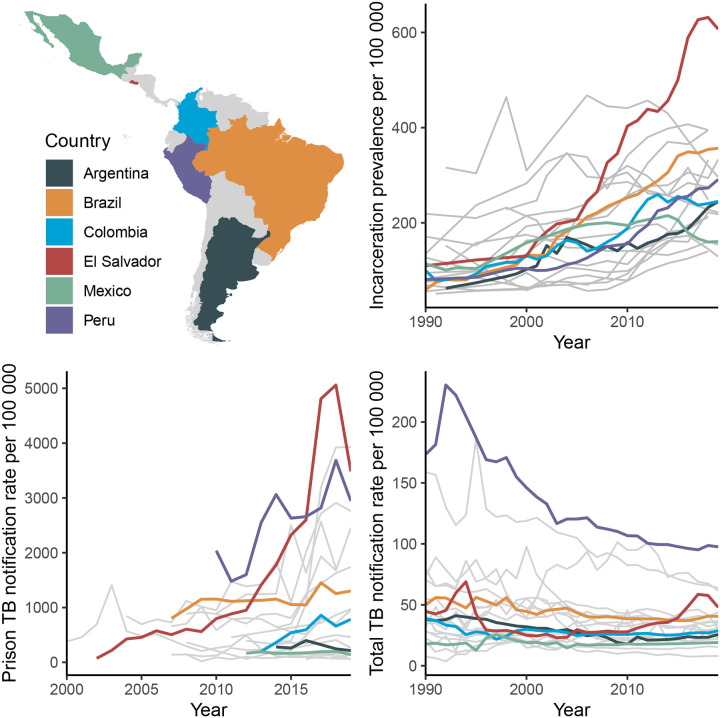
Figure 1.
Figure 1.. Geographic, demographic, and epidemiologic heterogeneity among included countries.
Countries included in the analysis are highlighted in color; remaining countries in Latin America are depicted in grey. Incarceration prevalence refers to the number of people per 100,000 population who are incarcerated at a given point in time. Tuberculosis (TB) notification rates are per 100,000 person-years. Data on prison tuberculosis notifications are only available starting in 2000. Latin America includes Mexico, Central America, and South America.
Figure 2.
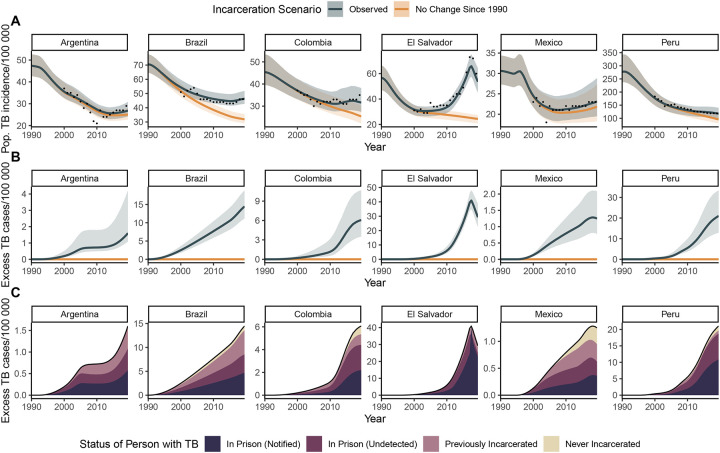
Figure 2.. Excess population tuberculosis incidence attributable to the rise in incarceration prevalence since 1990.
A) Population tuberculosis incidence per 100,000 person-years under the observed and counterfactual (no rise in incarceration since 1990) scenarios. Black points represent population tuberculosis (TB) incidence estimates from the World Health Organization, which are available beginning in 2000. Solid lines and shaded bands represent the median and 95% UI respectively. B) Excess population-wide incident tuberculosis cases per 100,000 person-years. C) Median estimates of excess cases, stratified by population subgroup in which they occurred, and for incident cases occurring in prison, additionally stratified by whether the disease was notified or undetected during incarceration. All model results are for the population age 15 and older.
Figure 3.
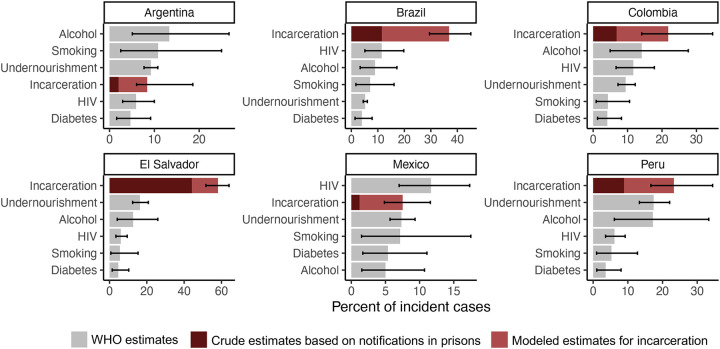
Figure 3.. Population attributable fraction (PAF) for incarceration and other tuberculosis risk factors.
Median estimates and uncertainty intervals for the percent of population-level incident tuberculosis cases in 2019 that can be attributed to each risk factor. The “crude” estimate of the population attributable fraction for incarceration is based on the percent of all notified tuberculosis cases occurring in prisons. Estimates for all other risk factors are from the World Health Organization (WHO). Risk factors are listed in descending order by PAF for each country. Estimates correspond to different age groups: incarceration, age ≥15; undernutrition, all ages; HIV, all ages; alcohol, age ≥15; smoking, age ≥15; diabetes, age ≥18 (see Methods).
Figure 4.
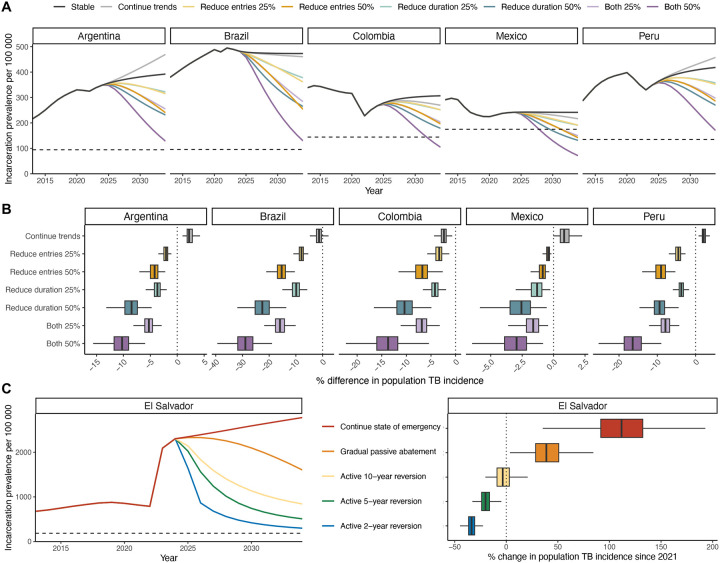
Figure 4.. Projected impacts of incarceration-related interventions on future population tuberculosis incidence.
A) Median incarceration prevalence per 100,000 population aged 15 and older under incarceration scenarios implemented between 2024 and 2034: stable entry and release rates (reference scenario), continuation of trends from prior ten years, and 25% or 50% reduction in prison entry rates, duration of incarceration, or both by 2034. The dashed horizontal line represents incarceration prevalence in 1990. B) Percent difference in population tuberculosis incidence in 2034 under each incarceration scenario, relative to the reference scenario of stable entry and release rates. Outliers are not shown. C) Left: Median incarceration prevalence under each incarceration scenario in El Salvador: continuation of entry and release rates under the state of emergency, passive abatement through gradual reversion of entry and release rates to pre-emergency levels by 2034, active cessation and approximate restoration of pre-emergency incarceration prevalence in ten years, or restoration of pre-emergency prevalence in five years or two years with continued decarceration thereafter. The dashed horizontal line represents incarceration prevalence in 1990. Right: Percent change in population TB incidence since 2021 under each scenario.

References

    1. Global Tuberculosis Report 2023: World Health Organization, 2023.
    1. Institute for Crime & Justice Policy Research. World Prison Brief. prisonstudies.org (accessed December 3 2023).
    1. Walter KS, Martinez L, Arakaki-Sanchez D, et al. The escalating tuberculosis crisis in central and South American prisons. The Lancet 2021; 397(10284): 1591–6. - PMC - PubMed
    1. Cords O, Martinez L, Warren JL, et al. Incidence and prevalence of tuberculosis in incarcerated populations: a systematic review and meta-analysis. The Lancet Public Health 2021. - PMC - PubMed
    1. Martinez L, Warren JL, Harries AD, et al. Global, regional, and national estimates of tuberculosis incidence and case detection among incarcerated individuals from 2000 to 2019: a systematic analysis. The Lancet Public Health 2023; 8(7): e511–e9. - PMC - PubMed

Publication types

LinkOut - more resources