


The effects of ACSM-based exercise on breast cancer-related lymphoedema: a systematic review and meta-analysis
- PMID: 39108540
- PMCID: PMC11300927
- DOI: 10.3389/fphys.2024.1413764
The effects of ACSM-based exercise on breast cancer-related lymphoedema: a systematic review and meta-analysis
Abstract
Background: Breast cancer-related lymphedema (BCRL) frequently occurs after axillary lymph node dissection and remains incurable even with lymphaticovenular anastomosis. Exercise interventions have emerged as a potential non-pharmacological management approach. However, standardized exercise recommendations tailored to BCRL patients are lacking.
Purpose: This study evaluated the impact of high and low compliance exercise interventions, aligned with ACSM recommendations, on quality of life (QOL), shoulder range of motion (ROM), and arm volume in BCRL patients. It further aimed to determine the optimal exercise dosage, assessed via the FITT (frequency, intensity, time, type) principle, that maximizes health benefits for BCRL patients.
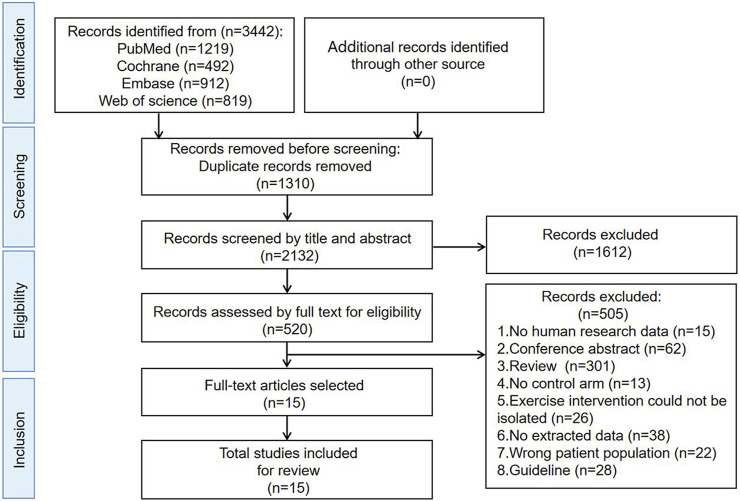
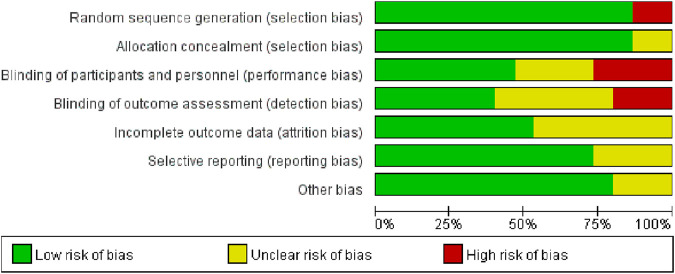
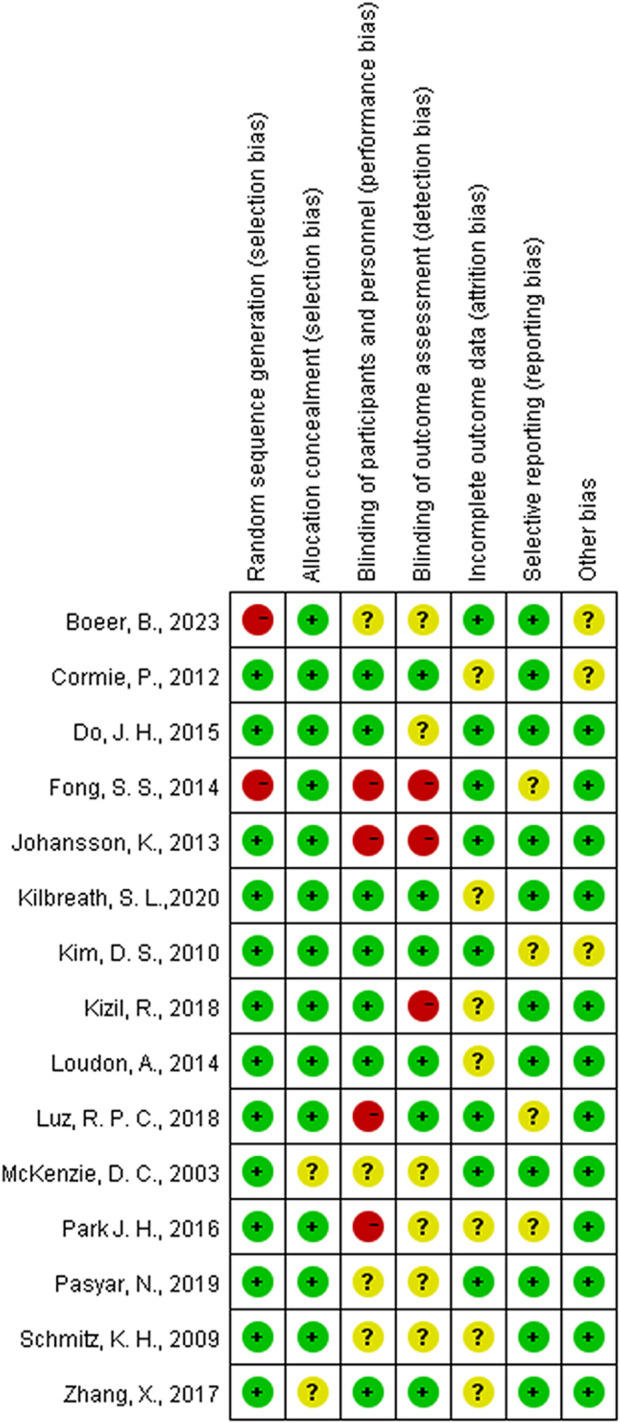
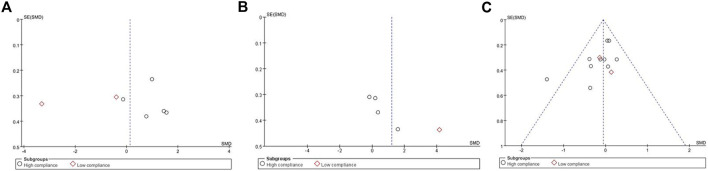
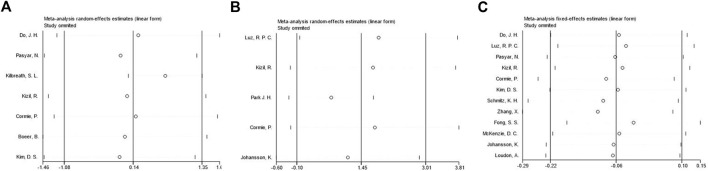
Methods: Adhering to the PRISMA guidelines for systematic reviews and meta-analyses, we conducted a comprehensive literature search in various databases, including PubMed, Embase, Cochrane Library, and Web of Science, encompassing the period from the inception of these databases to December 2023. We extracted data on exercise form, frequency, intensity, duration, repetitions, and sets from the identified studies. Subsequently, a meta-analysis and review were conducted. The exercise interventions were evaluated based on ACSM recommendations and categorized as either high or low compliance with ACSM standards. Fixed or random effects models were employed to compare outcomes across study subgroups with comparable results. Additionally, funnel plot analyses, sensitivity analyses, and Egger's and Begg's tests were conducted to evaluate the potential for bias.
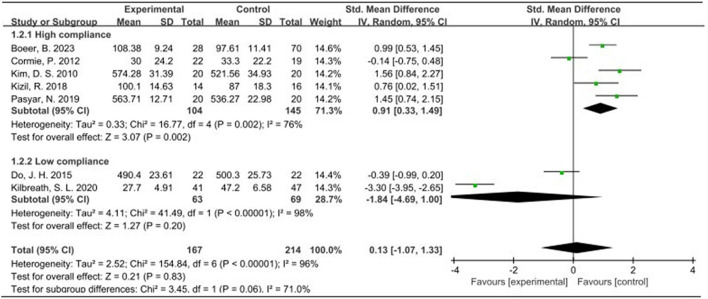
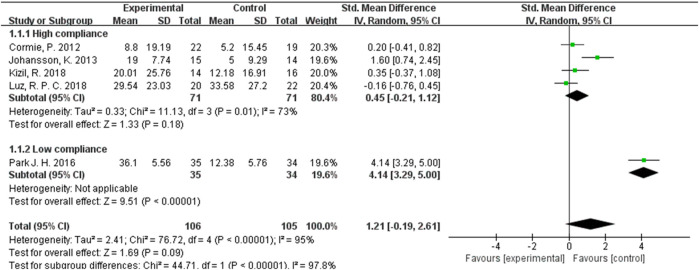
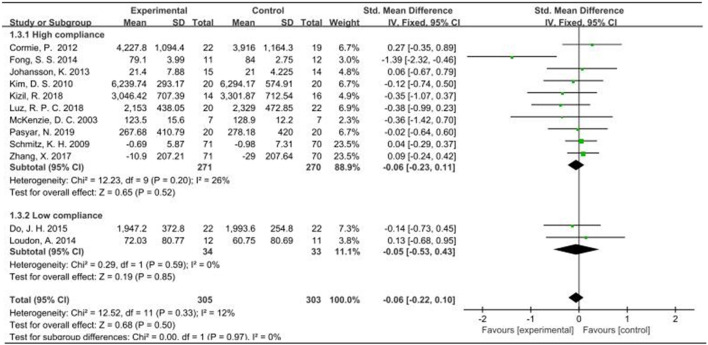
Results: 15 studies encompassing 863 patients with BCRL were analyzed. Eleven studies exhibited high ACSM compliance, while four demonstrated low ACSM compliance. Regarding QOL, the overall standard mean difference (SMD) was 0.13 (95% CI: -1.07, 1.33). Specifically, the SMD for the high-adherence subgroup was 0.91 (95% CI: 0.33, 1.49; p = 0.002). For ROM, the overall SMD was 1.21 (95% CI: -0.19, 2.61). For arm volume, the overall SMD was -0.06 (95% CI: -0.22, 0.10). QOL results differed significantly in the high-adherence subgroup, whereas no significant effect on ROM or arm volume was observed.
Conclusion: The study revealed significant QOL improvements in patients with high ACSM compliance, contrasted with those with low compliance. Conversely, no notable changes in ROM or arm volume were observed. Notably, the high adherence group tended to show better ROM during exercise and stable arm volume. Future research is needed to validate these findings.
Keywords: ACSM; breast cancer-related lymphedema; exercise; meta-analysis; systematic review.
Copyright © 2024 Luan, Li, Yang, Xu, Chen, Wang, Chen and Ge.
Conflict of interest statement
The authors declare that the research was conducted in the absence of any commercial or financial relationships that could be construed as a potential conflict of interest.
Figures
References
-
- American college of sports medicine position stand (1998). American college of sports medicine position stand. The recommended quantity and quality of exercise for developing and maintaining cardiorespiratory and muscular fitness, and flexibility in healthy adults. Med. Sci. sports Exerc. 30 (6), 975–991. 10.1097/00005768-199806000-00032 - DOI - PubMed
-
- Bittar S., Simman R., Lurie F. (2020). Lymphedema: a practical approach and clinical update. Wounds 32 (3), 86–92. - PubMed
Publication types
LinkOut - more resources
Full Text Sources
Other Literature Sources
