


Neuroprotection by ADAM10 inhibition requires TrkB signaling in the Huntington's disease hippocampus
- PMID: 39112663
- PMCID: PMC11335257
- DOI: 10.1007/s00018-024-05382-1
Neuroprotection by ADAM10 inhibition requires TrkB signaling in the Huntington's disease hippocampus
Abstract
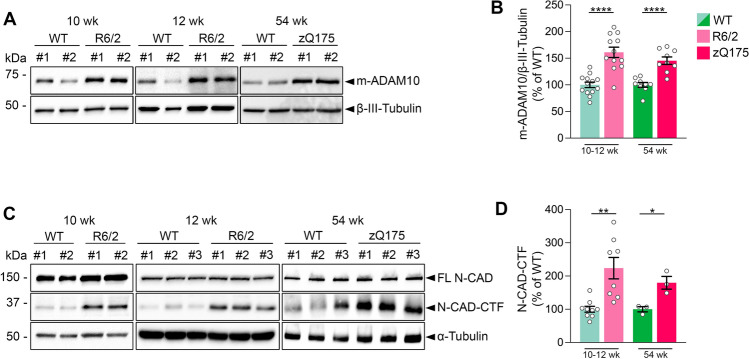
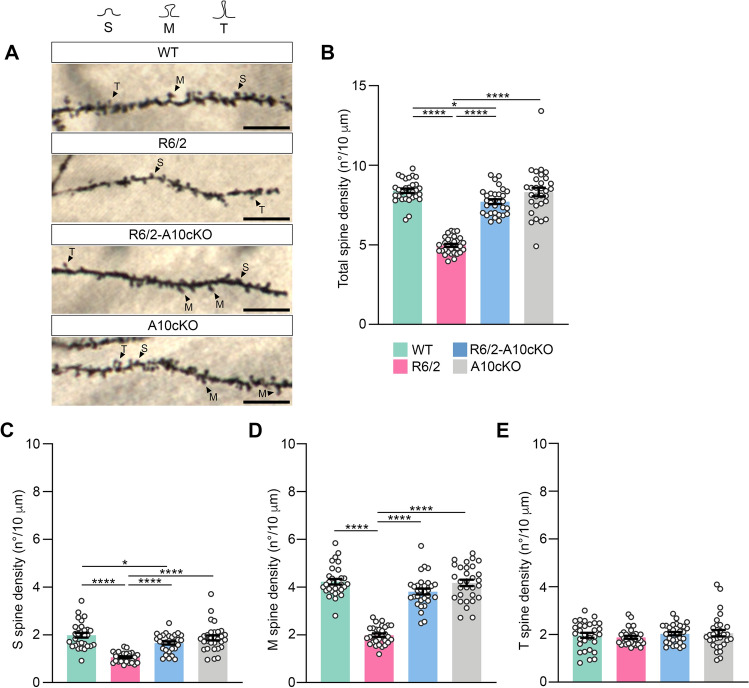
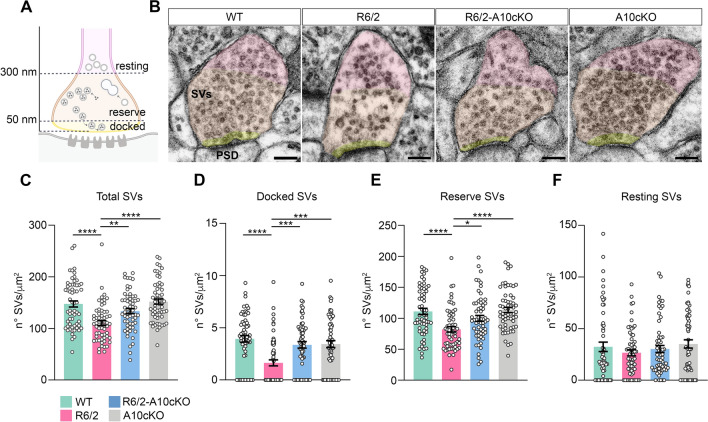
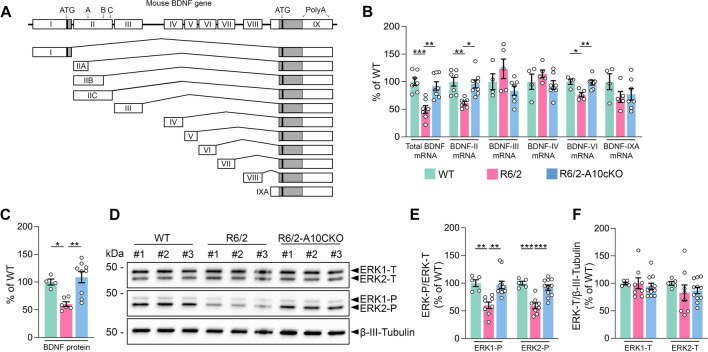
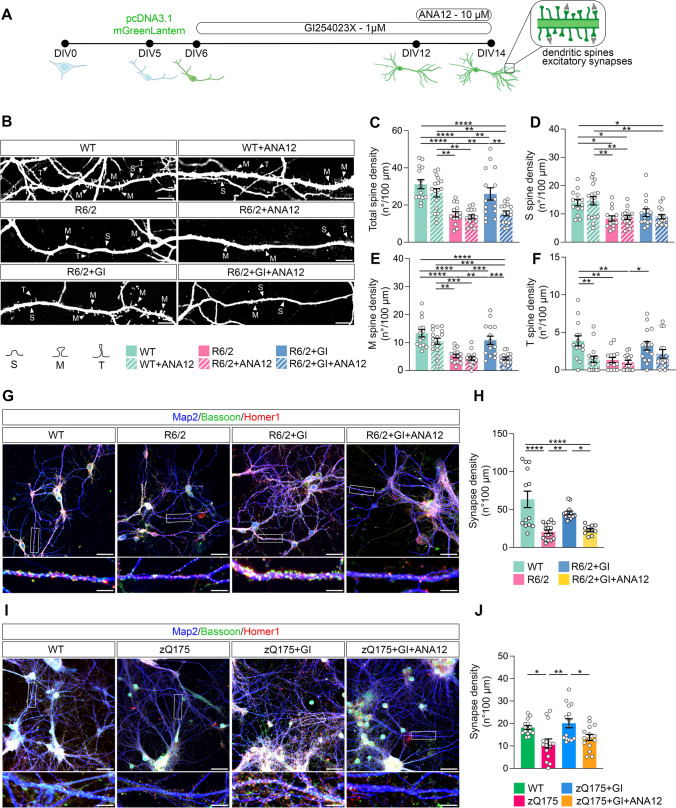
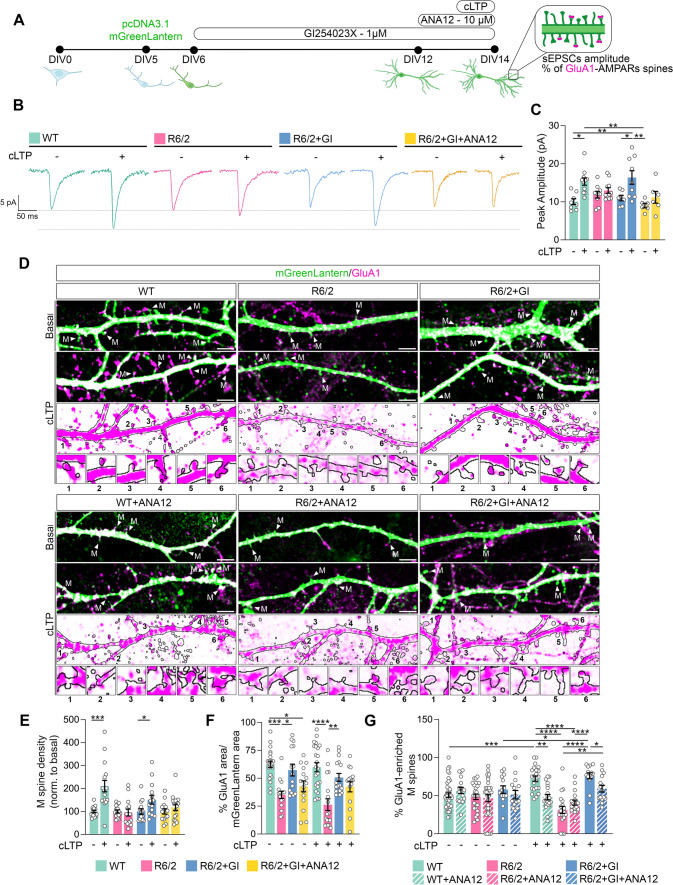
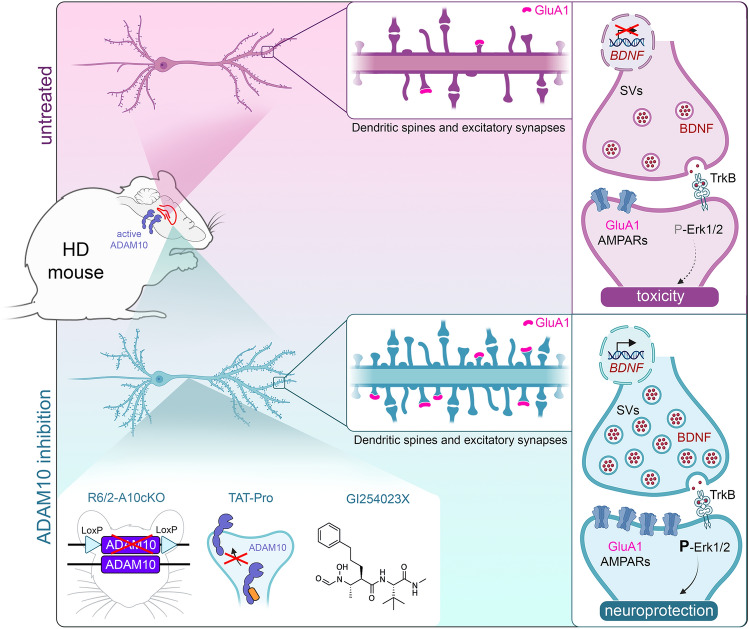
Synaptic dysfunction is an early pathogenic event leading to cognitive decline in Huntington's disease (HD). We previously reported that the active ADAM10 level is increased in the HD cortex and striatum, causing excessive proteolysis of the synaptic cell adhesion protein N-Cadherin. Conversely, ADAM10 inhibition is neuroprotective and prevents cognitive decline in HD mice. Although the breakdown of cortico-striatal connection has been historically linked to cognitive deterioration in HD, dendritic spine loss and long-term potentiation (LTP) defects identified in the HD hippocampus are also thought to contribute to the cognitive symptoms of the disease. The aim of this study is to investigate the contribution of ADAM10 to spine pathology and LTP defects of the HD hippocampus. We provide evidence that active ADAM10 is increased in the hippocampus of two mouse models of HD, leading to extensive proteolysis of N-Cadherin, which has a widely recognized role in spine morphology and synaptic plasticity. Importantly, the conditional heterozygous deletion of ADAM10 in the forebrain of HD mice resulted in the recovery of spine loss and ultrastructural synaptic defects in CA1 pyramidal neurons. Meanwhile, normalization of the active ADAM10 level increased the pool of synaptic BDNF protein and activated ERK neuroprotective signaling in the HD hippocampus. We also show that the ADAM10 inhibitor GI254023X restored LTP defects and increased the density of mushroom spines enriched with GluA1-AMPA receptors in HD hippocampal neurons. Notably, we report that administration of the TrkB antagonist ANA12 to HD hippocampal neurons reduced the beneficial effect of GI254023X, indicating that the BDNF receptor TrkB contributes to mediate the neuroprotective activity exerted by ADAM10 inhibition in HD. Collectively, these findings indicate that ADAM10 inhibition coupled with TrkB signaling represents an efficacious strategy to prevent hippocampal synaptic plasticity defects and cognitive dysfunction in HD.
Keywords: ADAM10; BDNF; Huntingtin; Synaptic dysfunctions.
© 2024. The Author(s).
Conflict of interest statement
The authors declare no competing interests.
Figures
References
-
- Paulsen JS, Langbehn DR, Stout JC, Aylward E, Ross CA, Nance M, Guttman M, Johnson S, MacDonald M, Beglinger LJ, Duff K, Kayson E, Biglan K, Shoulson I, Oakes D, Hayden M, Predict-HD Investigators and Coordinators of the Huntington Study Group (2008) Detection of Huntington’s disease decades before diagnosis: the Predict-HD study. J Neurol Neurosurg Psychiatry 79:874–880. 10.1136/jnnp.2007.128728 10.1136/jnnp.2007.128728 - DOI - PMC - PubMed
-
- Duff K, Paulsen J, Mills J, Beglinger LJ, Moser DJ, Smith MM, Langbehn D, Stout J, Queller S, Harrington DL, PREDICT-HD Investigators and Coordinators of the Huntington Study Group (2010) Mild cognitive impairment in prediagnosed Huntington disease. Neurology 75:500–507. 10.1212/WNL.0b013e3181eccfa2 10.1212/WNL.0b013e3181eccfa2 - DOI - PMC - PubMed
MeSH terms
Substances
Grants and funding
LinkOut - more resources
Full Text Sources
Medical
Research Materials
Miscellaneous
