Using Combination therapy to overcome diverse challenges of Immune Checkpoint Inhibitors treatment
- PMID: 39113705
- PMCID: PMC11302893
- DOI: 10.7150/ijbs.93697
Using Combination therapy to overcome diverse challenges of Immune Checkpoint Inhibitors treatment
Abstract
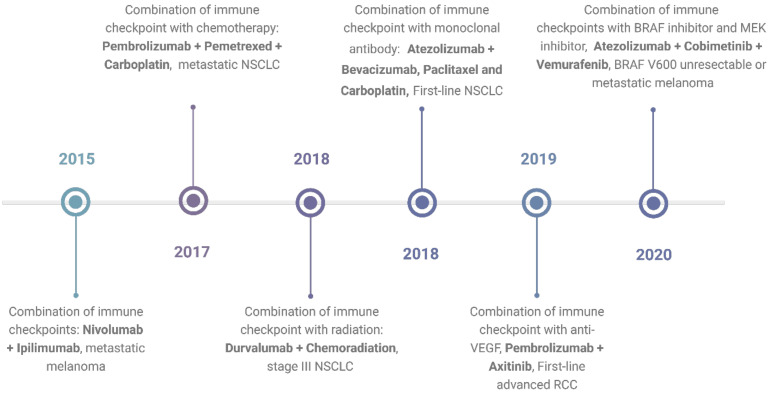
Immune checkpoint inhibitors (ICIs) have heralded a new era in immunotherapy, representing a pivotal breakthrough in cancer treatment. Their impact is profound, with ICIs standing as some of the most prescribed anticancer therapies today. Notably, their ability to induce long-term remission even after treatment cessation provides genuine hope for achieving durable cures. However, despite these strides, challenges persist in the landscape of oncology, including resistance phenomena, immune-related adverse events, and suboptimal response rates. In response to these challenges, combination therapy emerges as a promising approach, poised to enhance treatment outcomes and address limitations inherent to single-agent ICI therapy. By synergistically targeting multiple pathways, combination therapy holds the potential to augment therapeutic efficacy while mitigating toxicity and impeding the emergence of resistance mechanisms. Understanding the intricacies underlying resistance development and adverse events is paramount in devising novel and refined combination strategies. A timeline showing FDA approvals of ICIs combination is shown in Figure 1. This review aims to provide a comprehensive and up-to-date examples of different combined therapy strategies that can be used to overcome various challenges regarding ICI treatment. Through the exploration of innovative therapeutic combinations, we aim to provide clinicians and researchers with actionable knowledge to optimize patient outcomes and propel the field of immuno-oncology forward.
© The author(s).
Conflict of interest statement
Competing Interests: The authors have declared that no competing interest exists.
Figures
References
Publication types
MeSH terms
Substances
LinkOut - more resources
Full Text Sources
Medical