


Enhancing Endometrial Health in Assisted Reproductive Technology (ART): Evaluating Autologous Endometrial Cells and Platelets-Rich Plasma (PRP) via Hysteroscopic Injections
- PMID: 39114217
- PMCID: PMC11305442
- DOI: 10.7759/cureus.64068
Enhancing Endometrial Health in Assisted Reproductive Technology (ART): Evaluating Autologous Endometrial Cells and Platelets-Rich Plasma (PRP) via Hysteroscopic Injections
Abstract
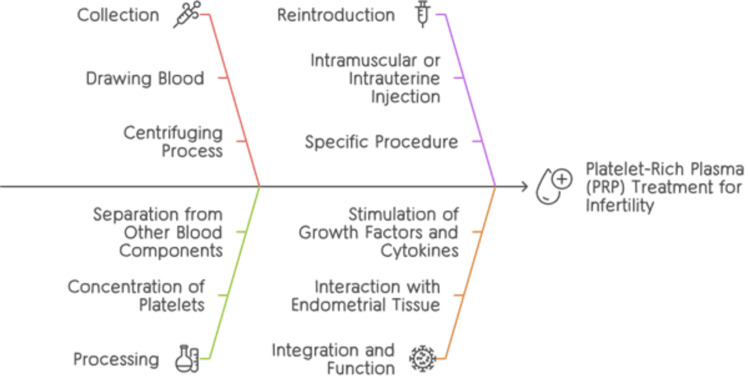
This review article examines the effectiveness of incorporating autologous endometrial cells and platelet-rich plasma (PRP) through hysteroscopic injections within the field of assisted reproductive technology (ART). This study assesses the outcomes of these injections on the susceptibility of the endometrium, the dynamics of the uterus, and the frequencies of pregnancy in individuals with refractory thin endometrium. Based on a complete examination of several trials, it becomes apparent that autologous PRP injections provide encouraging turnouts in augmenting endometrial thickness, raising endometrial receptivity, and, in the end, raising chances of being pregnant and successful delivery. The research highlights the promise of autologous PRP and minimally changed endometrial cellular treatments in enhancing outcomes in ART, especially for people who have had problems with implantation. This article gives a whole evaluation of the medical use of and upgrades regarding the utilization of infusions of PRP and autologous endometrial cells under hysteroscopic control to deal with infertility issues related to endometrial health through the synthesis of contemporary studies.
Keywords: biomarkers; endometrial receptivity; endometrial volumetric analysis; infertility therapy; instillations.
Copyright © 2024, Karadbhajne et al.
Conflict of interest statement
Conflicts of interest: In compliance with the ICMJE uniform disclosure form, all authors declare the following: Payment/services info: All authors have declared that no financial support was received from any organization for the submitted work. Financial relationships: All authors have declared that they have no financial relationships at present or within the previous three years with any organizations that might have an interest in the submitted work. Other relationships: All authors have declared that there are no other relationships or activities that could appear to have influenced the submitted work.
Figures
References
-
- Endometrial receptivity in the light of modern assisted reproductive technologies. Wallach EE, Yaron Y, Botchan A, Amit A, Peyser MR, David MP, Lessing JB. Fertil Steril. 1994;62:225–232. - PubMed
-
- What exactly is endometrial receptivity? Lessey BA, Young SL. Fertil Steril. 2019;111:611–617. - PubMed
-
- The clinical efficiency of transcriptome-based endometrial receptivity assessment (Tb-ERA) in Chinese patients with recurrent implantation failure (RIF): a study protocol for a prospective randomized controlled trial. Zhang WB, Li H, Lu X, et al. Contemp Clin Trials Commun. 2022;28:100928. - PMC - PubMed
Publication types
LinkOut - more resources
Full Text Sources
Research Materials