


Interference across time: dissociating short from long temporal interference
- PMID: 39114585
- PMCID: PMC11305178
- DOI: 10.3389/fpsyg.2024.1393065
Interference across time: dissociating short from long temporal interference
Abstract
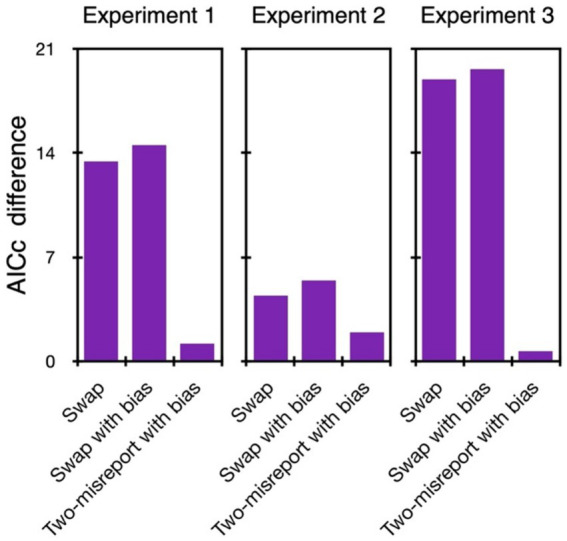
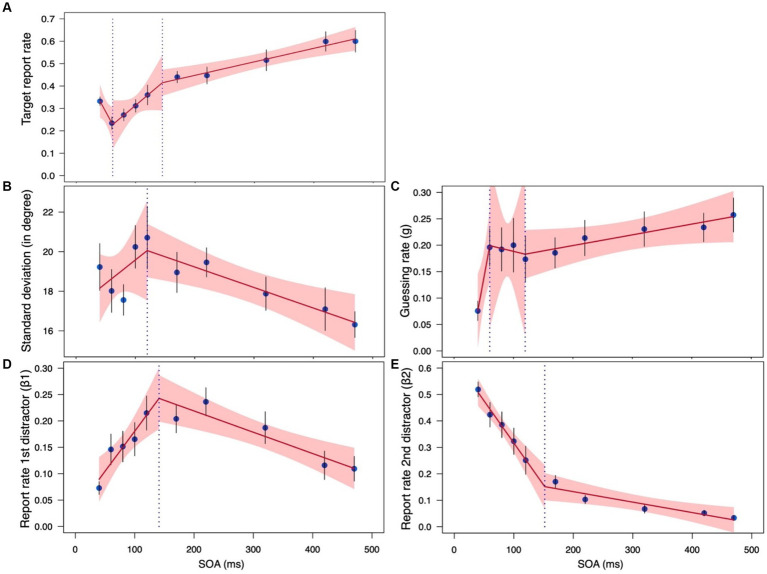
Our ability to identify an object is often impaired by the presence of preceding and/or succeeding task-irrelevant items. Understanding this temporal interference is critical for any theoretical account of interference across time and for minimizing its detrimental effects. Therefore, we used the same sequences of 3 orientation items, orientation estimation task, and computational models, to examine temporal interference over both short (<150 ms; visual masking) and long (175-475 ms; temporal crowding) intervals. We further examined how inter-item similarity modifies these different instances of temporal interference. Qualitatively different results emerged for interference of different scales. Interference over long intervals mainly degraded the precision of the target encoding while interference over short intervals mainly affected the signal-to-noise ratio. Although both interference instances modulated substitution errors (reporting a wrong item) and were alleviated with dissimilar items, their characteristics were markedly disparate. These findings suggest that different mechanisms mediate temporal interference of different scales.
Keywords: interference; mixture-model analysis; similarity; temporal crowding; visual masking.
Copyright © 2024 Hochmitz, Abu-Akel and Yeshurun.
Conflict of interest statement
The authors declare that the research was conducted in the absence of any commercial or financial relationships that could be construed as a potential conflict of interest.
Figures





References
-
- Bevan W., Jonides J., Collyer S. C. (1970). Chromatic relationships in metacontrast suppression. Psychon. Sci. 19, 367–368. doi: 10.3758/BF03328863 - DOI
LinkOut - more resources
Full Text Sources
