


Silymarin ameliorates diazinon-induced subacute nephrotoxicity in rats via the Keap1-Nrf2/heme oxygenase-1 signaling pathway
- PMID: 39117988
- PMCID: PMC11782450
- DOI: 10.1007/s11419-024-00697-x
Silymarin ameliorates diazinon-induced subacute nephrotoxicity in rats via the Keap1-Nrf2/heme oxygenase-1 signaling pathway
Abstract
Purpose: The goal of the current study was to clarify the potential molecular mechanism underlying the protective effects of silymarin (SIL) administration against diazinon-induced subacute nephrotoxicity, with a special emphasis on the role of the Kelch-like-associated protein-1 (Keap1)-nuclear factor erythroid 2-related factor 2 (Nrf2)-heme oxygenase-1 (HO-1) signaling pathway in minimizing the oxidative stress induced by diazinon (DZN).
Methods: Five equal groups of thirty adult male Wistar rats were created at random. Group 1 (G1) was maintained under typical control conditions and administered saline intragastrically (I/G) once daily for 4 weeks; G2 was administered olive oil I/G for 4 weeks; G3 was I/G administered silymarin daily for 4 weeks; G4 was I/G administered diazinon daily for 4 weeks. G5 was I/G administered silymarin daily 1 h before the I/G administration of the diazinon for 4 weeks. Blood samples were collected at the end of the experiment for the determination of complete blood cell count, and kidney function tests. Kidney specimens were collected for the evaluation of the oxidative markers, mRNA gene expression, protein markers, and histopathological examination.
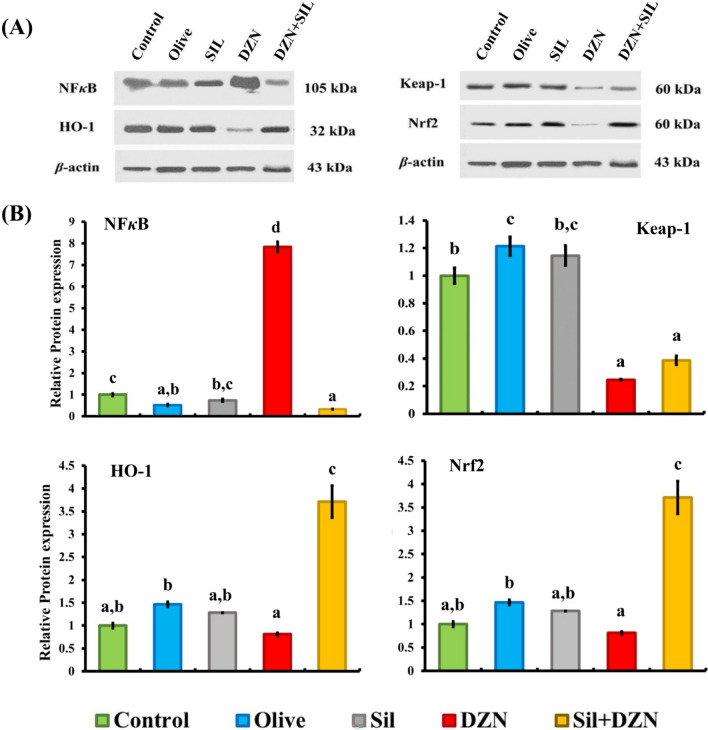
Results: SIL reduced the renal dysfunction caused by DZN by restoring urea and creatinine levels, as well as oxidative indicators. Although the expression of Keap-1 was also elevated, overexpression of Nrf2 also enhanced the expression of HO-1, a crucial target enzyme of Nrf2.
Conclusions: SIL is hypothesized to potentially aid in the prevention and management of nephrotoxicity caused by DZN.
Keywords: Diazinon; Heme oxygenase-1; Keap1; NF-κB; Nephrotoxicity; Silymarin.
© 2024. The Author(s).
Conflict of interest statement
Declarations. Conflict of interest: The authors declare no competing interests. Ethical approval: Regulations established by the Institutional Animal Ethics Committee of Benha University in Egypt were followed when conducting the current investigation under protocol approval number BUFVTM 03–04-21. Consent to participate: Acceptance of participation, each individual participant in this study provided both oral and written informed permission.
Figures

References
-
- Abdollahi M, Ranjbar A, Shadnia S, Nikfar S, Rezaie A (2004) Pesticides and oxidative stress: a review. Med Sci Monit 10(6):141–147 - PubMed
-
- WHO (2016) Safer access to pesticides: experiences from community interventions. World Health Organization. http://www.who.int
-
- Larkin DJ, Tjeerdema RS (2000) Fate and effects of diazinon. Rev Environ Contam Toxicol 166:49–82 - PubMed
-
- Tsitsimpikou C, Tzatzarakis M, Fragkiadaki P, Kovatsi L, Stivaktakis P, Kalogeraki A, Kouretas D, Tsatsakis AM (2013) Histopathological lesions, oxidative stress and genotoxic effects in liver and kidneys following long term exposure of rabbits to diazinon and propoxur. Toxicology 307:109–114. 10.1016/j.tox.2012.11.002 - DOI - PubMed
MeSH terms
Substances
LinkOut - more resources
Full Text Sources
Medical
Research Materials
