


Association between COVID-19 and the incidence of type 1 diabetes in Portugal - a registry study
- PMID: 39123199
- PMCID: PMC11313027
- DOI: 10.1186/s12902-024-01667-5
Association between COVID-19 and the incidence of type 1 diabetes in Portugal - a registry study
Abstract
Background: Viral respiratory infections may precipitate type 1 diabetes (T1D). A possible association between the severe acute respiratory syndrome coronavirus 2 (SARS-CoV-2), the virus responsible for COVID-19, and the incidence of T1D is being determined. This study was carried out using Portuguese registries, aiming at examining temporal trends between COVID-19 and T1D.
Methods: Hospital data, comparing the incidence before and during the COVID-19 pandemic, from children and young adults diagnosed with new-onset T1D, was acquired beginning in 2017 and until the end of 2022. Data was obtained from nine different Portuguese hospital units. The impact of the COVID-19 pandemic, beginning in March 2020, was assessed comparing the annual numbers of new-onset T1D cases. The annual median levels of glucose, glycated hemoglobin (HbA1c) and fasting C-peptide at T1D diagnosis were compared. The annual number of diabetic ketoacidosis (DKA) episodes among new T1D cases was also assessed at two centers.
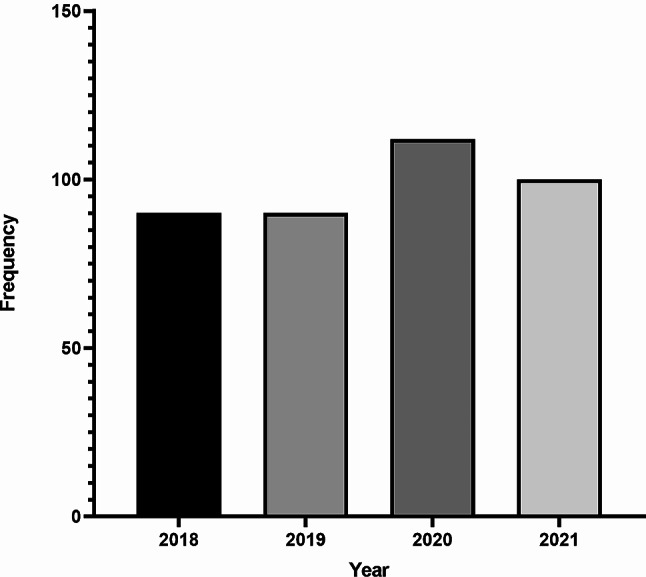
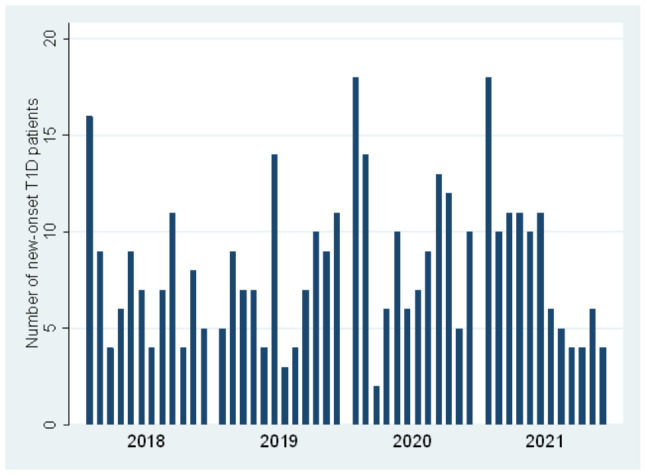
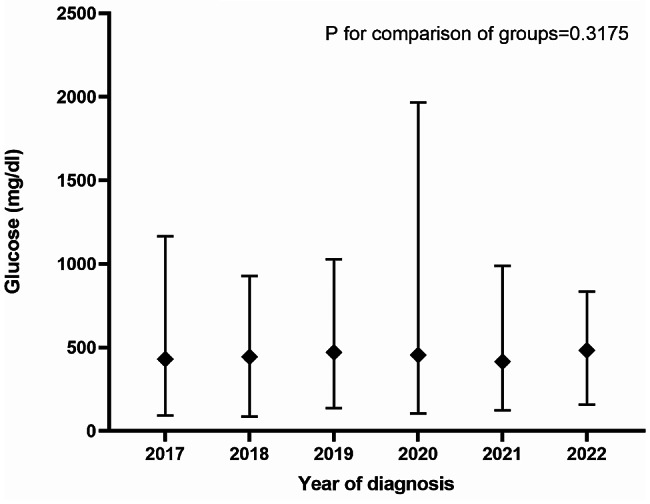
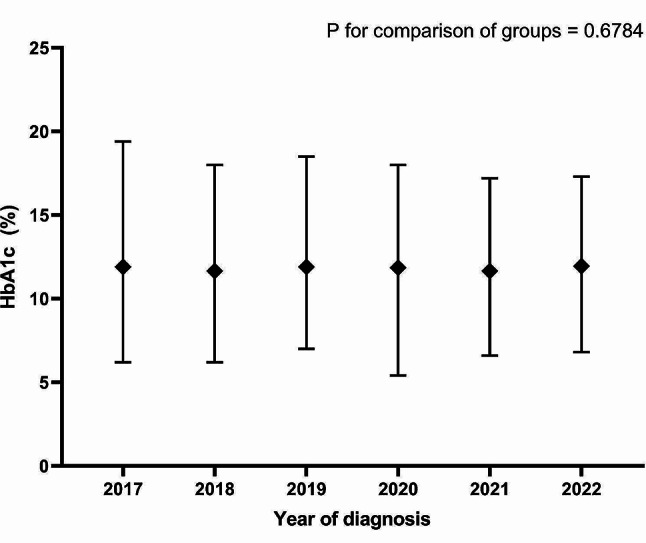
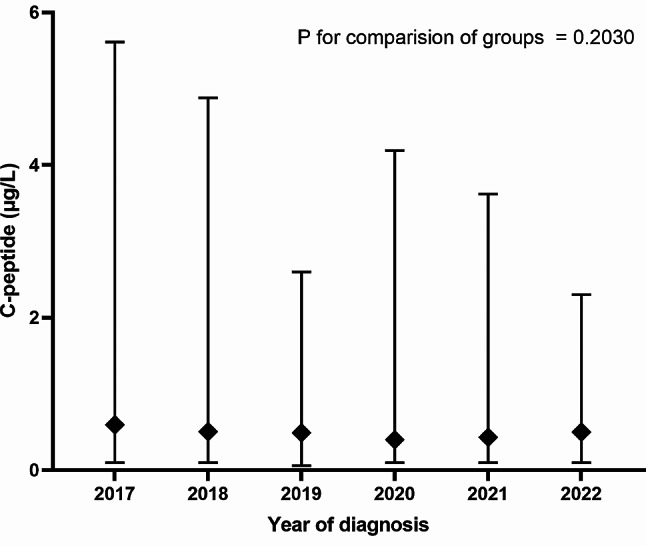
Results: In total, data from 574 newly diagnosed T1D patients was analyzed, including 530 (92.3%) children. The mean ages for child and adult patients were 9.1 (SD 4.4) and 32.8 (SD 13.6) years, respectively. 57.8% (331/573) were male, one patient had unknown sex. The overall median (25-75 percentiles) levels of glucose, HbA1c and fasting C-peptide at diagnosis were 454 mg/dL (356-568), 11.8% (10.1-13.4) and 0.50 µg/L (0.30-0.79), respectively. DKA at T1D diagnosis was present in 48.4% (76/157). For eight centers with complete 2018 to 2021 data (all calendar months), no overall significant increase in T1D cases was observed during the COVID-19 pandemic, i.e. 90 cases in 2018, 90 cases in 2019, 112 in 2020 and 100 in 2021 (P for trend = 0.36). Two of the centers, Faro (CHUA) and Dona Estefânia (CHULC) hospitals, did however see an increase in T1D from 2019 to 2020. No significant changes in glucose (P = 0.32), HbA1c (P = 0.68), fasting C-peptide (P = 0.20) or DKA frequency (P = 0.68) at the time of T1D diagnosis were observed over the entire study period.
Conclusion: The T1D incidence did not increase significantly, when comparing the years before and during the COVID-19 pandemic, nor did key metabolic parameters or number of DKA episodes change.
Keywords: COVID-19; Portugal; Type 1 diabetes.
© 2024. The Author(s).
Conflict of interest statement
The authors declare no competing interests.
Figures
References
-
- Gerasimidi Vazeou A, Kordonouri O, Witsch M, Hermann JM, Forsander G, de Beaufort C et al. Seasonality at the clinical onset of type 1 diabetes-lessons from the SWEET database. Pediatr Diabetes. 2016;17 Suppl 23:32 – 7. - PubMed
MeSH terms
Substances
LinkOut - more resources
Full Text Sources
Medical
Miscellaneous
