


Biochar from Co-Pyrolyzed Municipal Sewage Sludge (MSS): Part 2: Biochar Characterization and Application in the Remediation of Heavy Metal-Contaminated Soils
- PMID: 39124513
- PMCID: PMC11314058
- DOI: 10.3390/ma17153850
Biochar from Co-Pyrolyzed Municipal Sewage Sludge (MSS): Part 2: Biochar Characterization and Application in the Remediation of Heavy Metal-Contaminated Soils
Abstract
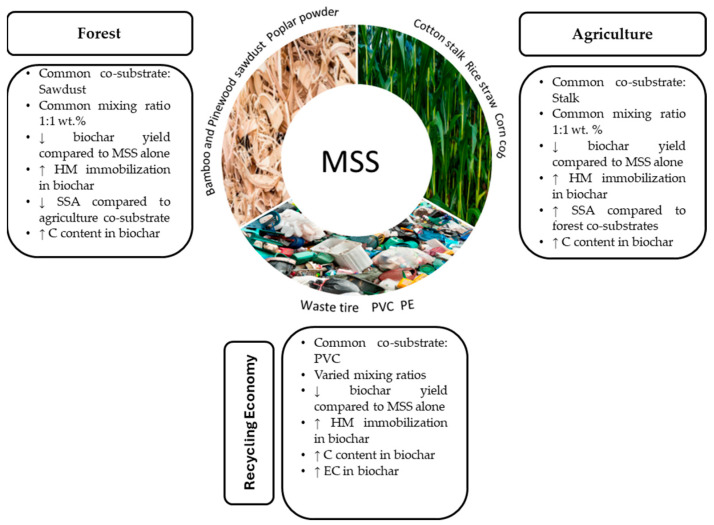
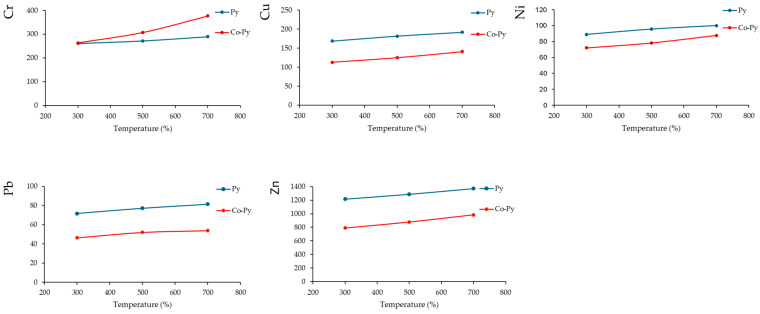
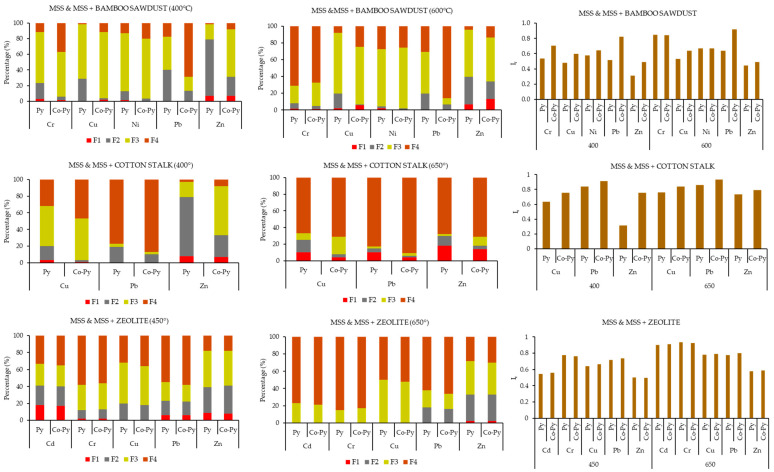
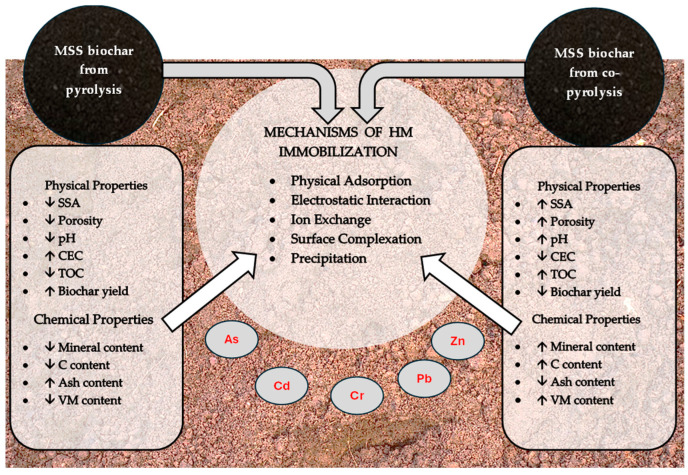
The disposal of municipal sewage sludge (MSS) from wastewater treatment plants poses a major environmental challenge due to the presence of inorganic and organic pollutants. Co-pyrolysis, in which MSS is thermally decomposed in combination with biomass feedstocks, has proven to be a promising method to immobilize inorganic pollutants, reduce the content of organic pollutants, reduce the toxicity of biochar and improve biochar's physical and chemical properties. This part of the review systematically examines the effects of various co-substrates on the physical and chemical properties of MSS biochar. This review also addresses the effects of the pyrolysis conditions (temperature and mixing ratio) on the content and stability of the emerging pollutants in biochar. Finally, this review summarizes the results of recent studies to provide an overview of the current status of the application of MSS biochar from pyrolysis and co-pyrolysis for the remediation of HM-contaminated soils. This includes consideration of the soil and heavy metal types, experimental conditions, and the efficiency of HM immobilization. This review provides a comprehensive analysis of the potential of MSS biochar for environmental sustainability and offers insights into future research directions for optimizing biochar applications in soil remediation.
Keywords: biochar properties; co-pyrolysis; municipal sewage sludge; pollutants; soil remediation.
Conflict of interest statement
The authors declare no conflicts of interest.
Figures

References
-
- Huang H., Yang T., Lai F., Wu G. Co-Pyrolysis of Sewage Sludge and Sawdust/Rice Straw for the Production of Biochar. J. Anal. Appl. Pyrolysis. 2017;125:61–68. doi: 10.1016/j.jaap.2017.04.018. - DOI
-
- Mohamed B.A., Ruan R., Bilal M., Khan N.A., Awasthi M.K., Amer M.A., Leng L., Hamouda M.A., Vo D.N., Li J. Co-Pyrolysis of Sewage Sludge and Biomass for Stabilizing Heavy Metals and Reducing Biochar Toxicity: A Review. Environ. Chem. Lett. 2023;21:1231–1250. doi: 10.1007/s10311-022-01542-6. - DOI
-
- Yi L.M., Xin Y.H., Yuan S.X. Sludge-Derived Biochar: A Review on the Influence of Synthesis Conditions on Environmental Risk Reduction and Removal Mechanism of Wastewater Pollutants. Arch. Environ. Prot. 2023;49:3–15.
-
- Kujawska J. Content of Heavy Metals in Various Biochar and Assessment Environmental Risk. J. Ecol. Eng. 2023;24:287–295. doi: 10.12911/22998993/166557. - DOI
Publication types
LinkOut - more resources
Full Text Sources
