


Brain Responses Difference between Sexes for Strong Desire to Void: A Functional Magnetic Resonance Imaging Study in Adults Based on Graph Theory
- PMID: 39124552
- PMCID: PMC11313296
- DOI: 10.3390/jcm13154284
Brain Responses Difference between Sexes for Strong Desire to Void: A Functional Magnetic Resonance Imaging Study in Adults Based on Graph Theory
Abstract
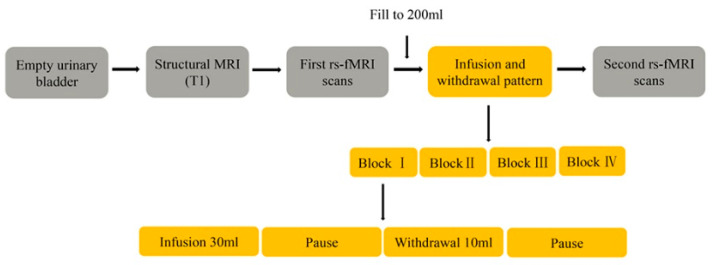
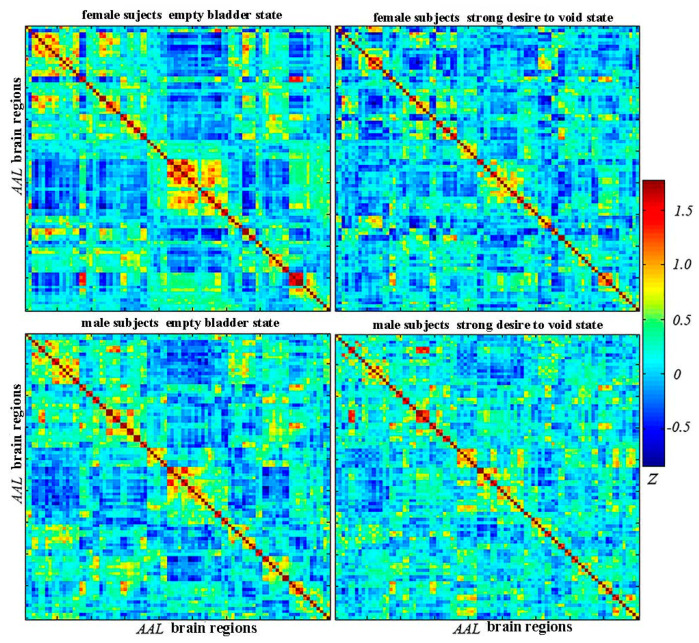
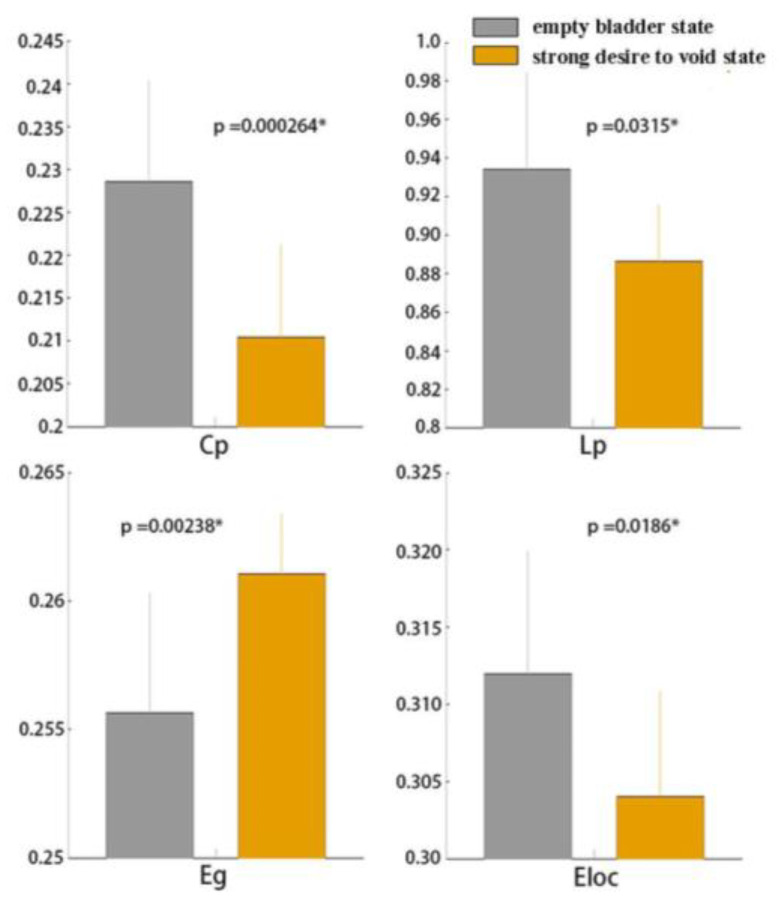
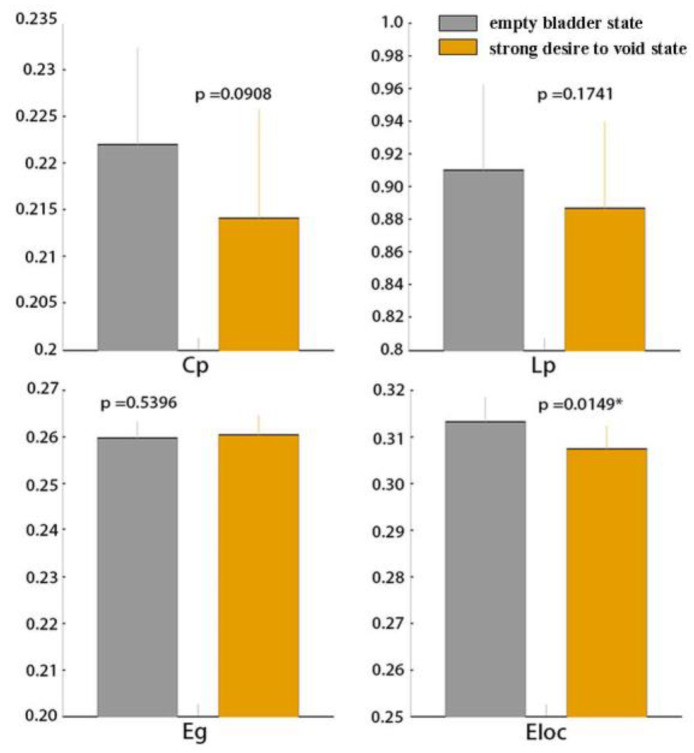
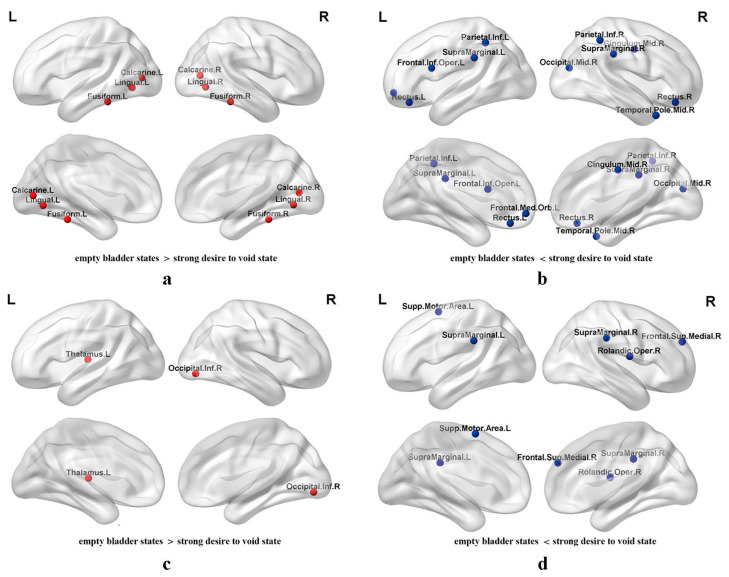
Background: The alternations of brain responses to a strong desire to void were unclear, and the gender differences under the strong desire to void remain controversial. The present study aims to identify the functional brain network's topologic property changes evoked by a strong desire to void in healthy male and female adults with synchronous urodynamics using a graph theory analysis. Methods: The bladders of eleven healthy males and eleven females were filled via a catheter using a specific infusion and withdrawal pattern. A resting-state functional magnetic resonance imaging (fMRI) was performed on the enrolled subjects, scanning under both the empty bladder and strong desire to void states. An automated anatomical labeling (AAL) atlas was used to identify the ninety cortical and subcortical regions. Pearson's correlation calculations were performed to establish a brain connection matrix. A paired t-test (p < 0.05) and Bonferroni correction were applied to identify the significant statistical differences in topological properties between the two states, including small-world network property parameters [gamma (γ) and lambda (λ)], characteristic path length (Lp), clustering coefficient (Cp), global efficiency (Eglob), local efficiency (Eloc), and regional nodal efficiency (Enodal). Results: The final data suggested that females and males had different brain response patterns to a strong desire to void, compared with an empty bladder state. Conclusions: More brain regions involving emotion, cognition, and social work were active in females, and males might obtain a better urinary continence via a compensatory mechanism.
Keywords: brain–bladder control; desire to void; graph theory; resting-state functional magnetic resonance imaging; small-world network; topologic properties.
Conflict of interest statement
The authors declare that the research was conducted without any potential conflict of interest.
Figures
References
-
- Abrams P., Cardozo L., Fall M., Griffiths D., Rosier P., Ulmsten U., van Kerrebroeck P., Victor A., Wein A. The standardisation of terminology of lower urinary tract function: Report from the Standardisation Sub-committee of the International Continence Society. Am. J. Obstet. Gynecol. 2002;187:116–126. doi: 10.1067/mob.2002.125704. - DOI - PubMed
-
- Rosier P.F.W.M., Schaefer W., Lose G., Goldman H.B., Guralnick M., Eustice S., Dickinson T., Hashim H. International Continence Society Good Urodynamic Practices and Terms 2016: Urodynamics, uroflowmetry, cystometry, and pressure-flow study. Neurourol. Urodyn. 2017;36:1243–1260. doi: 10.1002/nau.23124. - DOI - PubMed
Grants and funding
LinkOut - more resources
Full Text Sources
Miscellaneous
