


Mitigating Traumatic Brain Injury: A Narrative Review of Supplementation and Dietary Protocols
- PMID: 39125311
- PMCID: PMC11314487
- DOI: 10.3390/nu16152430
Mitigating Traumatic Brain Injury: A Narrative Review of Supplementation and Dietary Protocols
Abstract
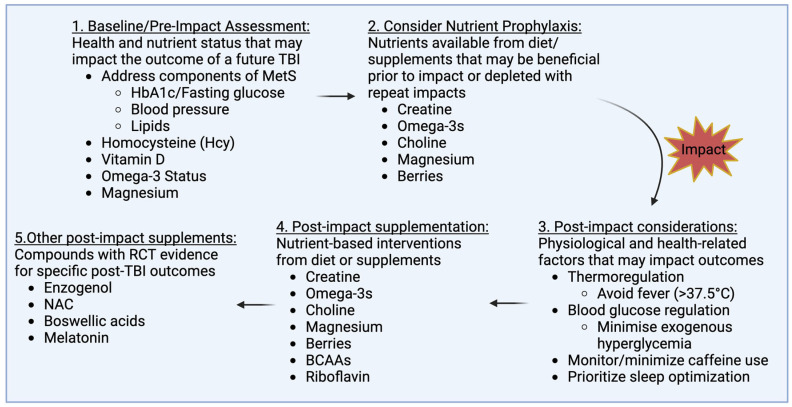
Traumatic brain injuries (TBIs) constitute a significant public health issue and a major source of disability and death in the United States and worldwide. TBIs are strongly associated with high morbidity and mortality rates, resulting in a host of negative health outcomes and long-term complications and placing a heavy financial burden on healthcare systems. One promising avenue for the prevention and treatment of brain injuries is the design of TBI-specific supplementation and dietary protocols centred around nutraceuticals and biochemical compounds whose mechanisms of action have been shown to interfere with, and potentially alleviate, some of the neurophysiological processes triggered by TBI. For example, evidence suggests that creatine monohydrate and omega-3 fatty acids (DHA and EPA) help decrease inflammation, reduce neural damage and maintain adequate energy supply to the brain following injury. Similarly, melatonin supplementation may improve some of the sleep disturbances often experienced post-TBI. The scope of this narrative review is to summarise the available literature on the neuroprotective effects of selected nutrients in the context of TBI-related outcomes and provide an evidence-based overview of supplementation and dietary protocols that may be considered in individuals affected by-or at high risk for-concussion and more severe head traumas. Prophylactic and/or therapeutic compounds under investigation include creatine monohydrate, omega-3 fatty acids, BCAAs, riboflavin, choline, magnesium, berry anthocyanins, Boswellia serrata, enzogenol, N-Acetylcysteine and melatonin. Results from this analysis are also placed in the context of assessing and addressing important health-related and physiological parameters in the peri-impact period such as premorbid nutrient and metabolic health status, blood glucose regulation and thermoregulation following injury, caffeine consumption and sleep behaviours. As clinical evidence in this research field is rapidly emerging, a comprehensive approach including appropriate nutritional interventions has the potential to mitigate some of the physical, neurological, and emotional damage inflicted by TBIs, promote timely and effective recovery, and inform policymakers in the development of prevention strategies.
Keywords: nutraceuticals; post-concussion syndrome; supplements; traumatic brain injury.
Conflict of interest statement
T.R.W. is a paid scientific advisor for Hintsa Performance, Thriva LLC., and Rewire Fitness, and is a founding trustee and Treasurer of the British Society of Lifestyle Medicine. A.J.G. is a paid scientific advisor for Momentous and XPT Life, is a founder of RAPID Health Optimization and Absolute Rest and is on the board of directors for the Health and Human Performance Foundation.
Figures
References
-
- Centers for Disease Control and Prevention . Surveillance Report of Traumatic Brain Injury-related Emergency Department Visits, Hospitalizations, and Deaths-United States 2014. U.S. Department of Health and Human Services; Washington, DC, USA: 2019. [(accessed on 1 June 2024)]. Available online: http://www.cdc.gov/TraumaticBrainInjury.
-
- Traumatic Brain Injury Center of Excellence . Annual Report. TBICoE; Washington, DC, USA: 2023. [(accessed on 1 June 2024)]. Available online: https://health.mil/Military-Health-Topics/Centers-of-Excellence/Traumati....
Publication types
MeSH terms
Substances
LinkOut - more resources
Full Text Sources
Medical
Research Materials
