


Impact of Resistance and Endurance Training on Ghrelin and Plasma Leptin Levels in Overweight and Obese Subjects
- PMID: 39125635
- PMCID: PMC11311634
- DOI: 10.3390/ijms25158067
Impact of Resistance and Endurance Training on Ghrelin and Plasma Leptin Levels in Overweight and Obese Subjects
Abstract
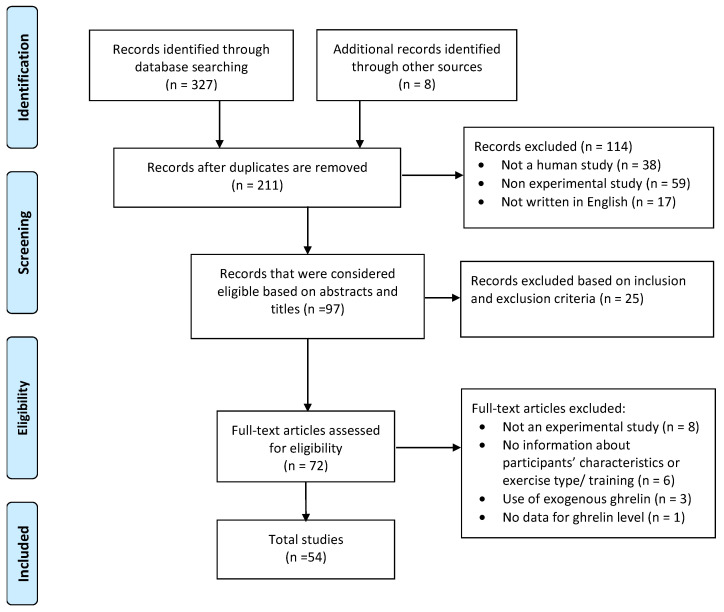
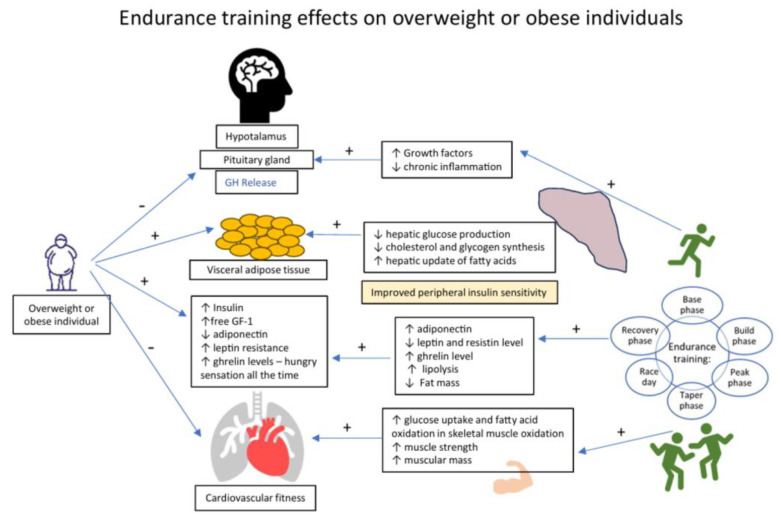
Exercise training is a valuable tool for improving body weight and composition in overweight or obese adults, which leads to a negative energy balance. It is relevant to consider whether exercise can help people lose weight or prevent weight gain because any energy expended in exercise increases the severity of hunger and promotes food consumption. Over the past decade, the identification of the circulating peptide ghrelin, which alerts the brain to the body's nutritional state, has significantly expanded our understanding of this homeostatic mechanism that controls appetite and body weight. To shed more light on this issue, we decided to investigate the effects of resistance and endurance training on plasma ghrelin and leptin levels. In addition, we sought to understand the mechanisms by which acute and chronic exercise can regulate hunger. This review analyzes studies published in the last fifteen years that focused on changes suffered by ghrelin, leptin, or both after physical exercise in overweight or obese individuals. Most studies have shown a decrease in leptin levels and an increase in ghrelin levels in these cases. Exercise regimens that support weight maintenance need further investigation.
Keywords: appetite-related peptides; exercise; ghrelin; leptin; obesity; overweight; physical activity; training.
Conflict of interest statement
The authors declare no conflict of interest.
Figures
References
-
- Yeung A.Y., Tadi P. StatPearls. StatPearls Publishing; Treasure Island, FL, USA: 2024. Physiology, Obesity Neurohormonal Appetite and Satiety Control. - PubMed
-
- Giordano A., Nisoli E. Neuroendocrinology of Energy Balance. In: Sbraccia P., Finer N., editors. Obesity: Pathogenesis, Diagnosis, and Treatment. Springer International Publishing; Cham, Switzerland: 2019. pp. 31–50.
Publication types
MeSH terms
Substances
LinkOut - more resources
Full Text Sources
Medical
Miscellaneous
