


German Chamomile (Matricaria chamomilla L.) Flower Extract, Its Amino Acid Preparations and 3D-Printed Dosage Forms: Phytochemical, Pharmacological, Technological, and Molecular Docking Study
- PMID: 39125862
- PMCID: PMC11311743
- DOI: 10.3390/ijms25158292
German Chamomile (Matricaria chamomilla L.) Flower Extract, Its Amino Acid Preparations and 3D-Printed Dosage Forms: Phytochemical, Pharmacological, Technological, and Molecular Docking Study
Abstract
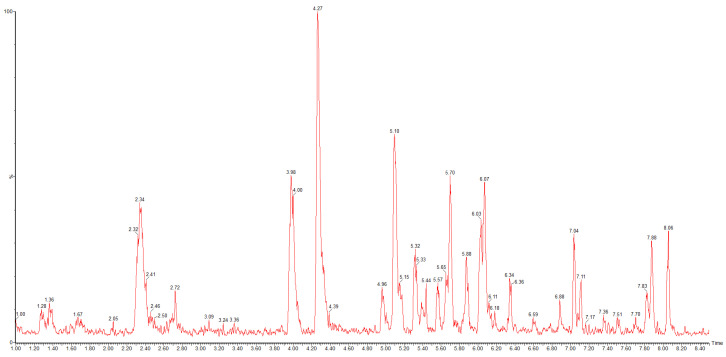
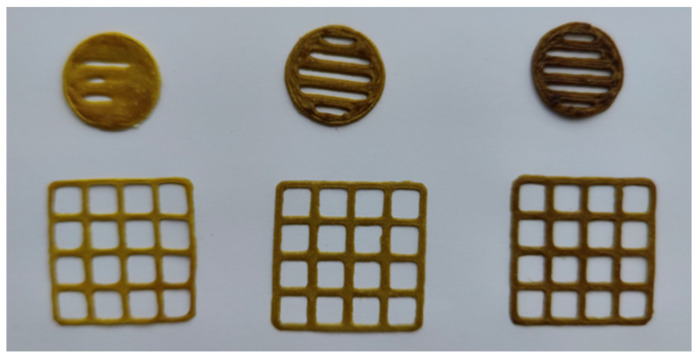
German chamomile (Matricaria chamomilla L.) is an essential oil- containing medicinal plant used worldwide. The aim of this study was to gain knowledge of the phytochemical composition and the analgesic and soporific activity of Matricaria chamomilla L. (German chamomile) flower extract and its amino acid preparations, to predict the mechanisms of their effects by molecular docking and to develop aqueous printing gels and novel 3D-printed oral dosage forms for the flower extracts. In total, 22 polyphenolic compounds and 14 amino acids were identified and quantified in the M. chamomilla extracts. In vivo animal studies with rodents showed that the oral administration of such extracts revealed the potential for treating of sleep disorders and diseases accompanied by pain. Amino acids were found to potentiate these effects. Glycine enhanced the analgesic activity the most, while lysine and β-alanine improved the soporific activity. The molecular docking analysis revealed a high probability of γ-aminobutyric acid type A (GABAA) and N-methyl-D-aspartate (NMDA) receptor antagonism and 5-lipoxygenase (LOX-5) inhibition by the extracts. A polyethylene oxide (PEO)-based gel composition with the M. chamomilla extracts was proposed for preparing a novel 3D-printed dosage form for oral administration. These 3D-printed extract preparations can be used, for example, in dietary supplement applications.
Keywords: German chamomile (Matricaria chamomilla L.) plant extract; amino acids; analgesic activity; lysine; polyphenolic compounds; soporific activity; three-dimensional printing; β-alanine.
Conflict of interest statement
The authors declare that this research was conducted in the absence of any commercial or financial relationships that could be construed as a potential conflict of interest. The funders had no role in the design of the study; in the collection, analyses, or interpretation of data; in the writing of the manuscript, or in the decision to publish the results.
Figures
References
-
- Gupta V., Mittal P., Bansal P., Khokra S.L., Kaushik D. Pharmacological potential of matricaria recutita-a review. Int. J. Pharm. Sci. Drug Res. 2010;2:12–16.
-
- Menale B., De Castro O., Di Iorio E., Ranaldi M., Muoio R. Discovering the Ethnobotanical Traditions of the Island of Procida (Campania, Southern Italy) Plant Biosyst.-Int. J. Deal. All Asp. Plant Biol. 2022;156:450–468. doi: 10.1080/11263504.2021.1881643. - DOI
MeSH terms
Substances
Grants and funding
LinkOut - more resources
Full Text Sources
