Microbiome and Mycobiome Analyses of Continuous Positive Airway Pressure Devices
- PMID: 39134466
- PMCID: PMC11626094
- DOI: 10.21053/ceo.2024.00167
Microbiome and Mycobiome Analyses of Continuous Positive Airway Pressure Devices
Abstract
Objectives: Microorganisms are likely present in continuous positive airway pressure (CPAP) devices in daily use. Given the potential risk of infection among CPAP users, we aimed to compare the microbiomes of CPAP devices with those of nasal mucosa samples obtained from patients using these devices.
Methods: We conducted a prospective cohort study at multiple tertiary medical institutions. Samples were collected from the tubes and filters of CPAP devices and the nasal mucosa of device users. Microbiomes and mycobiomes were analyzed using 16S ribosomal RNA and internal transcribed spacer region sequencing. The results were compared according to sampling site and usage duration for each patient.
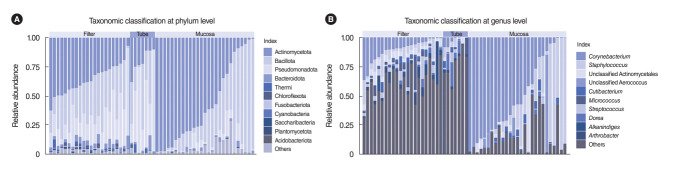
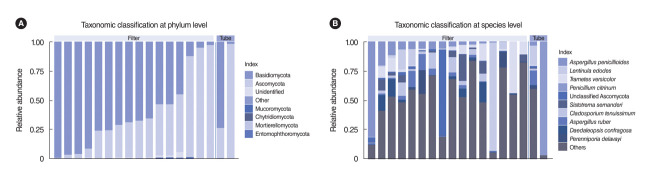
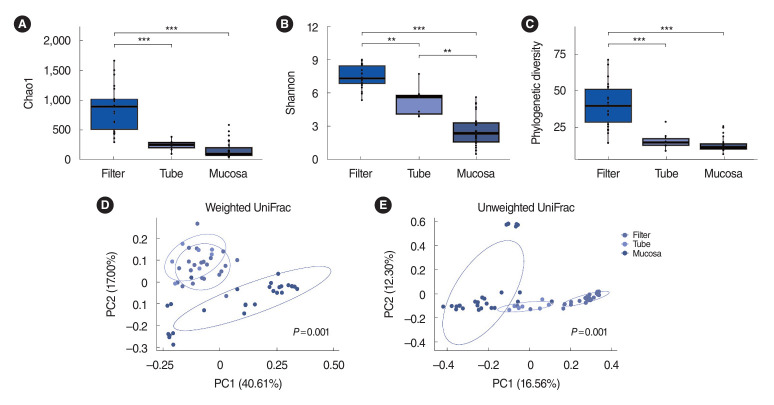
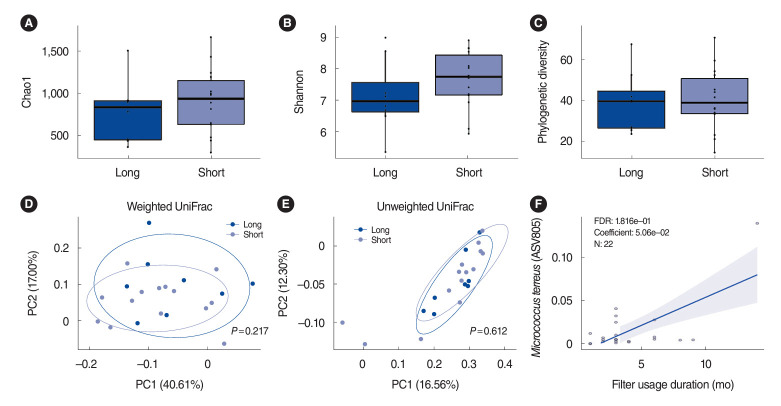
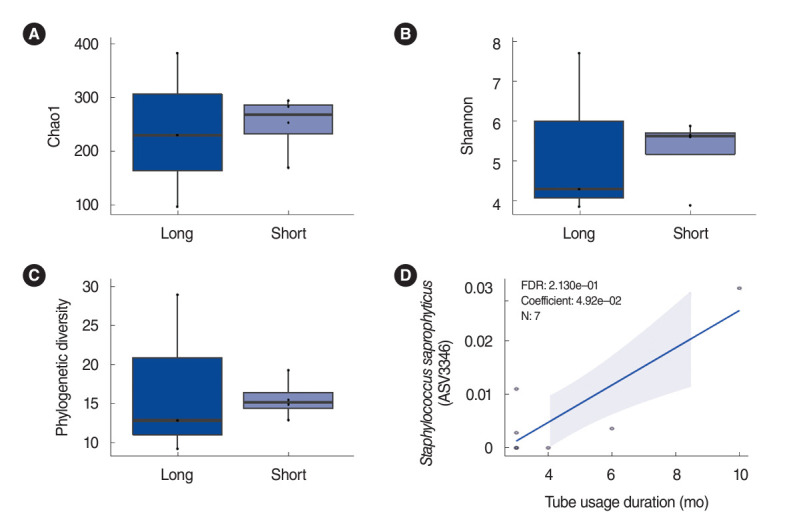
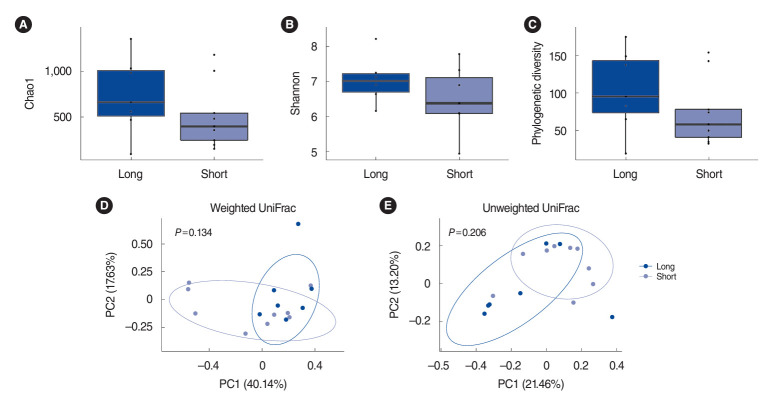
Results: Overall, 27 paired samples of human nasal mucosa and CPAP components were analyzed. Bacteria were detected in 7 of the 27 tubes (25.9%) and in 22 of the 27 filters (81.5%). Fungi were found in 2 tubes (7.4%) and 16 filters (59.3%). The most prevalent bacterial phyla across all samples were Actinobacteria and Firmicutes. Fungi were not detected in any nasal mucosa samples. However, fungi were identified in the CPAP filters and tubes, with the Basidiomycota and Ascomycota phyla predominating. No significant associations were identified according to sampling site or duration of CPAP use.
Conclusion: Some bacteria or fungi are detectable in CPAP samples, even after a short period of CPAP usage. However, the association between respiratory infections and these microbiomes or mycobiomes was not investigated. Further research is required to clarify the risk posed by CPAP devices as a microbial contamination source.
Keywords: Continuous Positive Airway Pressure Device; Microbiome; Mycobiome; Obstructive Sleep Apnea.
Conflict of interest statement
No potential conflict of interest relevant to this article was reported.
Figures
References
-
- Cai Y, Juszczak HM, Cope EK, Goldberg AN. The microbiome in obstructive sleep apnea. Sleep. 2021 Aug;44(8):zsab061. - PubMed
-
- Senaratna CV, Perret JL, Lodge CJ, Lowe AJ, Campbell BE, Matheson MC, et al. Prevalence of obstructive sleep apnea in the general population: a systematic review. Sleep Med Rev. 2017 Aug;34:70–81. - PubMed
-
- Pepperell JC, Ramdassingh-Dow S, Crosthwaite N, Mullins R, Jenkinson C, Stradling JR, et al. Ambulatory blood pressure after therapeutic and subtherapeutic nasal continuous positive airway pressure for obstructive sleep apnoea: a randomised parallel trial. Lancet. 2002 Jan;359(9302):204–10. - PubMed
-
- Laks L. Pulmonary arterial pressure in sleep apnea. Sleep. 1993 Dec;16(8 Suppl):S41–3. - PubMed
Grants and funding
LinkOut - more resources
Full Text Sources