


Clinical Considerations for Healthcare Provider-Administered Lipid-Lowering Medications
- PMID: 39136871
- PMCID: PMC11525244
- DOI: 10.1007/s40256-024-00665-1
Clinical Considerations for Healthcare Provider-Administered Lipid-Lowering Medications
Abstract
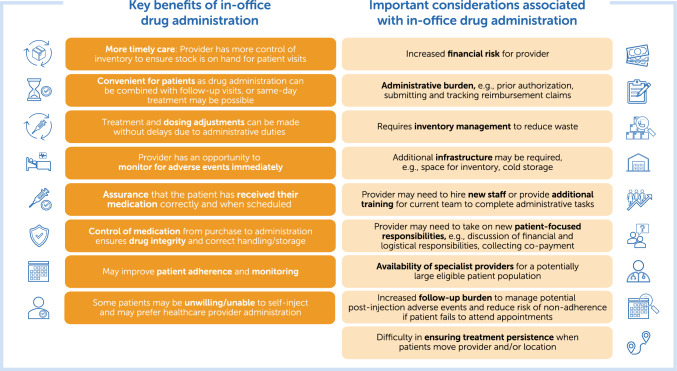
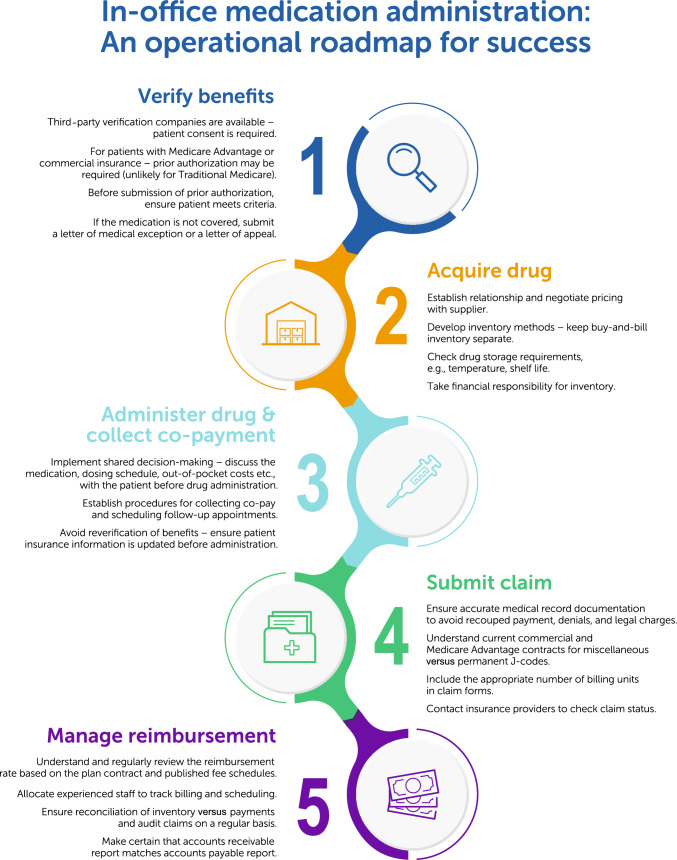
Atherosclerotic cardiovascular disease (ASCVD), a leading cause of mortality and morbidity, is associated with a substantial healthcare and economic burden. Reduction of low-density lipoprotein cholesterol (LDL-C) to guideline-recommended goals is crucial in the prevention or management of ASCVD, particularly in those at high risk. Despite the availability of several effective lipid-lowering therapies (LLTs), up to 80% of patients with ASCVD do not reach evidence-based LDL-C goals. This nonattainment may be due to poor adherence to, and lack of timely utilization of, LLTs driven by a range of variables, including polypharmacy, side effects, clinical inertia, costs, and access issues. Inclisiran was approved by the US Food and Drug Administration in 2021 as a novel, twice-yearly, healthcare provider (HCP)-administered LLT. In-office administration allows HCPs more control of drug acquisition, administration, and reimbursement, and may allow for more timely care and increased patient monitoring. In the USA, in-office administered drugs are considered a Medical Benefit and can be acquired and reimbursed using the "buy-and-bill" process. Buy-and-bill is a standard system for medication administration already established in multiple therapeutic areas, including oncology, vaccines, and allergy/immunology. Initiating in-office administration will involve new considerations for clinicians in the cardiovascular specialty, such as the implementation of new infrastructure and processes; however, it could ultimately increase treatment adherence and improve cardiovascular outcomes for patients with ASCVD. This article discusses the potential implications of buy-and-bill for the cardiology specialty and provides a practical guide to implementing HCP-administered specialty drugs in US clinical practice.
© 2024. The Author(s).
Conflict of interest statement
B.D.B. has received speaker honoraria from Amgen, AstraZeneca, Novartis, and Shockwave Medical and has served as a consultant to Medtronic. K.P.C. has received speaker honoraria from Bristol Myers Squibb. L.S. has received speaker honoraria from Novartis. J.L.M. has served as a consultant for Amgen and Novartis and has received speaker honoraria from Amgen. T.S. has nothing to disclose. D.S.P. has received consulting fees and speaker honoraria from Amgen and Johnson & Johnson Innovative Medicine, and has received speaker honoraria from AstraZeneca, Boehringer Ingelheim, and Esperion.
Figures
References
-
- Ference BA, Ginsberg HN, Graham I, Ray KK, Packard CJ, Bruckert E, et al. Low-density lipoproteins cause atherosclerotic cardiovascular disease. 1. Evidence from genetic, epidemiologic, and clinical studies. A consensus statement from the European Atherosclerosis Society Consensus Panel. Eur Heart J. 2017;38(32):2459–72. - DOI - PMC - PubMed
-
- Arnett DK, Blumenthal RS, Albert MA, Buroker AB, Goldberger ZD, Hahn EJ, et al. 2019 ACC/AHA guideline on the primary prevention of cardiovascular disease: a report of the American College of Cardiology/American Heart Association Task Force on Clinical Practice Guidelines. J Am Coll Cardiol. 2019;74(10):e177–232. - DOI - PMC - PubMed
-
- Grundy SM, Stone NJ, Bailey AL, Beam C, Birtcher KK, Blumenthal RS, et al. 2018 AHA/ACC/AACVPR/AAPA/ABC/ACPM/ADA/AGS/APhA/ASPC/NLA/PCNA guideline on the management of blood cholesterol: a report of the American College of Cardiology/American Heart Association task force on clinical practice guidelines. Circulation. 2019;139(25):e1082–143. - PMC - PubMed
Publication types
MeSH terms
Substances
LinkOut - more resources
Full Text Sources
Medical
Miscellaneous
