


Global trends in opioid use for pain management in acute pancreatitis: A multicentre prospective observational study
- PMID: 39140779
- PMCID: PMC11485295
- DOI: 10.1002/ueg2.12641
Global trends in opioid use for pain management in acute pancreatitis: A multicentre prospective observational study
Abstract
Background: Since there is no current international consensus on the optimal approach for pain management in acute pancreatitis (AP), analgesic practices may vary across different healthcare settings.
Objective: This study explored global disparities in analgesic use, in particular opioids, during admission and at discharge in hospitalised AP patients.
Methods: This was a post hoc analysis of the prospective PAINAP database, which included all admissions for AP between April and June 2022 with a 1-month follow-up. Demographic details, analgesic use, and clinical outcomes were recorded during admission and at discharge. Odds ratios (ORs) for opioid use during admission and at discharge were identified using multivariable regression analyses.
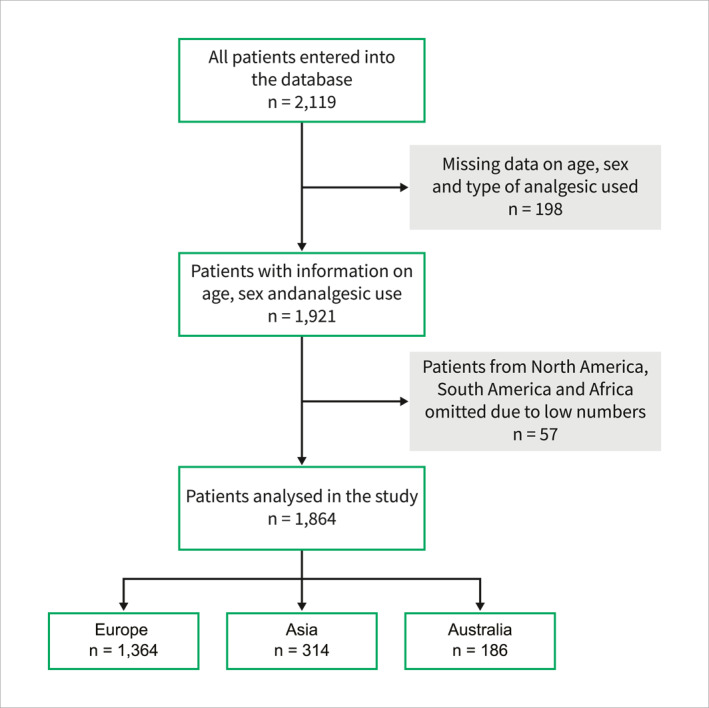
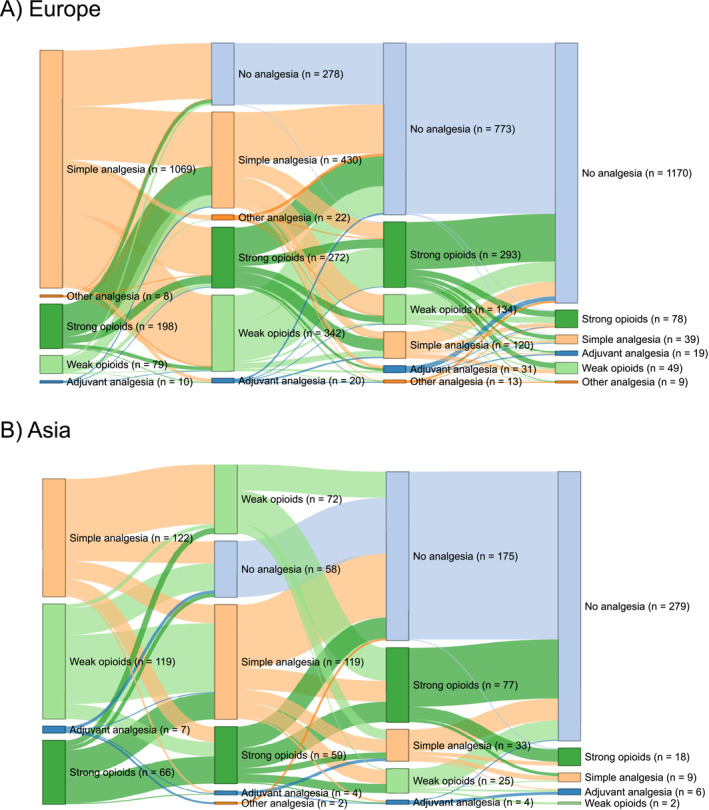
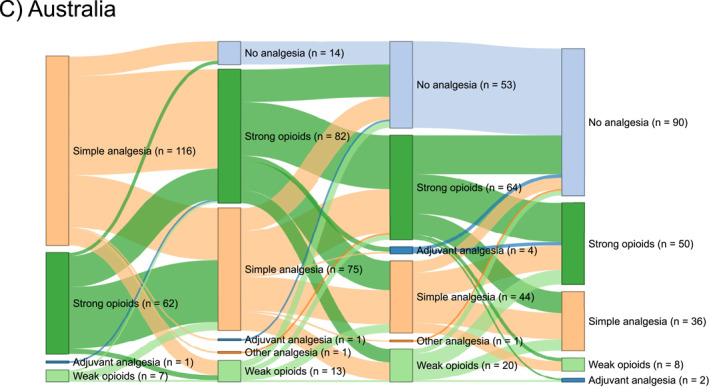
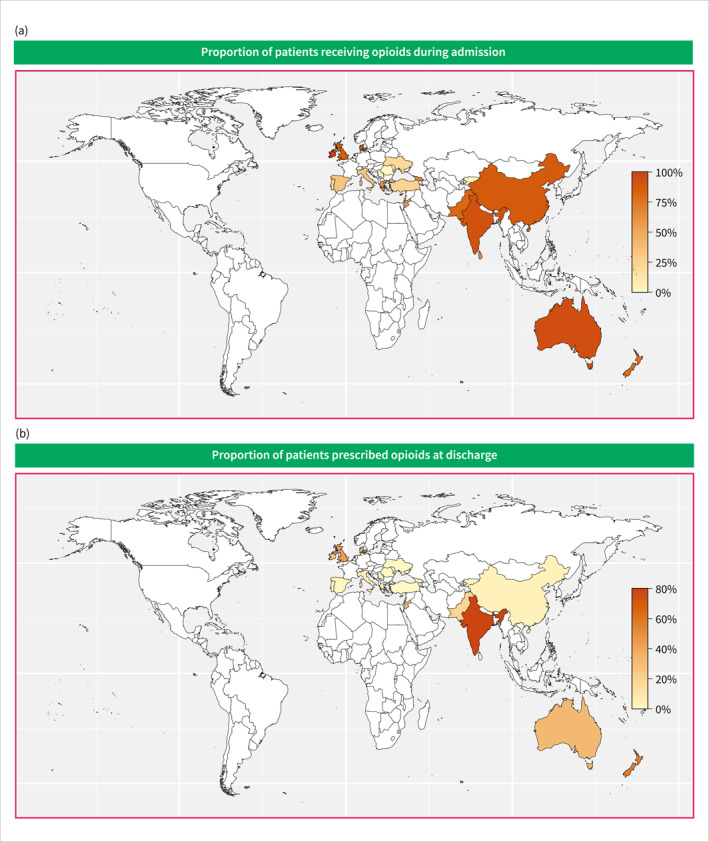
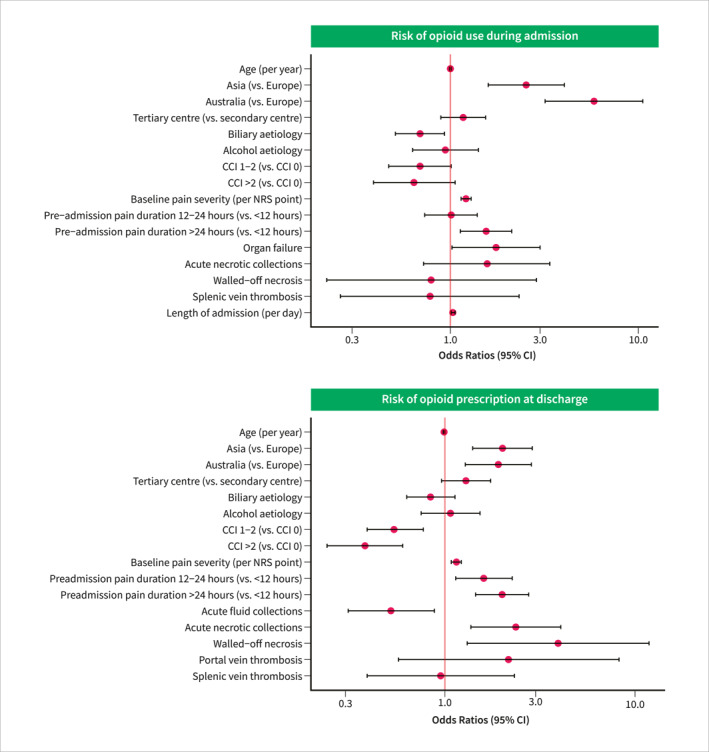
Results: Amongst the 1864 patients (52% males, median age 56 (interquartile range, 41-71)) across three different continents, simple analgesics were predominantly used as the primary analgesic (70%). Opioid use during admission was lowest in European centres (67%). Admission in Asian (OR, 2.53 (95% confidence interval (CI), 1.59-4.04), p < 0.001), and Australian (OR, 5.81 (95% CI, 3.19-10.56), p < 0.001) centres was associated with opioid administration during admission compared with European centres. Increased pain severity, longer pre-admission pain duration, organ failure, and longer length of admission increased opioid use during admission. At discharge, Asian (OR, 2.01 (95% CI, 1.40-2.88), p < 0.001) and Australian (OR, 1.91 (95% CI, 1.28-2.85), p = 0.002) centres were associated with opioid prescription compared with European centres. Increased pain severity, longer pre-admission pain duration, acute necrotic collections, and walled-off necrosis also increased the likelihood of opioid prescription at discharge.
Conclusion: There are substantial intercontinental differences in opioid use for AP pain. Accordingly, there is a need for international guidelines on pain management in AP.
Keywords: abdominal pain; acute necrotic collections; acute pancreatitis; analgesia; opioids; walled‐off necrosis.
© 2024 The Author(s). United European Gastroenterology Journal published by Wiley Periodicals LLC on behalf of United European Gastroenterology.
Conflict of interest statement
The authors have no conflicts of interest to declare.
Figures
References
-
- Working Group IAP/APA Acute Pancreatitis Guidelines . IAP/APA evidence‐based guidelines for the management of acute pancreatitis. Pancreatology. 2013;13(4 Suppl 2):e1–e15. - PubMed
Publication types
MeSH terms
Substances
Grants and funding
LinkOut - more resources
Full Text Sources
Medical
Miscellaneous
