


Association between fast eating speed and metabolic dysfunction-associated steatotic liver disease: a multicenter cross-sectional study and meta-analysis
- PMID: 39143072
- PMCID: PMC11324733
- DOI: 10.1038/s41387-024-00326-x
Association between fast eating speed and metabolic dysfunction-associated steatotic liver disease: a multicenter cross-sectional study and meta-analysis
Abstract
Background: With the fast pace of modern life, people have less time for meals, but few studies have examined the association between the habit of fast eating and metabolic diseases.
Objective: Combining the results of the current study and the prior ones, we aimed to investigate the possible relationship between fast eating and the risk of metabolic dysfunction-associated steatotic liver disease (MASLD).
Methods: This is a sub-analysis of a multicenter cross-sectional study of 1965 participants investigated the association between fast eating and MASLD in Chinese. Fast eating was defined as meal time less than five minutes and participants were divided into three categories based on their self-reported frequency of fast eating: ≤1 time/month, ≤1 time/week and ≥2 times/week. We further conducted a literature search for available studies published before November, 2023 as well as a meta-analysis to investigate the association between fast eating and MASLD.
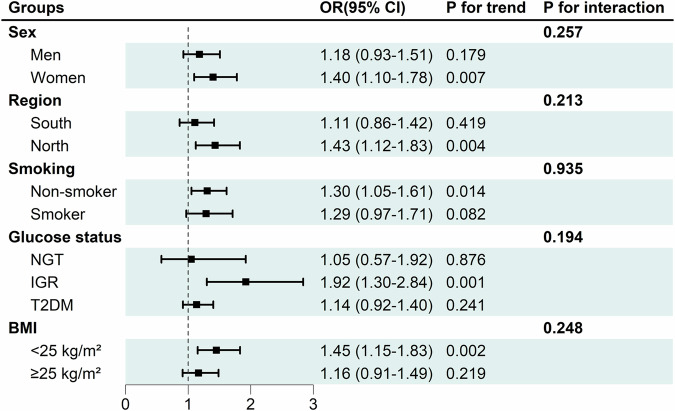
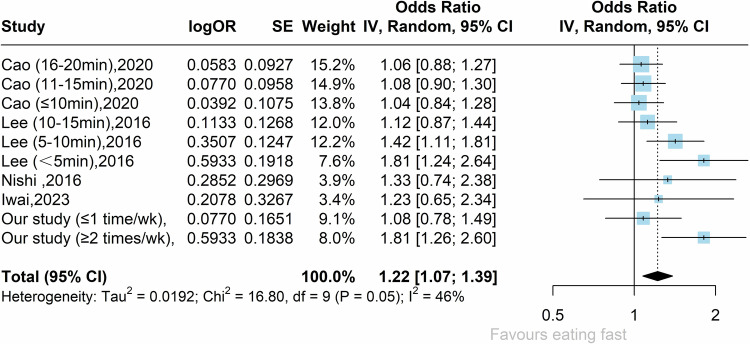
Results: The proportion of MASLD was 59.3%, 50.5%, and 46.2% in participants with fast eating ≥2 times/week, ≤1 time/week and ≤1 time/month, respectively (P for trend <0.001). The frequency of fast eating was independently associated with risk of MASLD after multiple adjustment for sex, age, demographics, smoking and drinking status, BMI and clinical metabolic parameters (OR, 1.29; 95%CI, 1.09-1.53). Participants who ate fast frequently (≥2 times/week) had 81% higher risk of MASLD (P = 0.011). A meta-analysis of five eligible studies confirmed that frequent fast eating was associated with increased risk of MASLD (pooled OR, 1.22; 95%CI, 1.07-1.39).
Conclusions: Frequent fast eating was associated with an increased risk of MASLD.
© 2024. The Author(s).
Conflict of interest statement
The authors declare no competing interests.
Figures
References
Publication types
MeSH terms
Grants and funding
- 22Y31900302/Shanghai Science and Technology Development Foundation (Shanghai Science and Technology Development Fund)
- 82370870/Shanghai Science and Technology Development Foundation (Shanghai Science and Technology Development Fund)
- 23XD1423300/Shanghai Science and Technology Development Foundation (Shanghai Science and Technology Development Fund)
- 202240295/Shanghai Municipal Health Bureau (Shanghai Municipal Public Health Bureau)
- 2020ZSLC19/Zhongshan Hospital
LinkOut - more resources
Full Text Sources
Research Materials
