


Saliva-derived DNA is suitable for the detection of clonal haematopoiesis of indeterminate potential
- PMID: 39143154
- PMCID: PMC11324896
- DOI: 10.1038/s41598-024-69398-0
Saliva-derived DNA is suitable for the detection of clonal haematopoiesis of indeterminate potential
Abstract
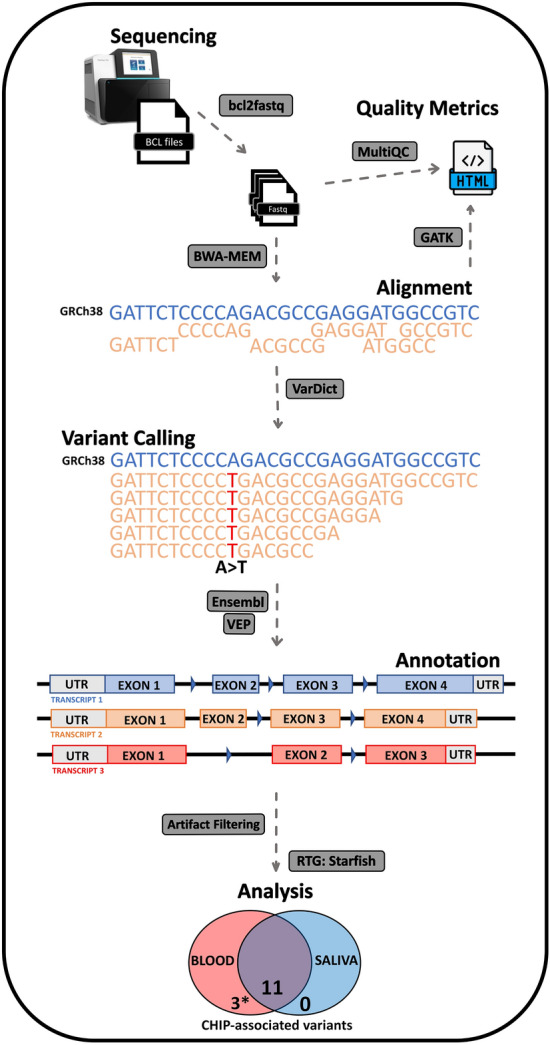
Clonal haematopoiesis of indeterminate potential (CHIP) has been associated with many adverse health outcomes. However, further research is required to understand the critical genes and pathways relevant to CHIP subtypes, evaluate how CHIP clones evolve with time, and further advance functional characterisation and therapeutic studies. Large epidemiological studies are well placed to address these questions but often collect saliva rather than blood from participants. Paired saliva- and blood-derived DNA samples from 94 study participants were sequenced using a targeted CHIP-gene panel. The ten genes most frequently identified to carry CHIP-associated variants were analysed. Fourteen unique variants associated with CHIP, ten in DNMT3A, two in TP53 and two in TET2, were identified with a variant allele fraction (VAF) between 0.02 and 0.2 and variant depth ≥ 5 reads. Eleven of these CHIP-associated variants were detected in both the blood- and saliva-derived DNA sample. Three variants were detected in blood with a VAF > 0.02 but fell below this threshold in the paired saliva sample (VAF 0.008-0.013). Saliva-derived DNA is suitable for detecting CHIP-associated variants. Saliva can offer a cost-effective biospecimen that could both advance CHIP research and facilitate clinical translation into settings such as risk prediction, precision prevention, and treatment monitoring.
Keywords: Blood; CHIP; Clonal haematopoiesis; Next generation sequencing; Saliva; Somatic mutations.
© 2024. The Author(s).
Conflict of interest statement
The authors declare no competing interests.
Figures
References
MeSH terms
Substances
Grants and funding
LinkOut - more resources
Full Text Sources
Research Materials
Miscellaneous
