


Living with faecal incontinence: a qualitative investigation of patient experiences and preferred outcomes through semi-structured interviews
- PMID: 39143448
- PMCID: PMC11541390
- DOI: 10.1007/s11136-024-03756-3
Living with faecal incontinence: a qualitative investigation of patient experiences and preferred outcomes through semi-structured interviews
Abstract
Purpose: Faecal incontinence (FI) is a prevalent and debilitating anorectal problem causing embarrassment, anxiety, and social isolation, diminishing quality of life. At present there is no optimal treatment option for FI. Consequently, treatments primarily focus on symptom reduction and improving quality of life. Understanding patient experiences and outcomes they seek from treatment is crucial for improving care. This study aims to explore how FI impacts patients' lives and identify important treatment outcomes as part of the development of a Core Outcome Set (COS).
Methods: Patients with FI were recruited from outpatient clinics in the Netherlands. Semi-structured interviews were performed, audio recorded, transcribed per verbatim and coded. Thematic analysis was performed to identify (sub)themes and categories relevant to the patients.
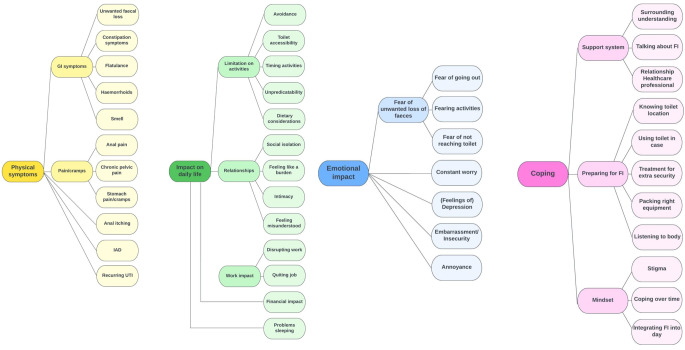
Results: Twelve interviews were conducted before saturation was reached (75% female, 25% male, mean age 63, range 39-83 year). Four main themes emerged 'Physical symptoms', 'Impact on daily life', 'Emotional impact' and 'Coping'. Patients expressed how FI severely limits daily activities and emotional wellbeing. Treatment priorities centred on resuming normal activities rather than solely on symptom reduction.
Conclusion: The impact of FI extends far beyond uncontrolled loss of faeces, affecting psychological, emotional, and social wellbeing. Patients prioritise outcomes focussed on reclaiming normalcy and independence rather than focusing on physical symptoms alone. Integrating these patient-centered outcomes in future studies could enhance treatment satisfaction and patient-perceived treatment success. Furthermore, the outcomes identified in this study can be included in a Delphi survey alongside other relevant outcomes, paving the way for the development of a COS.
Keywords: Faecal incontinence; Qualitative research; Quality of life.
Plain language summary
Faecal incontinence (FI), also known as unwanted bowel leakage, is a common and distressing condition that significantly impacts patients’ lives. It can cause embarrassment, worry and feelings of loneliness, significantly impairing quality of life. To better care for patients with FI, it is important to understand how they experience life with FI and what outcomes they look for in a treatment. This interview study explored patient experiences, how FI affects daily life, and identified treatment outcomes that matter most to this group of patients. The interviews revealed that patients do not just want fewer physical symptoms, but they want to regain freedom, to go out and move around like they used to, and to be able to do their daily activities without any problems.These patient perspectives should be used in future research within this field to improve patient satisfaction and patient perceived treatment success.
© 2024. The Author(s).
Conflict of interest statement
The authors have no relevant financial or non-financial interests related to the work to disclose.
Figures
References
-
- Rosato-Scott, C., Adjorlolo, S., Farrington, M., & Barrington, D. J. (2024). Do not forget us’: The shared experiences and needs of people living with incontinence in humanitarian contexts. Journal of Water Sanitation and Hygiene for Development, 14(3), 220–228. - DOI
-
- Bharucha, A. E., Dunivan, G., Goode, P. S., Lukacz, E. S., Markland, A. D., Matthews, C. A., Mott, L., Rogers, R. G., Zinsmeister, A. R., & Whitehead, W. E. (2015). Epidemiology, pathophysiology, and classification of fecal incontinence: State of the science summary for the National Institute of Diabetes and Digestive and kidney diseases (NIDDK) workshop. Official Journal of the American College of Gastroenterology| ACG, 110(1), 127–136. - DOI - PMC - PubMed
MeSH terms
LinkOut - more resources
Full Text Sources
