Fusion of shallow and deep features from 18F-FDG PET/CT for predicting EGFR-sensitizing mutations in non-small cell lung cancer
- PMID: 39144023
- PMCID: PMC11320501
- DOI: 10.21037/qims-23-1028
Fusion of shallow and deep features from 18F-FDG PET/CT for predicting EGFR-sensitizing mutations in non-small cell lung cancer
Abstract
Background: Non-small cell lung cancer (NSCLC) patients with epidermal growth factor receptor-sensitizing (EGFR-sensitizing) mutations exhibit a positive response to tyrosine kinase inhibitors (TKIs). Given the limitations of current clinical predictive methods, it is critical to explore radiomics-based approaches. In this study, we leveraged deep-learning technology with multimodal radiomics data to more accurately predict EGFR-sensitizing mutations.
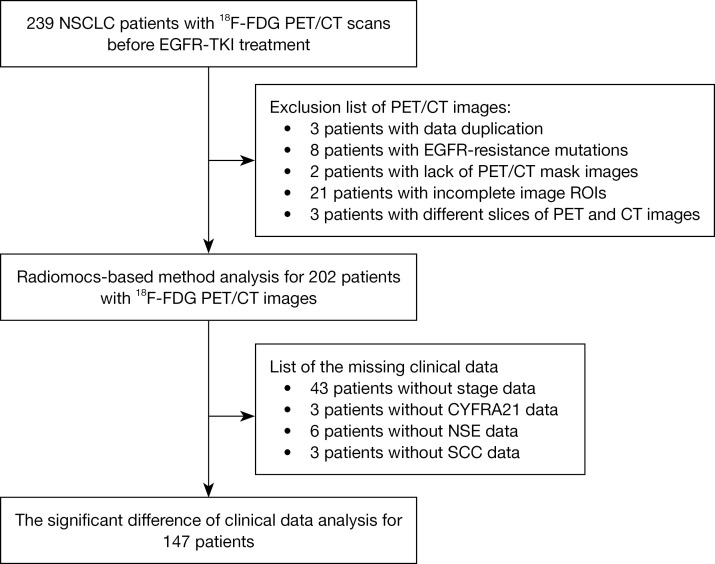
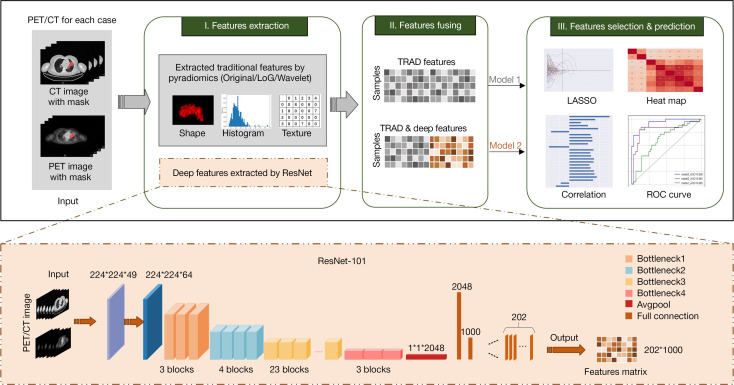
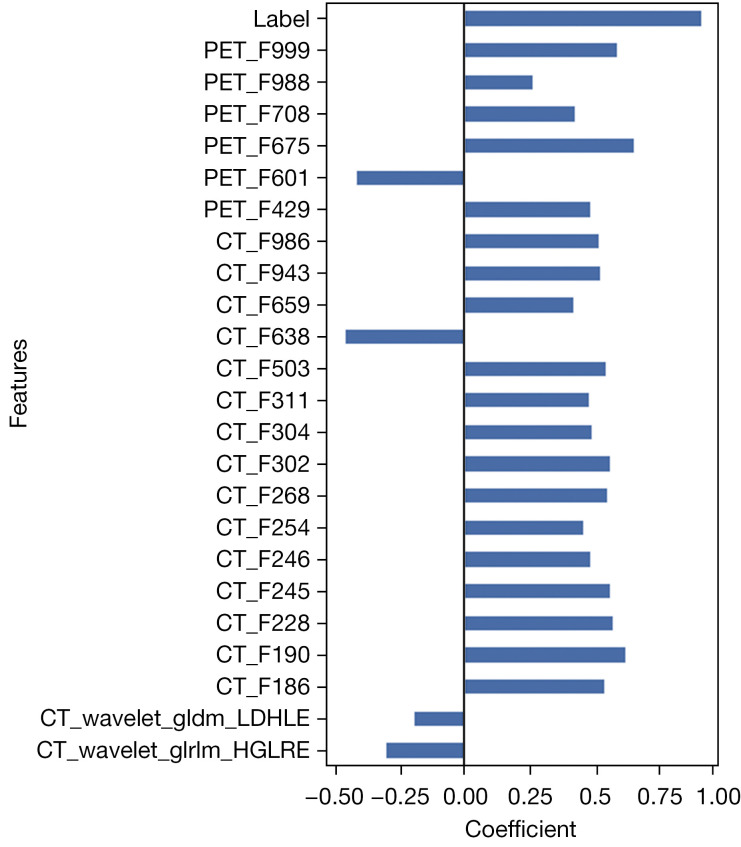
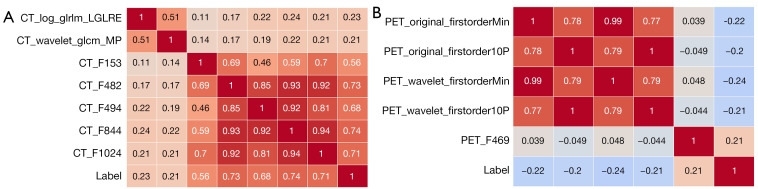
Methods: A total of 202 patients who underwent both flourine-18 fluorodeoxyglucose positron emission tomography/computed tomography (18F-FDG PET/CT) scans and EGFR sequencing prior to treatment were included in this study. Deep and shallow features were extracted by a residual neural network and the Python package PyRadiomics, respectively. We used least absolute shrinkage and selection operator (LASSO) regression to select predictive features and applied a support vector machine (SVM) to classify the EGFR-sensitive patients. Moreover, we compared predictive performance across different deep models and imaging modalities.
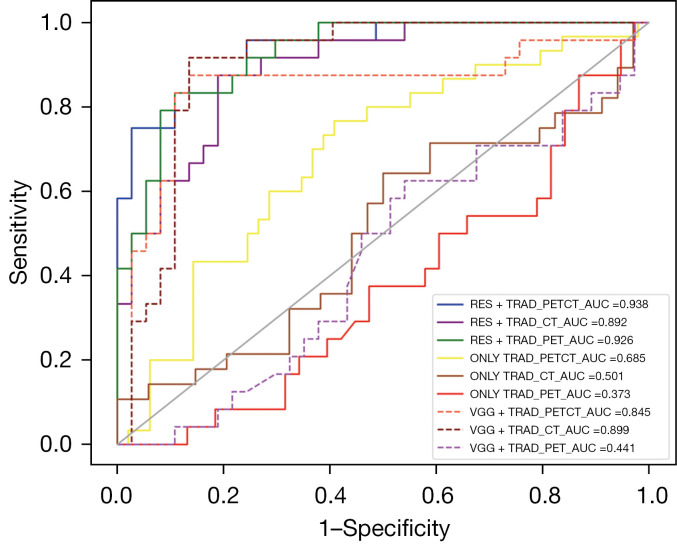
Results: In the classification of EGFR-sensitive mutations, the areas under the curve (AUCs) of ResNet-based deep-shallow features and only shallow features from different multidata were as follows: RES_TRAD, PET/CT vs. CT-only vs. PET-only: 0.94 vs. 0.89 vs. 0.92; and ONLY_TRAD, PET/CT vs. CT-only vs. PET-only: 0.68 vs. 0.50 vs. 0.38. Additionally, the receiver operating characteristic (ROC) curves of the model using both deep and shallow features were significantly different from those of the model built using only shallow features (P<0.05).
Conclusions: Our findings suggest that deep features significantly enhance the detection of EGFR-sensitizing mutations, especially those extracted with ResNet. Moreover, PET/CT images are more effective than CT-only and PET-only images in producing EGFR-sensitizing mutation-related signatures.
Keywords: Epidermal growth factor receptor-sensitizing mutation (EGFR-sensitizing mutation); deep learning; flourine-18 fluorodeoxyglucose positron emission tomography/computed tomography (18F-FDG PET/CT); non-small cell lung cancer (NSCLC); radiomics.
2024 Quantitative Imaging in Medicine and Surgery. All rights reserved.
Conflict of interest statement
Conflicts of Interest: All authors have completed the ICMJE uniform disclosure form (available at https://qims.amegroups.com/article/view/10.21037/qims-23-1028/coif). The authors have no conflicts of interest to declare.
Figures
References
-
- Manafi-Farid R, Askari E, Shiri I, Pirich C, Asadi M, Khateri M, Zaidi H, Beheshti M. [18F]FDG-PET/CT Radiomics and Artificial Intelligence in Lung Cancer: Technical Aspects and Potential Clinical Applications. Semin Nucl Med 2022;52:759-80. - PubMed
-
- Smith O. The Epidermal Growth Factor Receptor: A Target for the Treatment of Non-Small Cell Lung Cancer: The University of Manchester (United Kingdom); 2020.
LinkOut - more resources
Full Text Sources
Research Materials
Miscellaneous