Demographic characteristics and clinical features of patients presenting with different forms of cutaneous leishmaniasis, in Lay Gayint, Northern Ethiopia
- PMID: 39146362
- PMCID: PMC11349221
- DOI: 10.1371/journal.pntd.0012409
Demographic characteristics and clinical features of patients presenting with different forms of cutaneous leishmaniasis, in Lay Gayint, Northern Ethiopia
Abstract
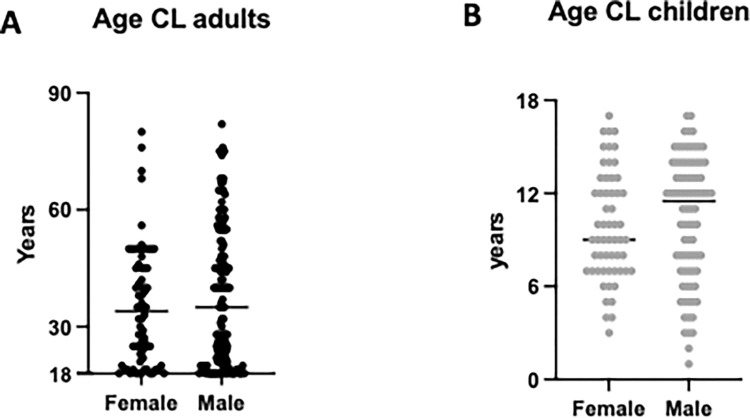
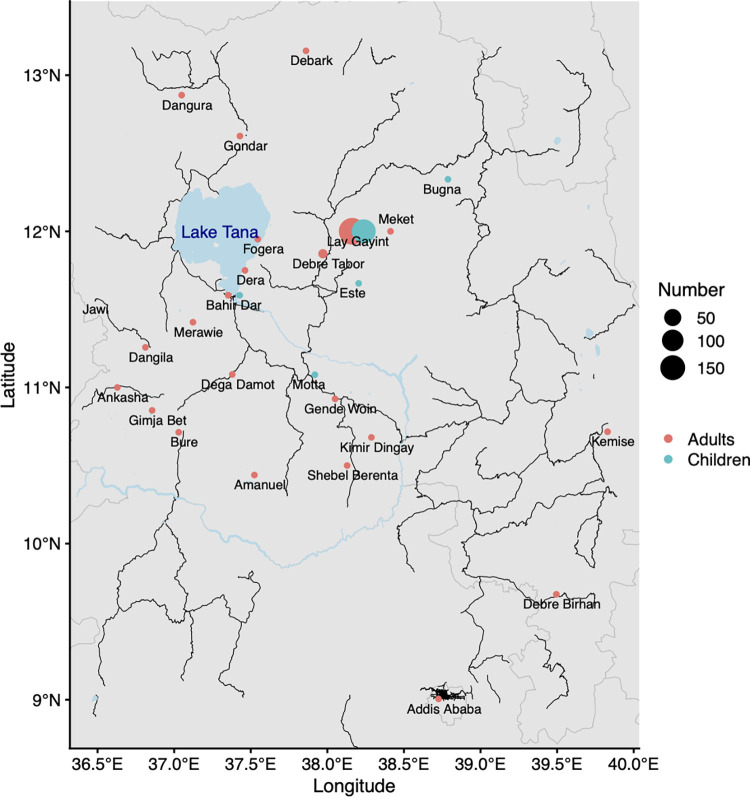
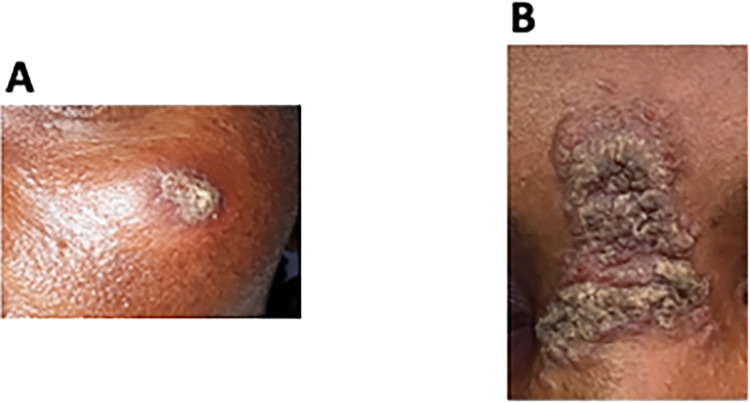
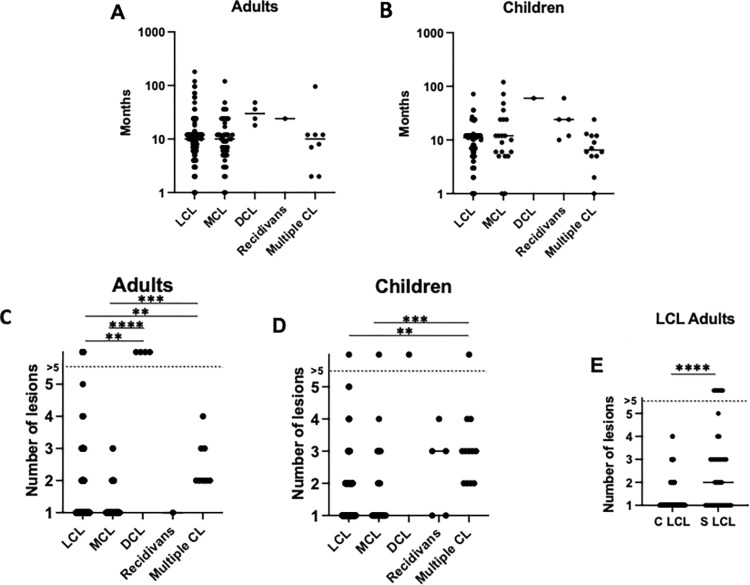
Cutaneous leishmaniasis (CL) is a neglected tropical disease caused by Leishmania parasites, that can cause long-term chronic disabilities. The clinical presentation of CL varies in both type and severity. CL presents as three main clinical forms: localised lesions (localised cutaneous leishmaniasis, LCL); mucocutaneous leishmaniasis (MCL) that affects the mucosa of the nose or the mouth; or as disseminated not ulcerating nodules (diffuse cutaneous leishmaniasis, DCL). Here we recruited a cohort of CL patients in a newly established leishmaniasis treatment centre (LTC) in Lay Gayint, Northwest Ethiopia, and collected detailed demographic and clinical data. The results of our study show that more males than females present to the LTC to seek diagnosis and treatment. 70.2% of CL patients presented with LCL and 20.8% with MCL. A small number of patients presented with DCL, recidivans CL (a rare form of CL where new lesions appear on the edges of CL scars) or with a combination of different clinical presentations. The duration of illness varied from 1 month to 180 months. Over a third of CL patients had additional suspected CL cases in their household. Despite the majority of CL patients having heard about CL, only a minority knew about its transmission or that it could be treated. Most CL patients lived in areas where environmental factors known to be associated with the transmission of CL were present. This work highlights that CL is an important public health problem in Lay Gayint and emphasises the urgent need for more CL awareness campaigns, better health education and better disease management practices.
Copyright: © 2024 Yizengaw et al. This is an open access article distributed under the terms of the Creative Commons Attribution License, which permits unrestricted use, distribution, and reproduction in any medium, provided the original author and source are credited.
Conflict of interest statement
The authors have declared that no competing interests exist.
Figures
References
-
- Ruiz-Postigo JA, Jain S, Madjou S, Virrey Agua JF, Maia-Elkhoury AN, Valadas S, et al. Global leishmaniasis surveillance, 2022: assessing trends over the past 10 years. Weekly epidemiological record. 2023;40(98): 471–87.
-
- Guidelines for diagnosis, treatment and prevention of leishmaniasis in Ethiopia, (2013). https://www.afrikadia.org/wp-content/uploads/2018/08/VL_Guidelines_Ethio...
-
- Heras-Mosteiro J, Monge-Maillo B, Pinart M, Lopez Pereira P, Reveiz L, Garcia-Carrasco E, et al. Interventions for Old World cutaneous leishmaniasis. Cochrane Database Syst Rev. 2017;11(11):CD005067. Epub 20171117. doi: 10.1002/14651858.CD005067.pub4 ; PubMed Central PMCID: PMC6486265. - DOI - PMC - PubMed
-
- Pinart M, Rueda JR, Romero GA, Pinzon-Florez CE, Osorio-Arango K, Silveira Maia-Elkhoury AN, et al. Interventions for American cutaneous and mucocutaneous leishmaniasis. Cochrane Database Syst Rev. 2020;8(8):CD004834. Epub 20200827. doi: 10.1002/14651858.CD004834.pub3 ; PubMed Central PMCID: PMC8094931. - DOI - PMC - PubMed
MeSH terms
LinkOut - more resources
Full Text Sources