


Affective, semantic, frequency, and descriptive norms for 107 face emojis
- PMID: 39147946
- PMCID: PMC11525295
- DOI: 10.3758/s13428-024-02444-x
Affective, semantic, frequency, and descriptive norms for 107 face emojis
Abstract
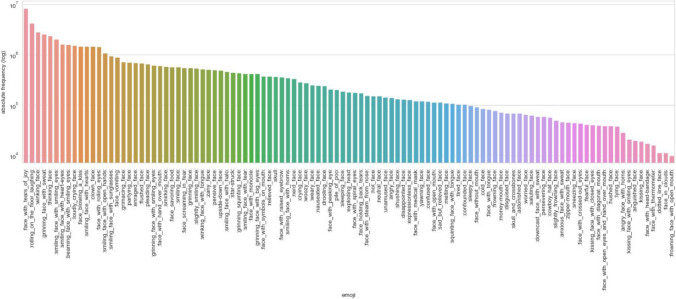
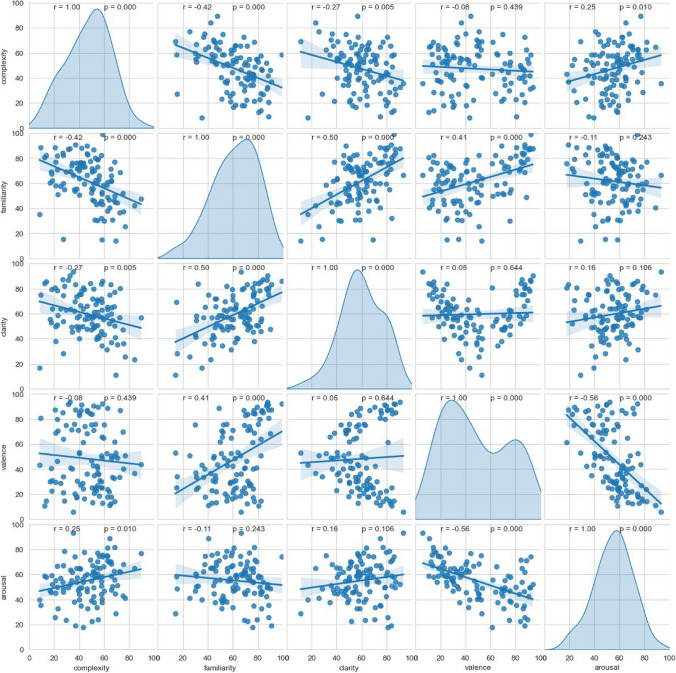
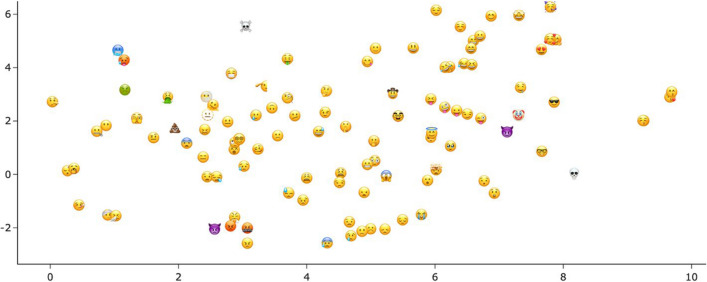
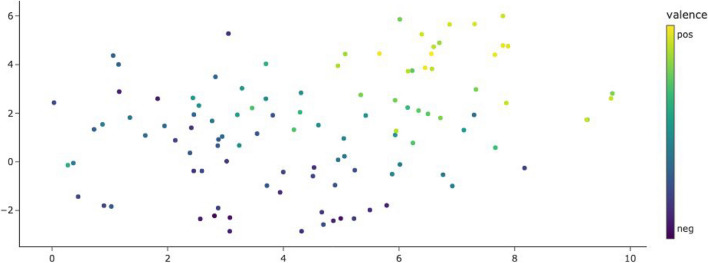
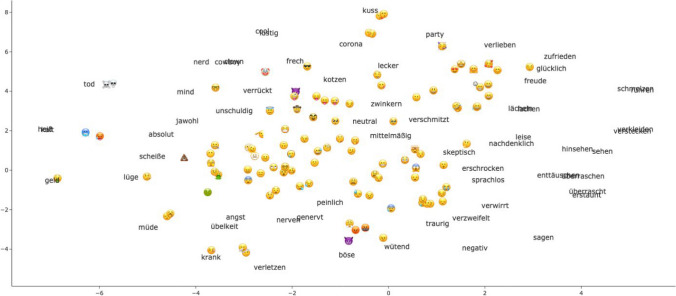
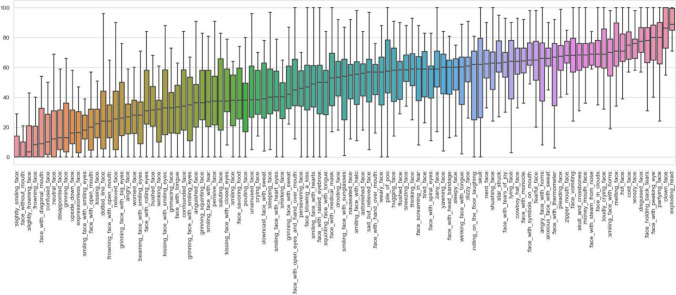
We introduce a novel dataset of affective, semantic, and descriptive norms for all facial emojis at the point of data collection. We gathered and examined subjective ratings of emojis from 138 German speakers along five essential dimensions: valence, arousal, familiarity, clarity, and visual complexity. Additionally, we provide absolute frequency counts of emoji use, drawn from an extensive Twitter corpus, as well as a much smaller WhatsApp database. Our results replicate the well-established quadratic relationship between arousal and valence of lexical items, also known for words. We also report associations among the variables: for example, the subjective familiarity of an emoji is strongly correlated with its usage frequency, and positively associated with its emotional valence and clarity of meaning. We establish the meanings associated with face emojis, by asking participants for up to three descriptions for each emoji. Using this linguistic data, we computed vector embeddings for each emoji, enabling an exploration of their distribution within the semantic space. Our description-based emoji vector embeddings not only capture typical meaning components of emojis, such as their valence, but also surpass simple definitions and direct emoji2vec models in reflecting the semantic relationship between emojis and words. Our dataset stands out due to its robust reliability and validity. This new semantic norm for face emojis impacts the future design of highly controlled experiments focused on the cognitive processing of emojis, their lexical representation, and their linguistic properties.
Keywords: Arousal; Emoji; Frequency; Norming study; Subjective rating; Valence; Visual complexity; Word embeddings.
© 2024. The Author(s).
Figures






References
-
- Barbieri, F., Ronzano, F., & Saggion, H. (2016). What does this emoji mean? A vector space skip-gram model for Twitter emojis. In: Proceedings of the Tenth International Conference on Language Resources and Evaluation (LREC’16), 3967–3972, Portorož, Slovenia. European Language Resources Association (ELRA). https://aclanthology.org/L16-1626. Accessed 18 Jun 2024.
-
- Benjafield, J., Frommhold, K., Keenan, T., Muckenheim, R., & Mueller, D. (1993). Imagery, concreteness, goodness, and familiarity ratings for 500 proverbs sampled from the Oxford Dictionary of English Proverbs. Behavior Research Methods, Instruments, & Computers,25(1), 27–40. 10.3758/BF03204446 - DOI
Publication types
MeSH terms
Grants and funding
LinkOut - more resources
Full Text Sources
